Politics
Allowing Hemp THC Sales To Continue Would Effectively Legalize Marijuana Nationwide, Republican Senator Says

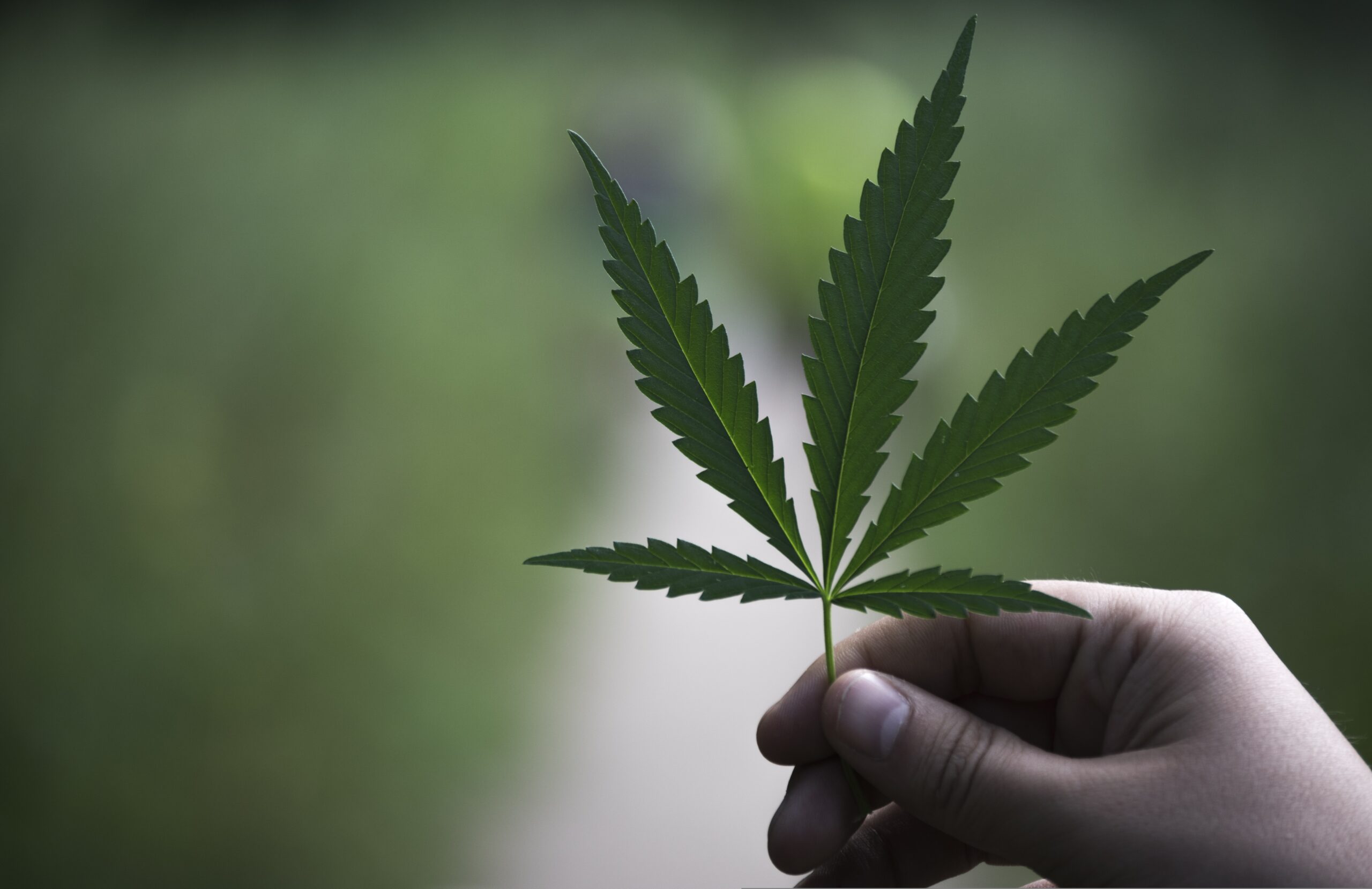
A GOP senator is urging colleagues to let the scheduled federal recriminalization of hemp THC products take effect next month—saying that further extending the ban would amount to “nationwide legalization of marijuana.”
“It is critical that this ban goes into effect on December 11th,” Sen. James Lankford (R-OK) wrote in a letter to other senators. “It is also critical that we remember how we got here and what is at stake for American communities, especially children.”
Hemp derivatives with less than 0.3 percent delta-9 THC on a dry-weight basis were federally legalized under the 2018 Farm Bill that President Donald Trump signed during his first term in office. But late last year, the president signed new legislation containing provisions that redefined hemp to make it so only products with 0.4 milligrams of total THC per container would remain legal after November 12.
Under provisions included in a separate funding bill Trump signed this September, however, the effective date of the ban for most products was pushed back to December 11 to give lawmakers more time to craft regulations for hemp derivatives. There was a carve-out, however, to allow the recriminalization on November 12 of synthetic cannabinoids “that are not capable of being naturally produced by a Cannabis sativa L. plant.”
Lankford’s letter says that the goal of the 2018 Farm Bill reform was “to remove non-intoxicating hemp from Schedule I of the Controlled Substances Act.”
“Supporters of that provision claimed the focus was to protect industrial hemp–the plant that is used to make rope, fabric, and other consumer goods,” he said. “I remember that conversation and was supportive of that Farm Bill because it seemed straightforward that a non-intoxicating plant should not be classified as a Schedule I drug.”
“In the years that followed, the hemp market got creative and exploited a loophole in the new definition of hemp. Our country has witnessed an explosion of intoxicating hemp products that claim to be legal under the 2018 Farm Bill. These products are chemically similar to marijuana products. They contain semi-synthetic cannabinoids derived from the hemp plant. So, while they contain less than .3% Delta-9 THC, they contain high amounts of either Delta-8 THC, Delta-10 THC, or another synthetic cannabinoid that can get you high. They come packaged in gas stations as candy-flavored gummies, sodas, and vapes.”
“A vote to extend the THC limits is a vote for nationwide legalization of marijuana,” Lankford wrote. “Our communities deserve for these drugs to be taken off the shelves and out of reach of children. It is time for Congress to close the loophole we created in 2018. Hemp producers can sell CBD oil and hemp fibers, but they should not be allowed to sell intoxicating products disguised as harmless hemp.”
Last week, two other Republican senators said they will not support passage of any bill to keep the federal government funded if it includes language to reverse the currently scheduled recriminalization of hemp THC products.
After bipartisan colleagues filed legislation that would replace the ban with new legal regulations to keep consumable hemp products available to adults—which industry advocates hope can be attached to larger, must-pass appropriations legislation—Sens. Ted Budd (R-NC) and Pete Ricketts (R-NE) drew a line in the sand, warning leadership not to go along with that plan.
The new bipartisan hemp regulation bill from Sens. Tim Sheehy (R-MT) and Amy Klobuchar (D-MN), the Hemp Guardrails Act, would stop the ban that is scheduled to go into effect next month while instituting a set of new product rules as an alternative to prohibition.
It would raise the legal threshold for hemp to one percent total THC on a dry-weight basis—with an exception to go above that for in-process materials—and create a new category of prohibited cannabinoids that include delta-8 THC, delta-10 THC and THC-O-acetate, while also restricting the manufacturing or synthesizing of those compounds outside of the hemp plant.
The measure would continue allowing conversions for CBD, delta-9 THC and other natural hemp compounds outside of the plant, but only if it results in a naturally occurring end product.
Raw floral hemp material, smokable hemp flower or hemp pre-rolls would be barred from entering interstate commerce.
There would be an age limit of 21 to possess and consume hemp cannabinoid products, and they would need to be grown, processed and packaged within the U.S. to be legal.
The bill also seeks to establish categories for hemp-derived products and supplements under the Federal Food, Drug, and Cosmetic Act and directs the Food and Drug Administration (FDA) to set rules for packaging, labeling, manufacturing, testing, registration and recalls within 180 days.
Certain industrial hemp products not containing cannabinoids—such as seed, seed oil, and hempseed protein—would be considered food additives, subject to applicable safety requirements.
The legislation preserves the authority of states to enact stricter hemp regulations but prohibits them from blocking the interstate transportation of compliant products.
Meanwhile, a top GOP congressman is pushing to attach provisions to keep hemp products legal to larger spending legislation in the coming weeks.
“The best opportunity, in my opinion, is to get this on a bill that is going to pass,” Rep. James Comer (R-KY), who chairs the House Oversight and Government Reform Committee, said. “The only bill that I think that absolutely, positively has to pass is going to be another continuing resolution, which is what got us here to begin with.”
Rep. Morgan Griffith (R-VA) similarly recently floated the idea of including hemp extension and regulation language in a broader budget reconciliation bill.
The Congressional Research Service noted in a recent report that the Food and Drug Administration (FDA) is now more than nine months late in fulfilling a legal mandate to publish a list of known cannabinoids and guidance on hemp product containers that was included in last year’s hemp product recriminalization legislation.
Aside from the new Senate legislation, a number of lawmakers from both chambers and both parties have filed or are circulating a growing number of bills to prevent the scheduled federal recriminalization of hemp THC drinks and other products.
Comer, for example, is circulating legislation that would delay a planned federal ban on hemp THC products and institute some regulations—including packaging requirements, testing rules and age limits.
Reps. Beth Van Duyne (R-TX) and Greg Landsman (D-OH) introduced a bill to keep hemp THC drinks legal while taxing and regulating them like alcohol.
Separately, Reps. Andy Barr (R-KY) and Angie Craig (D-MN) filed a lengthier proposal to prevent the federal recriminalization of hemp THC products and put in place a number of regulations for manufacturing, labeling, sales and taxation of hemp-derived products, including an age limit of 21.
Griffith and Rep. Marc Veasey (D-TX) introduced a measure to allow continued sales of hemp THC products to adults over 21, with new regulations,
Several Republican lawmakers recently spoke to Marijuana Moment about the kinds of rules they would like to see enacted to keep hemp THC products legal.
This week, Veterans of Foreign Wars and other military veterans groups sent a letter urging Congress to keep hemp THC products legal.