Business
More Than Half Of Pennsylvania Medical Marijuana Dispensaries Are Operated By Just Six Companies

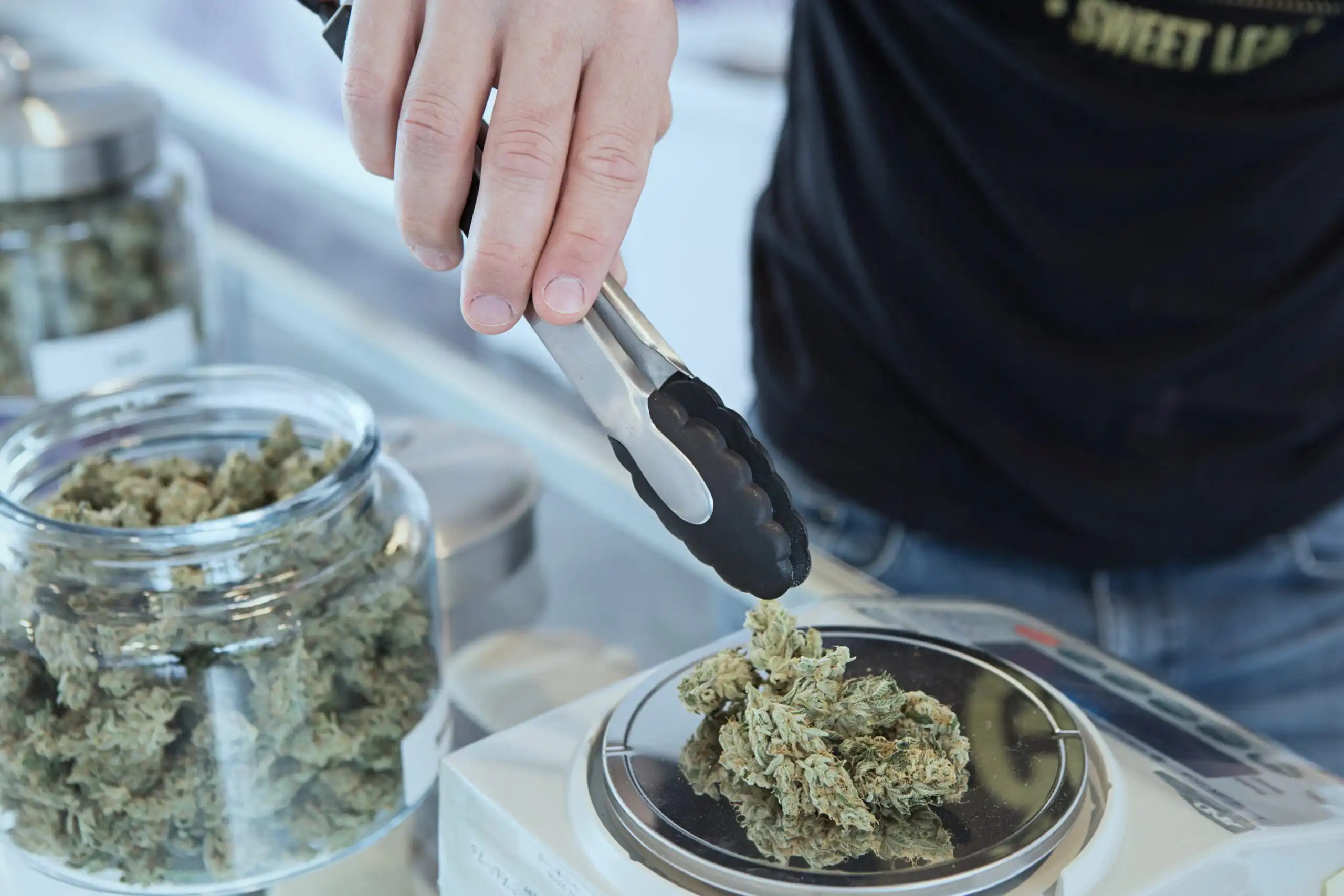
“There’s a gravitational-like force towards consolidation in almost any industry… All I know is, I drive around Pennsylvania, I see a Curaleaf every couple blocks.”
By Hannah Frances Johansson, NewsWorks Lab
Daylin Leach, a former state senator, said he once knew the names of everyone running a dispensary in Pennsylvania.
Now, he knows none.
“There’s a gravitational-like force towards consolidation in almost any industry,” said Leach, the Montgomery County Democrat who co-sponsored Senate Bill 3, which became the Medical Marijuana Act.
A decade after Pennsylvania legalized medical marijuana, multistate corporations, not locals, control many of the state permits to grow and sell cannabis. The reason stems partly from the needs of growers and dispensers to access large sums of cash, which are largely unavailable from traditional lenders because cannabis remains illegal at the federal level, industry insiders said.
Following a wave of acquisitions starting in 2018, multistate corporations control at least 10 of the 16 original permits initially given to cannabis companies to set up shop in the southwest region of the state, according to NewsWorks Lab’s analysis of permit applications, Department of Health documents, Securities and Exchange Commission filings and press releases.
Across the state, companies from Chicago, Florida and Connecticut operate most of the state’s dispensaries. Six multistate retail brands—Curaleaf, RISE, Trulieve, Zen Leaf, Sunnyside and Beyond Hello—operate more than 100 locations, or more than half of Pennsylvania’s dispensaries, according to the Pennsylvania Department of Health.
All six—or their parent companies—rank among the world’s biggest cannabis firms based on net revenue, according to Tom Adams Research, an industry consultant.
“I saw where the industry was going,” said Chris Kohan, a founder of The Healing Center, which was a locally owned regional chain of dispensaries. “That got very disappointing.”
Chicago-based Verano Holdings Corp., the company behind the Zen Leaf dispensary brand, bought The Healing Center in 2021 in a deal worth $110 million, according to media reports. Verano operates more than 160 retail locations and 14 growing and processing locations across 13 states, according to its website.
“I didn’t have any choice in that matter, really, if I wanted to be as successful as I possibly could,” Kohan said. “People who held on and are sitting there now, they’re wishing they didn’t.”
State Sen. Chris Gebhard, a Lebanon County Republican, introduced a 2023 bill to counterbalance the movement toward consolidation.
“A program once looked to as an example of good government, promoting homegrown jobs and businesses in some of our more economically downtrodden communities, is now a program dominated by out-of-state companies,” Gebhard wrote about the Pennsylvania Medical Marijuana Program in a prepared remark submitted to the state Senate, urging his colleagues to vote in favor of the bill.
The bill succeeded, and later that year became law as Act 63 of 2023, an amendment to the Medical Marijuana law to allow independent companies to apply for an additional permit.
If a company had a permit to grow, it could apply for a permit to sell, or vice versa.
Around a dozen companies have received grower-processor or dispensary permits because of Act 63, according to the Pa. Department of Health.
Despite the amendment, multistate companies still dominate.
“All I know is, I drive around Pennsylvania, I see a Curaleaf every couple blocks,” Leach said.
Curaleaf Holdings, Inc. is the biggest cannabis company in the world, according to the net revenue analysis by Tom Adams Research. It has 18 active dispensary locations in Pennsylvania, according to the Department of Health.
Multistate companies and outside influence
In southwestern Pennsylvania, mergers and acquisitions started soon after companies first obtained permits to grow and sell cannabis, state and federal SEC records show.
Florida-based Trulieve Cannabis Corp. entered the Pennsylvania market when it bought PurePenn LLC and Keystone Relief Centers, LLC, two cannabis companies headquartered in the Pittsburgh area, in November 2020.
PurePenn had a permit to grow and process cannabis. Keystone Relief Centers had a permit to run dispensaries. Trulieve now has 21 dispensaries across the state, according to its website.
In 2024, multistate corporation Cresco Labs Inc. bought Keystone Integrated Care, LLC, a company with two locations, in Pittsburgh and in Greensburg, according to an exhibit filed with the SEC. Cresco operates in eight states, according to its website.
Big operators are able to supply larger quantities of medicine because they can more easily bear the cost of complying with Pennsylvania’s rules for safe production, a Cresco spokesperson told NewsWorks Lab.
Green Thumb Industries Inc., the Chicago-based parent company of GTI Pennsylvania, LLC (associated with the RISE dispensary brand), has hung onto permits it was awarded for growing and selling cannabis across the state, including in Westmoreland County. Green Thumb Industries now has over 120 dispensaries across the country, according to its website.
National backers also have reached into the Pa. market through lending agreements, records show.
The U.S. Government Accountability Office found in an August report that some cannabis companies have entered into contracts with nontraditional lenders or private investors.
“Focus group participants said that potential investors structured contracts in ways that could allow them to take control of the business,” GAO found.
Maitri Medicinals—a dispensary brand with locations in Uniontown, Pittsburgh and New Stanton—advertises itself as a cannabis company with deep roots in southwestern Pennsylvania.
However, a form filed with the SEC on November 3, 2022, included John Mazarakis and Andreas Bodmeier—two founding partners at private credit group Chicago Atlantic—among the leadership of Maitri Holdings, LLC.
The same month the company filed the document with the SEC, Maitri’s board of managers wrote that they had defaulted on their debt and lease obligations to Chicago Atlantic in a letter included in a lawsuit filed in Allegheny County’s Court of Common Pleas.
FarmaceuticalRX, another permitted Pa. processor and retailer that is opening a dispensary in Oakland, has also borrowed from Chicago Atlantic Real Estate Finance, Inc., according to an SEC filing from this year.
Representatives from Maitri, FarmaceuticalRx and Chicago Atlantic have not responded to requests for comment about the nature of their relationships or if they have continued.
Why consolidation happened in cannabis
UC Berkeley’s Michael Polson, director of the Berkeley Cannabis Research Center, said he sees a similar pattern across the country: After a state legalizes cannabis, investors rush to grab a piece of the market without expecting profitability at first.
In California, where Polson conducts a lot of his research, this led to oversupply, which helped depress prices.
In Pennsylvania, the retail price of dry leaf tanked from $14.90 per gram at the start of 2021 to $7.65 per gram in mid-2025, according to a presentation from a June 2025 meeting of the Department of Health’s Medical Marijuana Advisory Board. The Advisory Board did not respond to a request for comment about what drove down the price.
To survive lower prices, big companies are often able to draw capital from different parts of their operation; small shops might not have the same flexibility, Polson said.
Cannabis companies and their employees told the GAO they find it difficult to access traditional banking because the drug remains illegal at the federal level, leading them to seek loans that might contain “unfavorable” terms.
In April, the U.S. Justice Department rescheduled medical marijuana, reducing restrictions on the substance for medical uses; it remains illegal for recreational ones.
Publicly traded companies, meanwhile, can fall back on shareholders’ investments if they need an injection of capital, Polson said.
Each of the cannabis companies with the greatest number of stores in Pennsylvania are publicly traded, according to Yahoo Finance: Cresco (Sunnyside), Verano (Zen Leaf), Green Thumb Industries (RISE), Curaleaf, Trulieve and Jushi Holdings Inc. (Beyond Hello).
The Healing Center
At the height of his business, Kohan said he had handpicked staff, multiple pharmacists, a weekly newsletter and a monthly donation drive for local organizations, including veterans’ groups and animal shelters.
For several months after selling to Verano, Kohan said he stayed to supervise the marketing transition from The Healing Center to Zen Leaf.
“You know, sadly, they all morphed into kind of the same places,” Kohan said. “I mean, the place is still the place. It’s just, the people aren’t the people.”
Verano cut his staff, Kohan said, and got rid of the on-site pharmacists, opting for virtual consultations.
Verano employs nearly 20 pharmacists across Pennsylvania who provide both in-person and virtual consultations, Steve Mazeika, vice president of investor relations and communications, wrote in a statement. He added that the company has maintained a philanthropic culture.
“Verano has a proud history of philanthropy supporting a large assortment of local and national charitable organizations,” he wrote, including pro bono support for cannabis expungement clinics, as well as support to the LGBTQ+ community and veterans.
You may reach Hannah Frances Johansson at [email protected].
NewsWorks Lab is a public-benefit company owned by Trib Total Media to produce high-impact, accountability journalism as a free, open-source resource. You may find more information at NewsWorksLab.com. Questions, tips and comments may be shared at [email protected].
Copyright NewsWorksLab, LLC 2026.
This article first appeared on NewsWorks Lab and is republished here under a NewsworkLabs License.