Politics
First Phase Of Renewed Federal Hemp Product Ban Takes Effect As Industry Pushes Congress For Regulatory Alternative

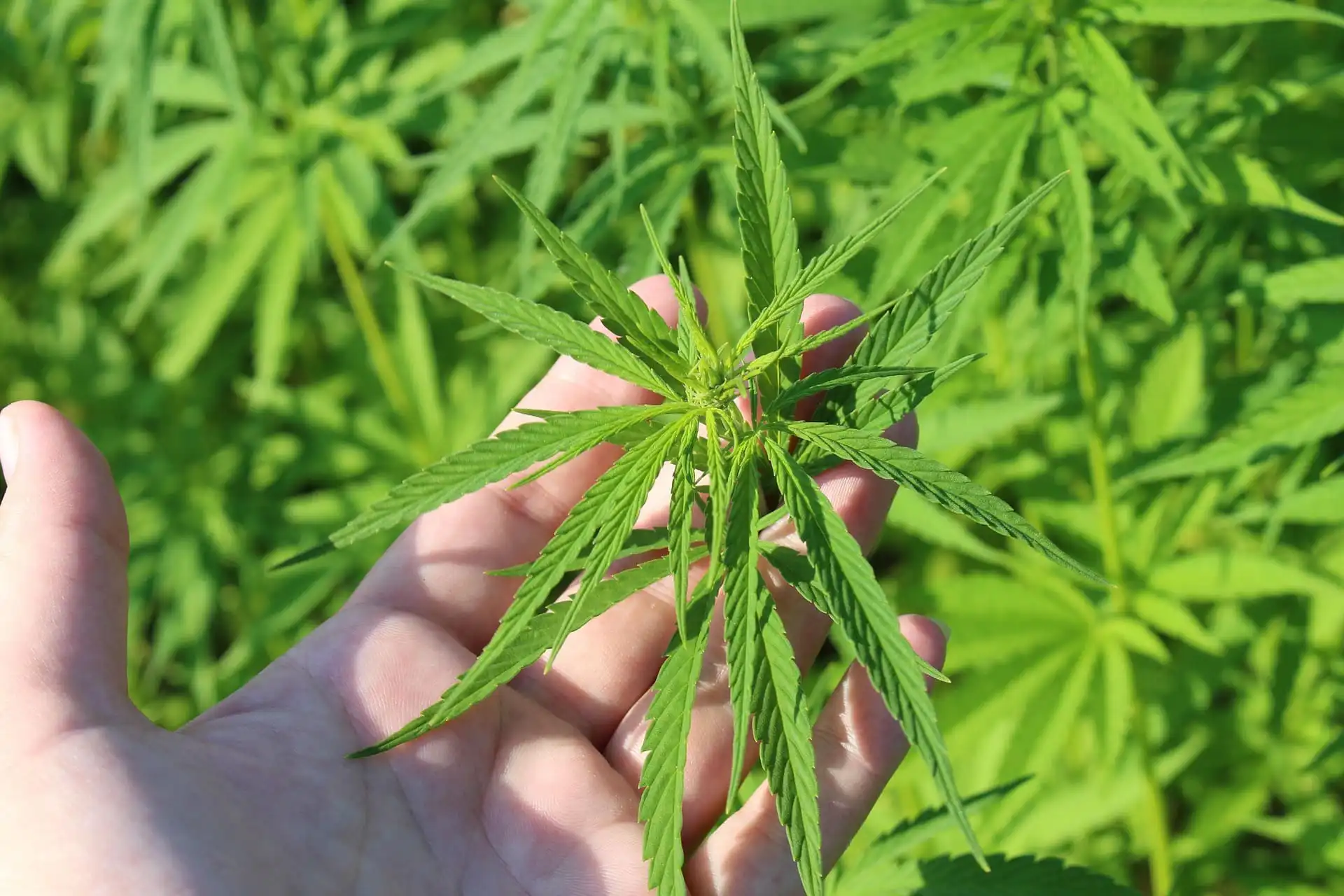
As of Thursday, it is no longer federally legal to produce or sell hemp products that contain cannabinoids that can’t be naturally produced by the cannabis plant.
A broader recriminalization of hemp THC products is currently scheduled to take effect next month, though industry advocates and a bipartisan group of lawmakers—in partnership with the Trump administration—have been pushing to enact legislation to enact regulations as an alternative to prohibition.
It remains to be seen if such a proposal can get enough support to clear Congress and make its way to the president’s desk in time to ward off the ban.
Hemp derivatives with less than 0.3 percent delta-9 THC on a dry-weight basis were federally legalized under the 2018 Farm Bill that President Donald Trump signed during his first term in office. But late last year, the president signed new legislation containing provisions that redefined hemp to make it so only products with 0.4 milligrams of total THC per container would remain legal after November 12.
Under provisions included in a separate funding bill Trump signed this September, however, the effective date of the ban for most products was pushed back to December 11 to give lawmakers more time to craft regulations for hemp derivatives. There is a carve-out, however, to allow the recriminalization on November 12 of synthetic cannabinoids “that are not capable of being naturally produced by a Cannabis sativa L. plant.”
The recriminalization of such cannabinoids applies to both intermediate and final hemp-derived products, though there is some disagreement about which specific products that are on the market today will be impacted. The initial phase of the federal ban does not cover synthetic conversion of cannabinoids that can otherwise be naturally produced by cannabis, such as converting CBD to delta-9 THC, delta-8 THC or related isomers.
Jonathan Miller, general counsel for the U.S. Hemp Roundtable, told Marijuana Moment that his group and much of the industry “has long called for the banning of synthetic cannabinoids and are fully supportive of the pending ban.”
“We are very hopeful that Congress will soon take the next step and pass a plan to robustly regulate hemp derived products instead of the ill advised complete ban that could go into effect on December 11,” he said.
Jim Higdon, co-founder and chief communications officer for the company Cornbread Hemp, said “good riddance to synthetic cannabinoids and the bad reputation they have caused the hemp industry.”
“Products made from synthetic cannabinoids like HHC had no business in the legitimate hemp industry to begin with,” he told Marijuana Moment. “The only impairing cannabinoid that we are interested in defending is delta-9 THC.”
Hexahydrocannabinol (HHC), however, does occur in trace quantities in the cannabis plant, according to a 2023 study in Current Neuropharmacology and a 2024 study in Scientific Reports. As such, some believe it is not being removed from the legal definition of hemp as part of this week’s first phase of the federal ban, even when it is chemically converted from other cannabinoids since the compound itself meets the definition of being “capable of being naturally produced by a Cannabis sativa L. plant” under relevant law.
The American Trade Association for Cannabis and Hemp (ATACH), which represents state-licensed marijuana businesses, argued in a fact sheet provided to Marijuana Moment that “few products on the market” today will be affected by the first phase of the ban.
The group noted that the Food and Drug Administration (FDA) is now more than nine months late in fulfilling a legal mandate to publish a list of known cannabinoids and guidance on hemp product containers that was included in last year’s hemp product recriminalization legislation.
The agency’s list of cannabinoids that the cannabis plant can naturally produce, if and when it is issued, “will settle the edges of this category,” ATACH said.
A number of lawmakers from both chambers and both parties have filed or are circulating a growing number of bills to prevent the scheduled federal recriminalization of hemp THC drinks and other products.
For example, Reps. Beth Van Duyne (R-TX) and Greg Landsman (D-OH) introduced a bill to keep hemp THC drinks legal while taxing and regulating them like alcohol.
Rep. James Comer (R-KY), who chairs the House Oversight and Government Reform Committee, is circulating legislation that would delay a planned federal ban on hemp THC products and institute some regulations—including packaging requirements, testing rules and age limits.
Separately, Rep. Andy Barr (R-KY), filed a lengthier proposal to prevent the federal recriminalization of hemp THC products and put in place a number of regulations for manufacturing, labeling, sales and taxation of hemp-derived products, including an age limit of 21.
Reps. Morgan Griffith and Rep. Marc Veasey (D-TX) introduced a measure to allow continued sales of hemp THC products to adults over 21, with new regulations,
Several Republican lawmakers recently spoke to Marijuana Moment about the kinds of rules they would like to see enacted to keep hemp THC products legal.
Sens. Tim Sheehy (R-MT) and Amy Klobuchar (D-MN) are expected to soon file a hemp product regulation proposal that advocates hope to attach to broader, must-pass legislation by December 11—though it remains to be seen if that can happen.
Meanwhile, at the state level, a Missouri hemp product restriction law also takes effect on Thursday. Similar state hemp legislation in Illinois was also scheduled to go into force this week but is on hold amid litigation.