Politics
The Election’s Blue Wave Won’t Save Cannabis Equity, But A New Blueprint Might (Op-Ed)

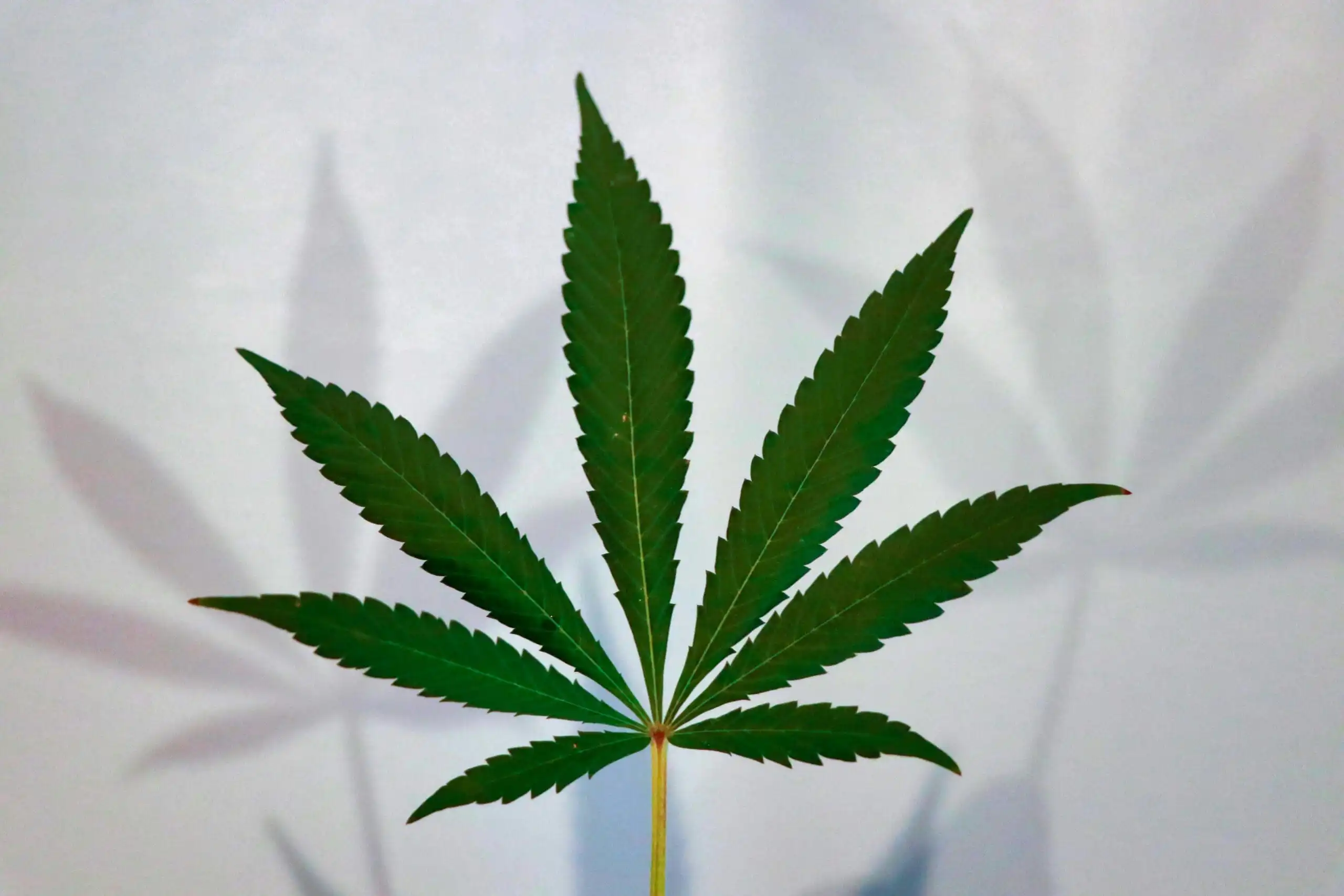
“Some of the states that have struggled most to translate cannabis equity into meaningful outcomes have been led by Democrats.”
By Dasheeda Dawson, The WeedHead™
The Democrats won big. Cannabis legalization could be next. But will cannabis equity and freedom actually win?
That’s the question we should be asking after the 2026 midterms, as shifting political dynamics renew optimism about cannabis reform in states like Texas, Pennsylvania, North Carolina and Georgia.
Texas lawmakers have introduced legalization legislation. North Carolina’s legislative leadership has floated decriminalization. Across the country, new political possibilities are reopening conversations about cannabis policy.
For advocates who have spent decades fighting prohibition, these developments offer renewed opportunity. Before we celebrate the next wave of legalization, we should reckon with what the last one taught us.
Some of the states that have struggled most to translate cannabis equity into meaningful outcomes have been led by Democrats. Some of my most difficult conversations about what equity actually means happened in jurisdictions where political leaders embraced it the loudest.
Cannabis transcends party lines. Education and access is a human rights issue, and getting it right is everyone’s responsibility.
I’ve spent a decade in this work, five of those years inside government. I managed Portland, Oregon’s cannabis program and served as the founding executive director of Cannabis NYC. Along the way, I’ve been an advocate, educator, entrepreneur and patient. From every one of those seats, I’ve witnessed the distance between legislative promises and lived experience.
The next chapter of cannabis reform needs a new blueprint.
The Equity Paradox
Equity programs were built to repair the harms of prohibition. For too many licensees, they’ve become the newest harm.
In conversations with equity licensees across the country, more than half have told me some version of the same thing: if they knew then what they know now, they wouldn’t have pursued a license.
These are field observations, gathered one licensee at a time, and the sentiment is consistent enough to demand attention.
New York offers a troubling example. Its Conditional Adult-Use Retail Dispensary (CAURD) program created a historic opportunity for justice-involved entrepreneurs. Some have built successful businesses, created jobs and opened doors that prohibition kept closed for generations.
Many others have spent years navigating delays, debt, real estate challenges and costly compliance requirements. The Dormitory Authority of the State of New York (DASNY) -backed Social Equity Cannabis Investment Fund became a case study in how assistance meant to accelerate opportunity can become another way to incarcerate people through financial burdens. Imagine surviving criminalization, qualifying for an equity license and then discovering that participating legally could threaten your health and financial future.
We built pathways to ownership without building the conditions for ownership to succeed.
That’s the equity paradox. The next state to legalize should confront it before repeating it.
Good Legislation Is Only The Beginning
Equity looks great on paper. Implementation is where it lives or dies.
I learned that firsthand in Portland. The city’s cannabis equity and community reinvestment commitments existed before I arrived. Building the systems to deliver on those commitments required intentional leadership, community engagement and operational discipline.
Across the country, cannabis tax revenue has been celebrated as a tool for repairing communities disproportionately harmed by prohibition. The gap between allocating those dollars and delivering measurable benefits can be enormous.
A budget allocation is a promise. A measurable improvement in people’s lives is an outcome. We’ve spent far too much time applauding promises.
Licensing works the same way. The number of equity licenses issued tells us little about whether those businesses are profitable, whether their owners are building wealth or whether their communities are better off. A license count is a headline. A profitable equity business is proof.
Economic participation, particularly dispensary ownership, has dominated the definition of cannabis equity. The CHEM Pillars of Health Equity measure it across four interconnected dimensions: social equity in the structures and relationships that sustain collective well-being; economic equity in fair access to resources and sustainable livelihoods; environmental equity in the places where communities live, work, and grow; and human equity in dignity, ancestral knowledge, and the right to make informed decisions about one’s own health.
Dispensary ownership speaks to one pillar. Cannabis reform has to answer for all four.
A community can generate millions in cannabis sales while its residents remain criminalized, patients struggle with affordability and promised reinvestment never arrives. A thriving cannabis market and a healthy community are two different achievements.
That should change how we define success.
We Legalized The Market And Kept The Stigma
While working in government, I discovered that some of the people shaping cannabis policy understood the least about the plant.
It was one of the most frustrating parts of the job. Even in New York City, where I spent considerable time educating colleagues across agencies, including public health and mental health officials, deeply rooted stereotypes continued to shape conversations about cannabis.
Science has evolved. Public opinion has shifted. Laws were changing. Institutional understanding lagged behind all three. That knowledge gap has consequences.
We still impose arbitrary possession limits, restrictive home cultivation rules and expensive compliance requirements while treating cannabis activity outside licensed commerce as inherently suspect. We cannot regulate our way out of ignorance.
Texas offers a particularly revealing example. An expansive hemp-derived cannabinoid market emerged under the 2018 Farm Bill, including products marketed as “THCA flower.” THCA is naturally abundant in marijuana flower until heat converts it to THC so the distinction was an absurd loophole.
That market rapidly grew with limited oversight, only to face sweeping restrictions and renewed criminal penalties. Now, with a federal hemp ban looming, Texas lawmakers are introducing proposals to legalize adult-use cannabis.
Texas has turned the same plant into a commodity, then a crime and now a campaign promise.
What have lawmakers learned from this experience? Judging by the latest proposals, not nearly enough.
Newly introduced Texas legislation proposes a two-ounce possession limit and permits twelve plants for home cultivation. Sounds great, except the possession threshold preserves an arbitrary line between lawful conduct and criminal exposure. Twelve plants per person should be the minimum for meaningful home cultivation rights, with additional allowances reflecting patient needs, caregiving, genetic preservation and personal autonomy.
Full decriminalization should be the foundation of reform. Public safety standards should address actual harms, and an arbitrary quantity threshold should never be the line between a law abiding citizen and a criminal.
Protect the people. Expand their ability to understand and benefit from the plant. That’s the job.
Federal Reform Is Exposing The Contradictions
The federal government is finally running into the contradictions state regulators have lived with for years.
The Schedule III framework recognizes cannabis’s accepted medical use while drawing a federal distinction between qualifying medical activities and state-licensed adult-use operations.
Regulators know how artificial that separation is. The same cannabis product can be sold through either market, often to consumers seeking the same benefits. Sleep, pain and anxiety consistently rank among the leading reasons people shop in adult-use cannabis markets. Focus is another common motivation.
Cannabis remains medicinal no matter which dispensary counter it crosses.
Federal policy is still constructing separate categories of legitimacy around the same plant, risking an unprecedented regulatory divide within a single controlled substance.
For years, “regulate cannabis like alcohol” was the rallying cry of legalization campaigns. It made a great slogan. Cannabis consumer behavior tells a more complicated story. An over-the-counter health and wellness model offers a more relevant starting point for many cannabis products, borrowing elements of alcohol regulation where warranted.
A whole-plant approach could go further, establishing a unified regulatory foundation for cannabis that recognizes its medicinal, agricultural, industrial and adult-use applications. Product standards could reflect actual composition, effects and risks, while licensing and compliance requirements accommodate different activities within one coherent legal framework.
That approach allows states to meet federal medical requirements where necessary while keeping one market for one plant.
Our laws should follow the science of the plant. Its classification has followed politics long enough.
Instead, policymakers remain consumed with developing markets, establishing regulatory categories, and choosing economic winners and losers.
Meanwhile, sixteen governors have once again urged Congress to pass the SAFE Banking Act.
We’ve been here before. As chair of the Cannabis Regulators of Color Coalition, I helped challenge the assumptions behind this legislation years ago. SAFE protects financial institutions that serve cannabis businesses. It guarantees nothing about equitable lending or meaningful access to capital for the entrepreneurs who need it most.
The familiar story goes like this: cannabis businesses run on cash, and banking reform will solve the crime that cash attracts. Regulators on the ground have seen a far more complicated reality. Access to affordable capital is the bigger, harder problem which remains unresolved with the proposed legislation.
And the same bill, carrying the same promises, still dominates federal reform conversations. We’ve spent years trying to free the money while leaving the plant and the people federally criminalized.
At the same time, federal restrictions on hemp-derived cannabinoids threaten another segment of the cannabis economy, deepening the contradictions between federal policy and state legalization.
The plant hasn’t changed. Our rules keep changing around it.
Rescheduling may benefit qualifying medical operators. Full descheduling, decriminalization, whole-plant access and the federal treatment of adult-use businesses remain unresolved.
Those questions deserve to lead the next chapter of reform.
The Next Wave Needs A New Blueprint
Every generation of legalization has fixed some of the last one’s mistakes and made new ones of its own.
Early adult-use states largely left equity out of their statewide frameworks, while cities like Oakland, Los Angeles and Portland pioneered local efforts to address the harms of prohibition. Massachusetts became the first state to establish a statewide cannabis social equity effort, followed by Illinois, New York, New Jersey, Maryland and others that built equity into their legalization frameworks.
Each generation has expanded the conversation, created opportunities, and exposed challenges for the next. That’s progress. Progress also demands accountability. We have to be willing to critically grade our own work.
Through that lens, we must acknowledge where we’ve lost the plot. Somewhere between designing markets, allocating licenses and determining who gets to participate, the fight for freedom became consumed by the business of legalization. Meanwhile, criminalization persists, stereotypes remain embedded in public policy and access to the plant is still treated as a privilege to be negotiated.
We’ve become experts at designing cannabis markets while still struggling to define cannabis freedom.
The next wave also demands a shift in advocacy. For too long, the pursuit of whatever legislation can pass has shaped the boundaries of what we’re willing to fight for. Political feasibility has become a substitute for policy vision.
Our responsibility as advocates is to establish the foundations of freedom and hold legislation accountable to them. Full decriminalization, meaningful cultivation rights, science-based education, health autonomy and equitable access must anchor the framework from day one.
Texas, Pennsylvania, North Carolina, Georgia and other states entering a new political chapter have the benefit of our collective experience. They can build on what worked, confront what failed, and write policies that start with the rights we intend to protect. The markets can follow.
The real measure of cannabis equity must be rooted in measurable outcomes: freedom from criminalization and collateral consequences, more people educated and empowered to cultivate and access the plant, financially sustainable small businesses and community reinvestment that actually reaches the people it was intended to serve. Protecting our environment and preserving the plant’s cultural, medicinal, and agricultural value must be part of that equation.
That’s how we measure progress. That’s how we measure equity.
Political shifts can open doors. Sustainable reform requires the courage to build something better on the other side.
The blue wave may set the stage for another chapter of legalization. After decades of prohibition and years of imperfect implementation, we owe ourselves more than another collection of licenses, tax revenue projections and recycled federal proposals.
The next blueprint must measure how many people we’ve freed, how much knowledge we’ve shared, and how well we’ve protected the plant for generations to come.
Free the plant. Free the people.
Dasheeda Dawson is a cannabis policy strategist, educator, entrepreneur and former government regulator in New York City and Portland, Oregon. She is the founder of The WeedHead™ & Company and the bestselling author of How to Succeed in the Cannabis Industry: The Blueprint They Never Gave Us, 4th Edition.