Politics
Police Are Finally Turning Against Marijuana Prohibition, New Poll Shows (Op-Ed)

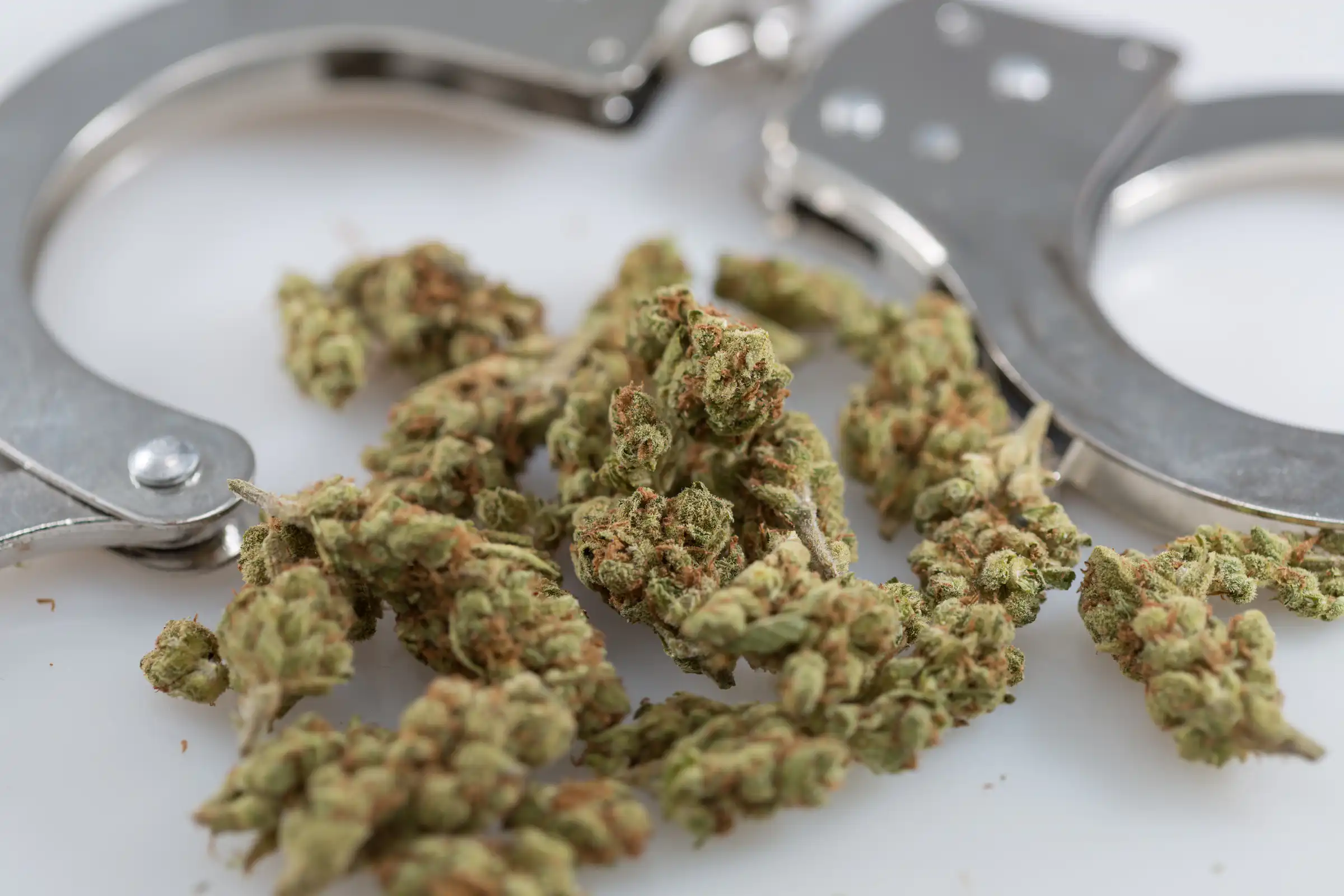
“Returning cannabis sales to an unregulated market would create more enforcement challenges and compound existing problems.”
By Lt. Diane Goldstein (Ret.), Law Enforcement Action Partnership
With the votes now counted, the extraordinary scale of Question 8’s failure in Massachusetts is coming into focus. More than 75 percent of voters opposed the measure to ban adult-use cannabis sales, making it one of the most lopsided ballot defeats in modern state history.
But the result also highlights how much law enforcement’s position on cannabis has shifted, from once reliable supporters of prohibition to an increasingly vocal constituency for regulation.
A decade after many of the state’s law enforcement organizations opposed legalization, none of these groups endorsed Question 8. Now, a new survey of Massachusetts officers finds 92 percent of respondents in favor of keeping licensed cannabis sales, with many recognizing the public-safety benefits of the regulated system.
Behind this historic defeat is a campaign that failed to make its case, including to the professionals responsible for upholding public safety. For months, Smart Approaches to Marijuana (SAM), the out-of-state group behind Question 8, argued that forcing cannabis commerce back to the illicit market would make Massachusetts safer. SAM’s lobbying arm, SAM Action, ultimately spent $3.7 million trying to convince voters, more than the annual general-fund public safety spending of 124 Massachusetts towns.
As a retired police lieutenant, the result wasn’t shocking.
Massachusetts law enforcement professionals I spoke with showed little appetite for moving back toward prohibition. The only police organizations to publicly weigh in on Question 8 did so in opposition: Law Enforcement Action Partnership (LEAP), where I serve as executive director, and the National Association of Black Law Enforcement Officers (NABLEO).
During the campaign, LEAP commissioned a survey to better understand how Massachusetts officers view the state’s cannabis system, its public-safety challenges and the potential consequences of eliminating it. Its findings offer a revealing look at how officers assess the risks of banning the regulated market.
Of the 161 current and former Massachusetts law enforcement officers who responded, 92 percent said they would keep licensed adult-use cannabis sales. Just 8 percent favored ending licensed sales altogether. On Question 8 itself, 44 percent opposed the measure and 38 percent supported it, with strong opposition more than twice as common as strong support. Four in five respondents had served both before and after licensed sales began.
The survey was opt-in, not a random sample or a precise measure of every Massachusetts officer’s views, but the responses offer a perspective from professionals with firsthand experience of drug policy.
Many police have real concerns about the current system. Access to cannabis by people under 21 was the most frequently identified problem, with 60 percent in the poll calling it serious in the areas they serve. But 70 percent expected pushing sales to the illicit market under Question 8 would make that problem worse, compared with just 7 percent who expected it to improve. Eighty-four percent anticipated more unsafe or contaminated products, while 79 percent expected more unlicensed sales.
Another finding challenges the idea that rolling back legalization would better serve law enforcement priorities. Asked where they would direct additional officer time, just 19 percent identified drug offenses as a top priority, ahead of only paperwork.
Officers have limited time to handle competing demands, from violent crime to crisis response. Returning cannabis sales to an unregulated market would create more enforcement challenges and compound existing problems. Officers who have worked under both systems understand that regulation offers tools prohibition doesn’t: age restrictions, product testing, licensing requirements and identifiable businesses subject to oversight.
None of this means Massachusetts’s cannabis system is perfect.
Overall, 38 percent of officers favored keeping licensed sales with changed rules, while 54 percent supported the current rules. Roughly half of all respondents identified public cannabis consumption and impaired driving as serious problems.
Those concerns deserve attention, but can be addressed through stronger enforcement, better product standards and testing and improved tools for addressing impaired driving.
That will matter as prohibition advocates regroup after their loss. SAM is backing a similar repeal effort in Maine, reportedly on track for the 2027 ballot. Supporters should consider what happened in Massachusetts before spending millions to turn back the clock. Voters were not persuaded that ending licensed sales would make communities safer, and most of the officers we surveyed expected it to make key problems worse, not better.
Supporters of Question 8 still have an opportunity to contribute constructively. If their concerns are underage access, product safety, impaired driving or public consumption, the existing system offers pathways to tackle those problems. Eliminating the licensed market would only make many of them harder to solve.
If groups like SAM insist on repeating the same failed approach, they risk being left behind as voters and law enforcement move toward a more practical conversation about cannabis and public safety. Massachusetts has shown that voters understand the value of a regulated cannabis market, and the officers we surveyed overwhelmingly agree.
The work of improving that system will move forward with or without prohibition advocates.
Lt. Diane Goldstein (Ret.) is a 21-year police veteran and executive director of Law Enforcement Action Partnership (LEAP), a nonprofit group of police, judges and other law enforcement professionals who support policies that improve public safety and police-community relations. She also helped form and lead the Committee for Responsible Cannabis Policy, a ballot question committee, legally separate from LEAP, that campaigned against Question 8.
(Marijuana Moment’s editor and publisher previously served as a staffer for LEAP under the organization’s former name, Law Enforcement Against Prohibition.)