Politics
Massachusetts Lawmakers Advance Bill To Let Military Veterans Get Medical Marijuana Without A Doctor’s Recommendation

A Massachusetts bill containing provisions aimed at increasing military veterans’ access to medical marijuana and adding new qualifying conditions to the state’s medical cannabis program is advancing in the legislature.
The Senate Ways and Means Committee approved the House-passed measure last week, setting it up for expected floor consideration on Thursday.
The large-scale supplemental budget bill that touches on a number of issues, including one section that would potentially allow veterans to receive a state medical cannabis card without having to get a recommendation from a doctor.
The initial version of the legislation was filed by Gov. Maura Healey (D), though some provisions of her initial proposal were amended or removed by the House of Representatives last month. If the measure passes the Senate this week, and the House signs off on recent changes, it would then go to the governor to be signed into law.
Because the U.S. Department of Veterans Affairs (VA) continues to prohibit its providers from filling out medical marijuana recommendation forms, many of their veteran patients are forced to either seek outside, often expensive physician consultations or go without legal access to medical cannabis.
But under the legislation that is now advancing, veterans in Massachusetts would be able to become registered medical marijuana patients by providing state officials with “official documentation” from the federal Veterans Administration “indicating a diagnosis of a debilitating medical condition; provided, that the [Cannabis Control Commission (CCC)] shall not require a written or electronic certification from a healthcare professional.”
In other words, VA doctors wouldn’t have to specifically recommend medical cannabis in order to help their patients get legal access and could instead just diagnose them with a qualifying condition under the state’s law.
That latter clause of the provision in its current form is a change from Healey’s initial proposal, which had more simply read that veterans under statute could use VA diagnosis documentation to get medical marijuana “without the need for a written or electronic certification from a healthcare professional”—without any reference to CCC.
The bill as approved by the House and the Senate committee also adds post-traumatic stress disorder, opioid use disorder and “a medical condition that produces chronic pain” to the definition of a “debilitating medical condition” that could qualify patents for medical cannabis. The version that was filed by the governor did not include opioid use disorder.
While veterans and other adults over the age of 21 are already able to buy recreational marijuana in Massachusetts, medical cannabis purchases are exempt from sales, excise and municipal taxes that apply in the adult-use market.
Medical patients also have higher purchase limits than adult-use consumers, and have access to higher potency products than are allowed in the recreational market.
—
Marijuana Moment is tracking hundreds of cannabis, psychedelics and drug policy bills in state legislatures and Congress this year. Patreon supporters pledging at least $25/month get access to our interactive maps, charts and hearing calendar so they don’t miss any developments.
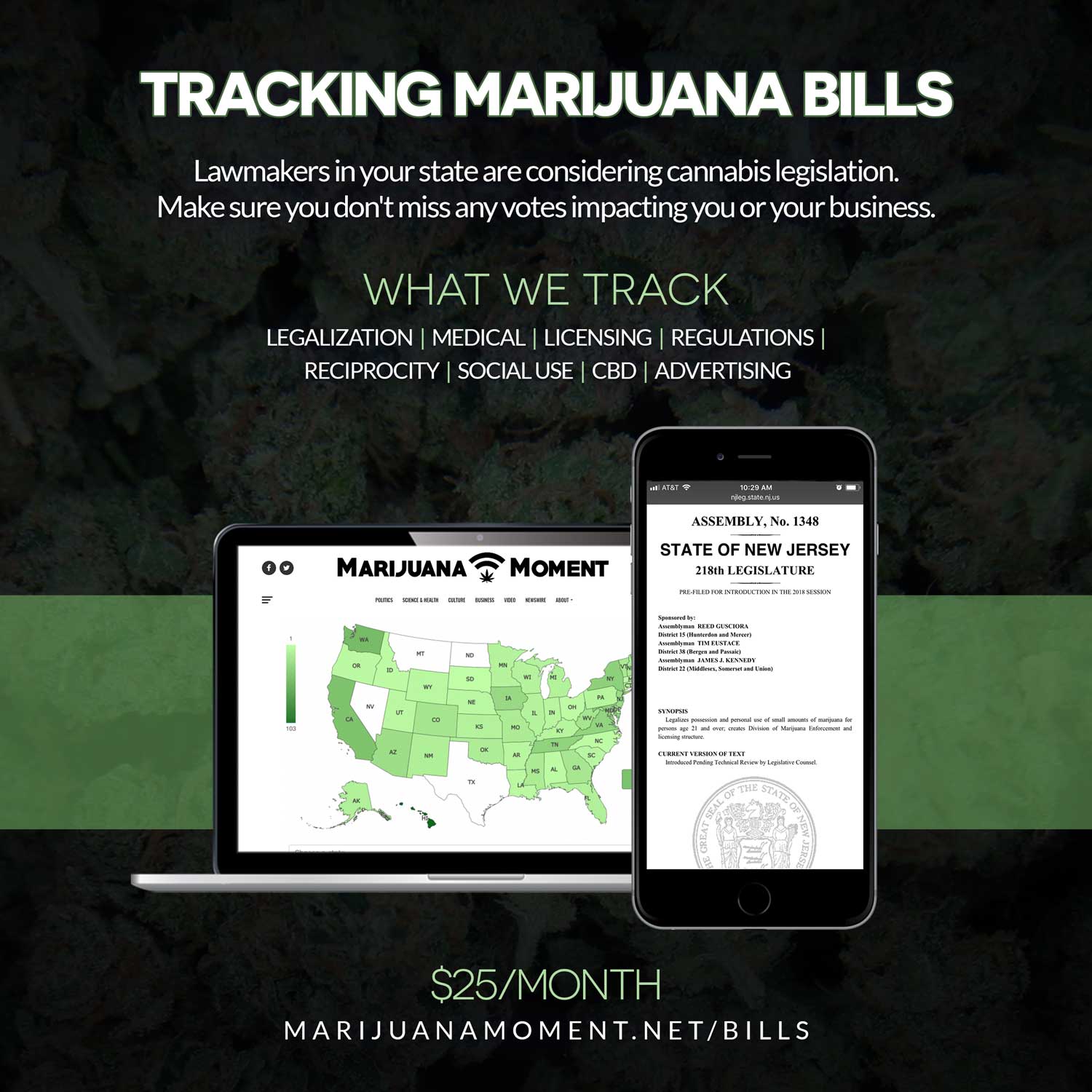
Learn more about our marijuana bill tracker and become a supporter on Patreon to get access.
—
The governor’s measure, if enacted into law, will also help to ensure veterans’ continued access to cannabis if voters approve an initiative on Tuesday’s ballot to roll back recreational marijuana legalization.
The measure would repeal laws allowing the regulated commercial sales of recreational cannabis and home cultivation while maintaining legal possession and continuing the medical marijuana system.
Despite the anti-marijuana measure qualifying for the ballot, recent polls show that a majority of Massachusetts voters oppose Question 8.
In April, Healey signed legislation to double the legal marijuana possession limit for adults and revise the regulatory framework for the state’s adult-use cannabis market.
In 2024, the governor approved a military veterans-focused bill that includes provisions to create a psychedelics working group to study and make recommendations about the potential therapeutic benefits of substances like psilocybin and MDMA.