Politics
New Hampshire GOP Governor Bashes Democratic Challenger’s Marijuana Legalization Support, Calling Her An ‘Opioid Lobbyist’

New Hampshire’s Republican governor and her Democratic opponent clashed over the issue of marijuana legalization at a debate, with the incumbent citing the challenger’s previous work as a lobbyist for a pharmaceutical company that manufactured opioids.
Gov. Kelly Ayotte (R) has made her opposition to legalizing marijuana clear in several recent interviews and speeches. Cinde Warmington, the Democrat running against her in Tuesday’s election, supports cannabis legalization.
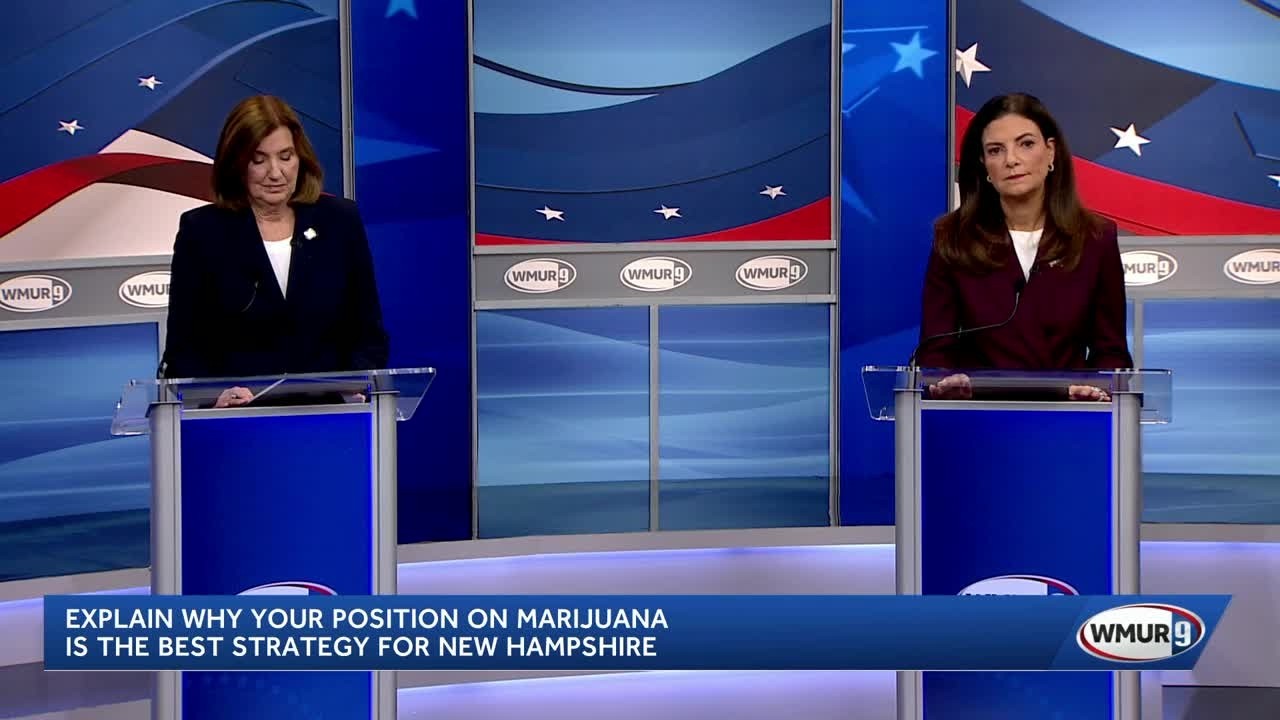
The two were asked about the issue at a debate on Thursday.
Warmington said New Hampshire is the “Live Free Or Die” state, arguing that its residents “have made it perfectly clear that they want access to this product, which they can drive over state lines and purchase—and which they are doing, and they are paying enormous amounts of taxes in those states to access this product.”
“This is a product that they should be able to purchase here in our state, properly regulated and taxed,” the Democrat who previously served on the New Hampshire Executive Council said. “Other states are doing this, and they’re doing it safely. And we can do it here in our state as well.”
Ayotte replied that she is “not surprised that an opioid lobbyist would want to legalize recreation marijuana in this state, but I care deeply about our children.”
Over two decades ago, Warmington worked on behalf of Purdue Pharma to oppose New Hampshire state legislation to place restrictions on the prescribing of OxyContin.
“If you look at the research that has been done, the clinical data, unfortunately, the marijuana, the recreation marijuana, the commercial marijuana, the big marijuana—if you think about your parents or the marijuana when you were young, it’s so much higher in strength, and it’s causing addiction, especially in our young people and our young adults,” the governor said at the debate.
“I’m concerned about the mental health of our young people in this state,” she said. “In fact, the scientific research that has been done on this is showing that is increasing mental illness, including schizophrenia and psychosis.”
“So when we think about our quality of life here in New Hampshire, I do not think it’s the right direction,” the governor argued. “Go to a state where they’ve legalized marijuana. You walk down the street, and that’s all you smell is marijuana. It’s not good for our quality of life. It’s not good for our children or their mental health.”
Warmington then said Ayotte is “just making this up.”
“We’re not talking about selling cannabis products in our state to children. We’re talking about about adult use, and adults in our state—in the Live Free Or Die State—have made this decision,” she said.
“Even the last governor had to acknowledge that the people of New Hampshire have made this decision,” Warmington said, referring to former Gov. Chris Sununu (R) who after opposing marijuana legalization for years proposed legislation to replace prohibition with state-controlled dispensaries that did not ultimately pass.
“They want this product. They’re traveling across state lines in order to access it. We should be offering this product in our state,” the Democratic gubernatorial candidate said. “It should be properly taxed and regulated. There’s also a safety issue with people buying a product on the street as well.”
The governor chimed in again, saying that “when you legalize a product, you send a very, very different message to our young people—and that’s a huge problem if we want to impact mental health in this state, and we want to protect our quality of life.”
New Hampshire Democratic Party Chair Ray Buckley told Marijuana Moment after the debate that “while every other New England state has moved forward with marijuana legalization, Kelly Ayotte is still stuck giving Granite Staters a bizarre lecture about peer pressure.”
The debate “made it clear that Ayotte would rather invent a boogeyman she calls ‘the BIG marijuana’ than explain why New Hampshire continues to leave millions in potential revenue on the table,” he said.
Ayotte separately said at a recent forum that the issue of cannabis represents a “big difference'” between her and Warmington.
“I don’t think that legalizing cannabis improves our quality of life,” she said. “I know often the argument is made, ‘well, there’s all of our neighbors are that way. Why shouldn’t we take this revenue?,'” she said. “I never say, ‘Oh, our neighbors are doing it, so we should do it.’ I think about my own children. I tell them, ‘Your friends are doing it, you’re doing it.'”
“That’s not really a good standard,” Ayotte said. “We need to make sure we’re looking at our own quality of life and what is the right thing to do for New Hampshire. And when you legalize something, it does send a different message to our young people. So I worry about that and our quality of life. So this is just something we differ on, and I do not think that that revenue is one that comes without a deep cost for New Hampshire.”
The governor also discussed her opposition to legalizing marijuana at an earlier debate with Warmington last month, arguing that cannabis revenue “comes at a huge cost.”
“It comes at the cost of the mental health of our young people. It comes at the cost of our quality of life,” she said. “I don’t think following because our neighbors do something, we should do it. We have the same discussion with our kids, right? If if Johnny jumps off the bridge, are you going to jump off the bridge with it?”
Warmington, on the other hand, said during the debate that “I support the the sale and legalization of cannabis as an additional revenue source in our state.”
“I think it is really odd that we are sending our citizenry over state lines and paying millions and millions—tens of millions—of dollars to our neighboring state in taxes when that revenue should be here in our state,” she said.
Warmington has previously discussed her support for legalizing marijuana, including at a town hall event last month when she said that “there is no reason why the citizens of New Hampshire should be driving across state borders to pay taxes to Massachusetts, Vermont and Maine to purchase a product that they obviously have stated that they want to have access to in our state.”
Ayotte, for her part, recently vetoed legislation to allow businesses in the state’s existing medical cannabis program to cultivate in greenhouses.
Her veto was overridden by lawmakers, however, and now the medical marijuana cultivation measure has become law despite her objections.
In June, Warmington criticized Ayotte’s veto of the medical marijuana proposal.
“Come on, Kelly. Shouldn’t we be trying to make health care more affordable for Granite Staters, not less?” said in a video posted to social media.
“This bill would have made medical cannabis more affordable and more accessible to Granite Staters who really need it, and she vetoed it,” Warmington said. “But honestly, this is what we’ve come to expect from Kelly Ayotte. Look what she did to the Medicaid premiums. She increased them by up to $270 a month on the most vulnerable Granite Staters. She increased prescription co-pays when other costs are already going through the roof.”
“New Hampshire deserves a governor who will fight to make sure we have lower health care costs and that health care is more accessible,” the Democratic candidate, who previously served as a member of the New Hampshire Executive Council, said. “That’s the bottom line.”
In a veto statement on the medical marijuana greenhouse bill, the governor simply said, “I do not support expanding the cultivation of marijuana in our state.”
—
Marijuana Moment is tracking hundreds of cannabis, psychedelics and drug policy bills in state legislatures and Congress this year. Patreon supporters pledging at least $25/month get access to our interactive maps, charts and hearing calendar so they don’t miss any developments.
Learn more about our marijuana bill tracker and become a supporter on Patreon to get access.
—
Ayotte has separately threatened to veto any marijuana legalization bill that reaches her desk.
The governor said last year that her position on the reform would not change even as the federal government moved forward with rescheduling the plant.
Photo courtesy of Philip Steffan.