Politics
Legalizing Marijuana In Pennsylvania Will Be ‘A Lot Easier’ Now That Trump Federally Rescheduled It, Senator Says

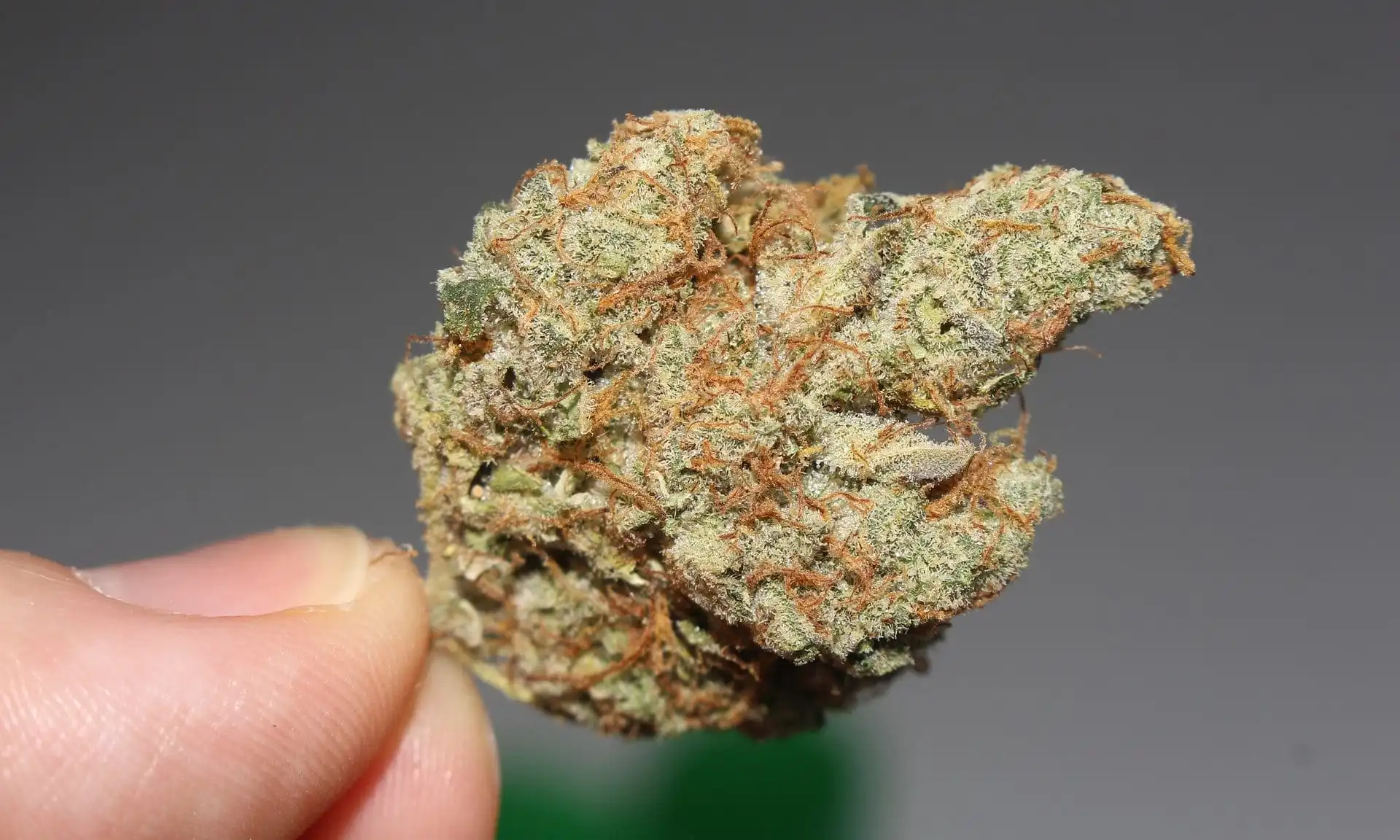
The Trump administration’s move to federally reschedule marijuana is “politically good” for efforts to legalize cannabis at the state level in Pennsylvania, a senator says, because it could “create a permission structure for Republicans” to embrace the reform.
“I think that Democrats are largely very supportive of legalization. I think that the reticence, where it exists, is largely within Republican, more conservative circles,” Sen. Sharif Street (D) said in an interview published by City & State Pennsylvania on Friday. “The Trump administration—a Republican administration—signaling that it believes it either is or should be rescheduled, depending on how you interpret what he did, certainly creates political cover for Republicans who may want to move forward.”
“They can say, ‘Look, even the Trump administration is supportive of rescheduling,'” the Democratic senator said, of his colleagues across the aisle.” So if you are a Pennsylvania state senator in a very red district…it makes it a lot easier for them to advance something that’s commonsense legislation. From that perspective, it’s very helpful politically, because he is signaling to the portion of the population that has been the most resistant that this is a good idea and important.”
Under an order issued by Deputy Attorney General Todd Blanche in April, marijuana products regulated under state medical cannabis programs such as the one that exists in Illinois immediately moved from Schedule I of the Controlled Substances Act (CSA) to Schedule III. An administrative hearing later this month will consider this issue of broader marijuana rescheduling.
In addition to creating “more access and fewer restrictions” for state-licensed businesses, as well as allowing them to take tax deductions that they are currently barred from under federal law, Street said the Department of Justice’s move will be “politically good” and “could create a permission structure for Republicans who already believe this should be legalized to move forward with the legalization of recreational adult use.”
But the state lawmaker also cautioned that the way federal rescheduling is being carried out has “created some irregularities” and falls short of broader reforms that are needed—including full descheduling of cannabis from the CSA.
“Is there a statement from the Justice Department committing to do nonprosecutions with respect to certain kinds of banking transactions that existed in previous administrations with respect to safe harbor? Is there a provision in it from the Justice Department that directs the FBI and interstate law enforcement not to enforce if there is transportation across state lines? If those directives exist, we’d have to look at how the banking and financial industry reacts to whatever language they put out, because that would have real-world implications for whether these transactions can truly take place across state lines.”
“Politically, I think it’s a good thing. I think operationally, it’s very much yet to be seen,” Street said. “This administration is unpredictable, and it’s unclear what this means in terms of their enforcement. It’s unclear how the banking community, for instance, will trust this as it relates to safe harbor provisions.”
As the state level, the lawmaker said he would prefer for the Pennsylvania legislature to move forward with “comprehensive” marijuana legalization as “the right way to go,” but he also backs more incremental reforms that may have more traction with GOP colleagues such as proposals to create a cannabis and hemp regulatory body, to expunge and seal past conviction records and to protect consumers from being charged with driving under the influence when they are not actually impaired.
“There are a number of things you could do as standalones,” he said. “I think it’s best that we get it done in a comprehensive bill.”
Meanwhile, Gov. Josh Shapiro (D) has repeatedly called on lawmakers to send him a marijuana legalization bill and for the last several years has included the reform in his budget requests to the legislature.
The Democratic-controlled House of Representatives passed a bill last year to end prohibition, but the Republican-controlled Senate has not followed suit.
Republican gubernatorial nominee Stacy Garrity, who is running against Shapiro, recently pledged to veto a marijuana legalization bill if lawmakers ever sent one to her desk—though she added that she doesn’t think the reform stands a chance of making it that far in the state.
“I don’t support legalizing recreational marijuana,” she said. “Recreational marijuana will not end up in the budget. They’re never going to pass it…not as long as Senate Republicans are in control of the Senate.”
Her running mate for lieutenant governor, Jason Richey, claimed that legalizing marijuana would be “catastrophic” for the state, arguing it would increase the size of the illegal market, undermine job creation and harm public health.
A spokesperson in the governor’s office said the Trump administration’s federal marijuana rescheduling move is an “important step” that “adds support” to his push to legalize cannabis in the state.
The governor also used this year’s unofficial cannabis holiday 4/20 as an opportunity to press lawmakers once again to send him a bill to legalize marijuana.
“Pennsylvanians who want to buy recreational marijuana are already driving across the border to one of our neighboring states who’ve legalized it,” Shapiro said in a social media post that day. “That’s hundreds of millions in revenue going out of state instead of being spent here in Pennsylvania.”
In April, the Pennsylvania House of Representatives passed budget legislation proposed by Shapiro that relies on revenue that would be generated from recreational marijuana sales, which has yet to be legalized in the state.
The governor earlier this year, as he has in past years, included cannabis legalization and the resulting expected revenue in his budget request. The $53.2 billion budget legislation, which doesn’t itself include provisions to actually legalize marijuana even as it contemplates allocating money that would result from it, now heads to the Senate for consideration.
The House of Representatives last year passed a bill to legalize marijuana and put sales in state-owned dispensaries, but the Republican Senate majority has criticized that plan while also not advancing a cannabis legalization model of its own.
Separately this session, lawmakers have advanced a bill to allow terminally ill patients to use medical cannabis in hospitals and other healthcare facilities
The legislative developments come as a recent poll shows that seven out of ten Pennsylvania likely voters support legalizing adult-use marijuana—including majority backing for the reform across party lines.
When asked whether they “support or oppose the regulation and taxation of legal cannabis for use by adults 21 and older in Pennsylvania,” 69 percent of respondents said yes. Support was strongest from Democrats, at 72 percent, but also includes 67 percent of Republicans and 64 percent of independents.
Meanwhile, Shapiro is continuing to pressure on lawmakers to send him a bill to legalize marijuana in the state, saying that doing so would generate new revenue that could be invested in key programs.
“While some in Harrisburg claim we can’t afford to make bigger investments in our kids, public safety, and our economy, know this: If we legalized and regulated adult-use cannabis, we’d bring in $1.3 BILLION in revenue for our Commonwealth over the first five years,” the governor said in another recent social media post.
“Those are dollars that can be invested back into our people and our communities,” he said. “Stop with the excuses. Let’s get this done.”
The state’s Independent Fiscal Office (IFO) reported in February that legalizing cannabis in Pennsylvania would generate nearly half a billion dollars in annual revenue by 2028, an estimate that is a significantly larger cash windfall compared to projections from Shapiro’s own office.
With a proposed 20 percent wholesale cannabis excise tax, 6 percent state sales tax for retail and licensing fees, IFO said the governor’s legalization plan would generate $140 million in tax revenue in the first year of implementation from 2027-2028 and increase to $432 million by 2030-2031.
That’s a much higher revenue estimate than what the governor’s office put forward in the latest executive budget. According to his office’s analysis, legalization would generate about $36.9 million in tax dollars in its first year from a 20 percent wholesale tax on marijuana—rising gradually to $223.8 million by 2030-2031.
In February, a coalition of drug policy and civil liberties organizations urged Shapiro to play a leadership role in convening legislative leaders to get the job done on cannabis legalization this session.
The Senate Law and Justice Committee last month amended and approved a bill to create a Cannabis Control Board (CCB) to oversee the state’s medical marijuana program and intoxicating hemp products and that could eventually regulate adult-use cannabis if it is legalized in the state.