Science & Health
Hemp-Based Plastic Shows Promise As Environmentally Friendly Alternative To Traditional Packaging Materials, Study Finds

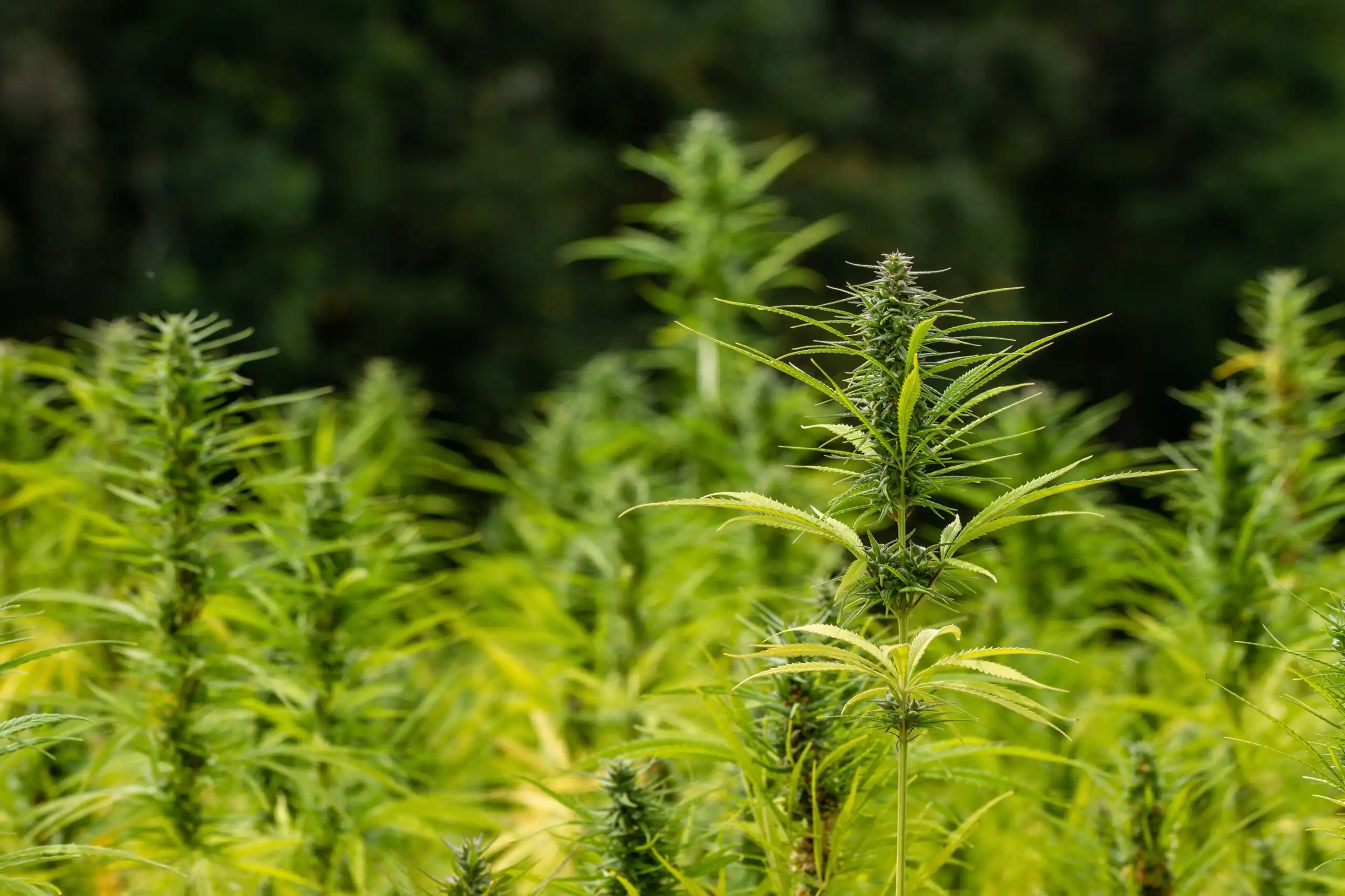
CBD is widely used for personal wellness. In the not-so-distant future, it could be used for environmental wellness.
By Phillip Smith, The American Hemp Monitor
Many ubiquitous plastics we use for everything from water bottles to food packaging to substrates for flexible electronics are made from petroleum-based materials such as polyethylene terephthalate (PET), which not only consume large quantities of fossil fuels but also break down into tiny particles called “microplastics.” These particles leach chemicals, including PET, into our air, water and food, and are linked to inflammation and cell damage.
Hemp, or more precisely, the hemp-derived cannabinoid CBD, may offer a viable alternative. In a study recently published in the journal Chem Circularity, a team of scientists and engineers demonstrated a hemp-derived thermoplastic that can stretch up to 16 times its original length. The material has a high “glass transition temperature,” a quality that allows plastics to stay dry and durable when they encounter boiling hot water.
Scientists have been looking for green alternatives to PET, but most plant-based polymers cannot match hemp’s glass transition temperature and cost more to produce. Additionally, producing bio-based plastics typically requires high-temperature catalysts, making large-scale production impractical due to challenges with catalyst removal and final product purification.
“Very few, if any, plastics made from natural resources have this quality,” said Gregory Sotzing, study author and UConn Department of Chemistry professor.
“Current-day polycarbonate is made from bisphenol-A, a known endocrine disruptor. The hope here is that cannabidiol (CBD) can take the place of bisphenol-A found in today’s processed plastics,” he added.
“Our work has established CBD-based polycarbonates as sustainable replacements for widely used thermoplastics such as PET,” said co-author Mukerrem Cakmak of Purdue University. “We have developed a rigorous processing science framework that links molecular architecture to melt processability, orientation development, and stretchability without compromising manufacturability.”
To compete with PETs, substitutes require medium- to high-temperature stability and melt processability, or the ability to easily melt, deform and shape a material, which the team has achieved in a hemp-based polycarbonate for the first time. They did so by testing processing parameters that yield the right structure and properties for widespread use, and by establishing guidelines for the material’s industrial processing.
“This polycarbonate has, as a smooth film, a very high contact angle with water. We were not expecting our polyCBD-carbonate to have a higher contact angle than most polyolefins,” said Sotzing, noting that materials with this property can be used as nanoparticles for drug delivery and for catheter coatings.
And they can be recycled.
“We can chemically recycle it with a base where the polyesters can be depolymerized using a base to break it down to the starting materials. We don’t need enzymes,” said Sotzing. “What happens is it will hydrolyze or break apart the polymer chain, and the CBD can be recovered.”
There is not currently enough CBD being produced globally to fully replace PET for plastics, but that means only that more hemp would need to be grown to supply demand once it emerges. That would be just one more application for this tremendously versatile plant that already supplies oils, fibers, seeds and cannabinoids, intoxicating and otherwise.
“We came together on this project to try to replace conventional petroleum-based plastics with something found in nature. We are finding new ways to use the entire plant. That’s what was done with oil, in that they found a way to use every little drop, even down to the sludge that becomes asphalt,” said Sotzing. “Now, we are doing that with hemp, too. There are plenty of things inside that plant that are useful.”
This story was first published by The American Hemp Monitor.