Politics
Pennsylvania GOP Governor Candidate Promises To Veto Marijuana Legalization If Lawmakers Passed It

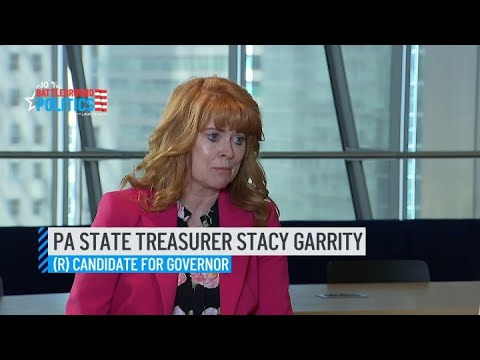
The Republican candidate running for Pennsylvania governor doesn’t think lawmakers will ever approve a bill to legalize marijuana in the state—but she says that if they did send her legislation to end cannabis prohibition, she would veto it.
“I don’t support legalizing recreational marijuana,” Stacy Garrity, currently the state treasurer, said in an interview with NBC10 Philadelphia.
“Recreational marijuana will not end up in the budget,” she said. “They’re never going to pass it…not as long as Senate Republicans are in control of the Senate.”
When asked by the NBC10 reported if she would veto such a bill, Garrity said, “yes.”
The Pennsylvania Democratic Party argued that Garrity’s cannabis comments provide another reason to defeat Republicans at the ballot box in November.
“Stacy Garrity opposes legalizing recreational marijuana in Pennsylvania—and made it clear she’s counting on Republicans controlling Harrisburg to keep blocking it,” the party said in a social media post. “We need to beat her—and elect Democrats up and down the ballot to finally get this done.”
The GOP candidate’s opposition to legalizing cannabis is in stark contrast to the stance of incumbent Gov. Josh Shapiro (D), who has repeatedly called on lawmakers to send him a marijuana legalization bill and for the last several years has included the reform in his budget requests to the legislature.
The Democratic-controlled House of Representatives passed a bill last year to end prohibition, but the Republican-controlled Senate has not followed suit.
Garrity, who is the sole Republican candidate running to challenge Shapiro this November, has until now largely dodged questions about whether she supports legalizing cannabis—saying last year, for example that she has no “policy position” on the issue while arguing that the Shapiro’s proposal for reform “way, way overstated” potential revenue.
But in 2020, when Garrity was running for treasurer, she filled out a Pennsylvania Family Council survey that asked about a number of policy positions, including cannabis legalization.
“Should marijuana be legalized for recreational use?” it asked.
According to an archived version of her responses, Garrity’s response to the cannabis question was “N.”
Campaign staff for the Republican candidate did not respond to a request for comment from Marijuana Moment about whether the Trump administration’s move to federally reschedule the drug last month makes her more likely to back reform at the state level.
Shapiro’s campaign, however, told Marijuana Moment that their candidate “has been clear that as nearly every one of our neighboring states has already legalized marijuana, we cannot afford to keep losing out on this revenue—and we need comprehensive cannabis reform to make Pennsylvania more competitive and more just.”
“While Stacy Garrity wants Pennsylvania to continue to lose out on critical revenue that could be invested into our schools, public safety and small businesses, Governor Shapiro is continuing to fight to get this done,” Shapiro for Pennsylvania Spokesperson Sam Reposa said.
A spokesperson in the governor’s office separately said last month that the Trump administration’s federal marijuana rescheduling move is an “important step” that “adds support” to his push to legalize cannabis in the state.
The governor also used last month’s unofficial cannabis holiday 4/20 as an opportunity to press lawmakers once again to send him a bill to legalize marijuana.
“Pennsylvanians who want to buy recreational marijuana are already driving across the border to one of our neighboring states who’ve legalized it,” Shapiro said in a social media post that day. “That’s hundreds of millions in revenue going out of state instead of being spent here in Pennsylvania.”
Last month, the Pennsylvania House of Representatives passed budget legislation proposed by Shapiro that relies on revenue that would be generated from recreational marijuana sales, which has yet to be legalized in the state.
The governor earlier this year, as he has in past years, included cannabis legalization and the resulting expected revenue in his budget request. The $53.2 billion budget legislation, which doesn’t itself include provisions to actually legalize marijuana even as it contemplates allocating money that would result from it, now heads to the Senate for consideration.
The House of Representatives last year passed a bill to legalize marijuana and put sales in state-owned dispensaries, but the Republican Senate majority has criticized that plan while also not advancing a cannabis legalization model of its own.
Separately last month, the House Health Committee approved a bill to allow terminally ill patients to use medical cannabis in hospitals and other healthcare facilities
The legislative developments come as a recent poll shows that seven out of ten Pennsylvania likely voters support legalizing adult-use marijuana—including majority backing for the reform across party lines.
When asked whether they “support or oppose the regulation and taxation of legal cannabis for use by adults 21 and older in Pennsylvania,” 69 percent of respondents said yes. Support was strongest from Democrats, at 72 percent, but also includes 67 percent of Republicans and 64 percent of independents.
Meanwhile, Shapiro is continuing to pressure on lawmakers to send him a bill to legalize marijuana in the state, saying that doing so would generate new revenue that could be invested in key programs.
“While some in Harrisburg claim we can’t afford to make bigger investments in our kids, public safety, and our economy, know this: If we legalized and regulated adult-use cannabis, we’d bring in $1.3 BILLION in revenue for our Commonwealth over the first five years,” the governor said in another recent social media post.
“Those are dollars that can be invested back into our people and our communities,” he said. “Stop with the excuses. Let’s get this done.”
The state’s Independent Fiscal Office (IFO) reported in February that legalizing cannabis in Pennsylvania would generate nearly half a billion dollars in annual revenue by 2028, an estimate that is a significantly larger cash windfall compared to projections from Shapiro’s own office.
With a proposed 20 percent wholesale cannabis excise tax, 6 percent state sales tax for retail and licensing fees, IFO said the governor’s legalization plan would generate $140 million in tax revenue in the first year of implementation from 2027-2028 and increase to $432 million by 2030-2031.
That’s a much higher revenue estimate than what the governor’s office put forward in the latest executive budget. According to his office’s analysis, legalization would generate about $36.9 million in tax dollars in its first year from a 20 percent wholesale tax on marijuana—rising gradually to $223.8 million by 2030-2031.
In February, a coalition of drug policy and civil liberties organizations urged Shapiro to play a leadership role in convening legislative leaders to get the job done on cannabis legalization this session.
In March, the Senate Law and Justice Committee amended and approved a bill to create a Cannabis Control Board (CCB) to oversee the state’s medical marijuana program and intoxicating hemp products and that could eventually regulate adult-use cannabis if it is legalized in the state.
Photo courtesy of Philip Steffan.