Politics
Pennsylvania House Passes Governor’s Budget Plan With Expected Revenue From Marijuana, Which Hasn’t Yet Been Legalized

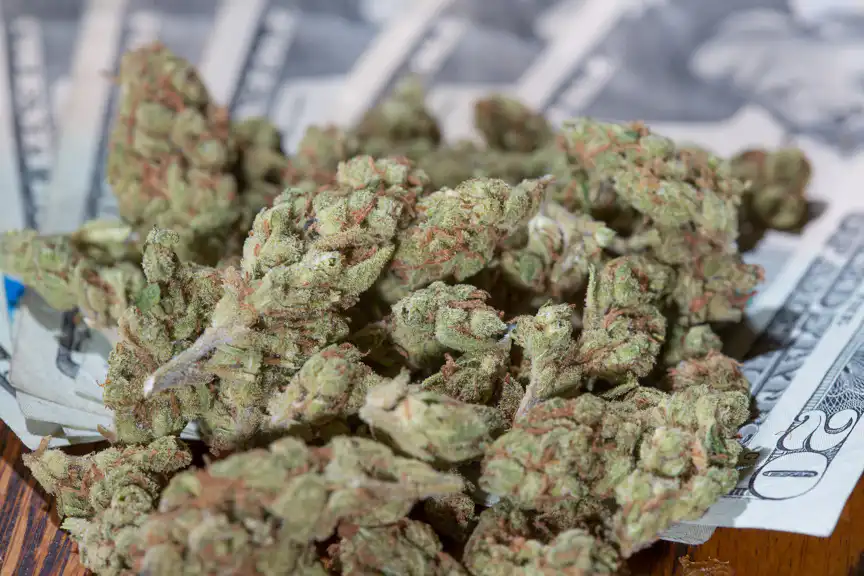
Pennsylvania’s House of Representatives has passed budget legislation proposed by the governor that relies on revenue that would be generated from recreational marijuana sales, which have not yet been legalized in the state.
The Democratic-controlled House voted 107-94 on Tuesday to approve the spending plan from Gov. Josh Shapiro (D) who earlier this year included cannabis legalization and the resulting expected revenue in his budget request. The vote was largely along party lines, though five GOP lawmakers joined Democrats in supporting the bill.
The $53.2 billion budget legislation, which doesn’t itself include provisions to actually legalize marijuana even as it contemplates allocating money that would result from it, now heads to the Senate for consideration.
“This legislation reflects the proposal put forward by Governor Shapiro in February and builds on the work we have diligently done,” House Majority Appropriations Chairman Jordan Harris (D) said. “This budget continues our investment in public education, support for law enforcement, and strengthening Pennsylvania’s economy, all while returning money to working families and not raising taxes.”
The Senate’s Republican majority leadership has continually criticized cannabis legalization, including a bill that the House passed last year that would put marijuana sales in state-owned stores.
Senate President Pro Tempore Kim Ward (R-), Majority Leader Joe Pittman (R-) and Appropriations Committee Chair Scott Martin (R) said in a joint statement on Tuesday that they “continue to have profound concerns about the level of spending in the budget proposed by Governor Shapiro and passed by the House today.”
“Moving a budget plan forward is an important step in the process, but much work remains to reach a final agreement which respects taxpayers both now and in the future,” they said. “We will continue to fight for a more fiscally responsible spending plan that better positions our Commonwealth to grow and prosper, without placing unreasonable financial burdens on Pennsylvania families and taxpayers.”
Shapiro, for his part, said the budget legislation “builds on the progress we’ve made and continues Pennsylvania’s rise—putting money back in folks’ pockets, investing in schools, expanding our workforce, keeping our communities safe, and growing our economy.”
“The ball is now in the State Senate’s court. It’s time to get to work to deliver for Pennsylvanians,” he said.
Also on Tuesday, the House Health Committee approved a bill to allow terminally ill patients to use medical cannabis in hospitals and other healthcare facilities
The legislative developments come as a new poll shows that seven out of ten Pennsylvania likely voters support legalizing adult-use marijuana—including majority backing for the reform across party lines.
When asked whether they “support or oppose the regulation and taxation of legal cannabis for use by adults 21 and older in Pennsylvania,” 69 percent of respondents said yes. Support was strongest from Democrats, at 72 percent, but also includes 67 percent of Republicans and 64 percent of independents.
Meanwhile, Pennsylvania’s governor is increasing pressure on lawmakers to send him a bill to legalize marijuana in the state, saying that doing so would generate new revenue that could be invested in key programs.
“While some in Harrisburg claim we can’t afford to make bigger investments in our kids, public safety, and our economy, know this: If we legalized and regulated adult-use cannabis, we’d bring in $1.3 BILLION in revenue for our Commonwealth over the first five years,” Gov. Josh Shapiro (D) said in a recent social media post.
“Those are dollars that can be invested back into our people and our communities,” he said. “Stop with the excuses. Let’s get this done.”
The state’s Independent Fiscal Office (IFO) reported in February that legalizing cannabis in Pennsylvania would generate nearly half a billion dollars in annual revenue by 2028, an estimate that is a significantly larger cash windfall compared to projections from Shapiro’s own office.
With a proposed 20 percent wholesale cannabis excise tax, 6 percent state sales tax for retail and licensing fees, IFO said the governor’s legalization plan would generate $140 million in tax revenue in the first year of implementation from 2027-2028 and increase to $432 million by 2030-2031.
That’s a much higher revenue estimate than what the governor’s office put forward in the latest executive budget. According to his office’s analysis, legalization would generate about $36.9 million in tax dollars in its first year from a 20 percent wholesale tax on marijuana—rising gradually to $223.8 million by 2030-2031.
In February, a coalition of drug policy and civil liberties organizations urged Shapiro to play a leadership role in convening legislative leaders to get the job done on cannabis legalization this session.
Last month, the Senate Law and Justice Committee amended and approved a bill to create a Cannabis Control Board (CCB) to oversee the state’s medical marijuana program and intoxicating hemp products and that could eventually regulate adult-use cannabis if it is legalized in the state.