Politics
If DEA Wants Medical Marijuana Operators To Get Serious Under Rescheduling, It Should Go First (Op-Ed)

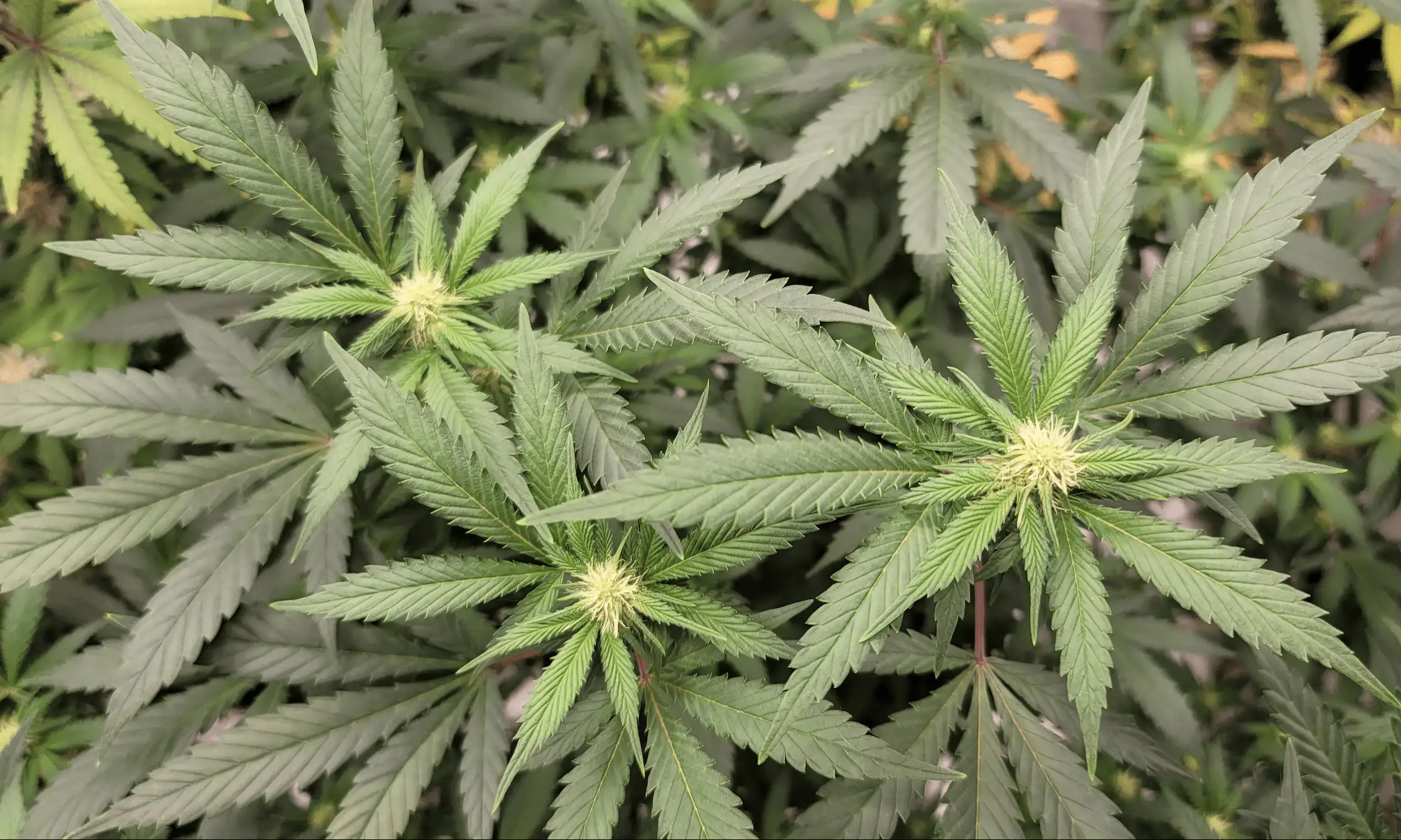
“An uncertain, inconsistent, ad hoc enforcement posture isn’t meaningfully better than the world operators lived in before rescheduling; it’s just a different flavor of unpredictable.”
By Whitt Steineker, Bradley Arant Boult Cummings LLP
I’m old enough to remember back to April of this year when many marijuana advocates celebrated the rescheduling of medical cannabis contained in Food and Drug Administration (FDA)-approved products or subject to a state medical cannabis license as though it marked a new period of marijuana operations without rules or consequences.
Six months later, many of those same people are looking at increased Drug Enforcement Administration (DEA) oversight of marijuana operators with the bewilderment of a dog who finally caught the car. It was as if the federal government had agreed to get out of the way, but DEA never agreed to that.
To be fair, rescheduling did deliver something real: The April final rule established an expedited registration process for entities holding state medical marijuana licenses, enabling them to manufacture, distribute and dispense cannabis for medical purposes under federal law.
That’s a pathway that didn’t exist before. The problem isn’t that DEA built a pathway; it’s what’s happening once operators began to walk down it.
The truth is that medical marijuana has been treated by the federal government as though it is special for more than a decade, up to and including the manner in which medical cannabis was rescheduled. Now, however, marijuana operators are wondering why they aren’t feeling quite so special anymore—and DEA is doing a poor job of telling everyone what the new deal is.
So What?
There’s an uncomfortable legal truth I don’t think enough rescheduling advocates have fully grappled with: DEA has a valid legal argument for holding medical cannabis to the same inspection standards as other Schedule III substances.
Nothing in the Controlled Substances Act says Schedule III marijuana gets gentler treatment than Schedule III ketamine or testosterone.
Equal treatment with ketamine is not what most people pushing for rescheduling actually wanted. They wanted an industry that could operate like a legitimate business, not one swapped from a federal felony under Schedule I to a federal felony-adjacent compliance regime under Schedule III.
After all, marijuana is special, right?
Evidence Of Ad Hoc DEA Enforcement
DEA is ramping up the regulation of recently rescheduled medical marijuana.
Start with registration. By way of example, DEA is requiring operators to enter into a memoranda of understanding (MOA) as a prerequisite before the agency will consider issuing a registration, and these MOA expressly say the agreement itself is not a registration. These are examples of what DEA is putting in front of applicants, and the MOAs I have reviewed differ from state to state.
The agreements cover the day-to-day business. They require written notice of any marijuana theft or loss within 24 hours of discovery, submission of DEA Form 106, retention of specified inventories and records for at least two years and a federal warning on dispensed products prohibiting transfer to anyone other than the patient.
They also require cooperation with DEA requests to inspect and copy those records without an administrative inspection warrant and to make employees available for interviews. Material violations can lead to proceedings to suspend or revoke registration or seek civil penalties.
In other words, this is not a welcome packet.
Then there is who the dispensary may serve. By way of contrast, the MOA issued to Mississippi operators prohibits dispensing to nonresident cardholders and limits all dispensing, including topical products, to qualifying cardholders, even where state law would permit otherwise.
In Arkansas, DEA’s MOA prohibits dispensing to visiting qualifying patients, including those presenting a visiting patient card issued by the Arkansas Department of Health. For an operator, a state-issued card is not necessarily the end of the eligibility analysis.
My concern isn’t that DEA is enforcing Schedule III rules against marijuana operators. It’s that DEA appears to be doing so aggressively, inconsistently and without publishing the standards operators are supposed to meet.
If you’re trying to figure out exactly what DEA expects of you, I don’t think you’ll find an honest answer, because in many instances the agency hasn’t written one down.
Start with how DEA runs its inspections. Since the agency launched its registration form for medical cannabis dispensaries in April, DEA’s own regional divisions have varied meaningfully in post-application facility inspections: The Rocky Mountain Division’s 26-question form covers suppliers, product types and disposal of defective product, while the New Orleans Division asks about license transfers, state disciplinary history and security plans absent from the Rocky Mountain form entirely.
That’s not a rounding error for multi-state operators. The checklist you build for one state’s registration may not be the checklist DEA brings to your door in another.
Now layer on how DEA treats applicants who get it wrong.
In a decision and order released last month, DEA denied a bulk manufacturer registration to MedPharm Research, LLC, a Denver-based applicant, after alleging that MedPharm’s sibling and parent entities had manufactured marijuana for roughly a decade without registration, including diversion into the recreational market.
The applicant never answered the show cause order, so DEA found it in default, deemed the allegations admitted, and concluded that history weighed against registration. Notably, the agency refused to take at face value the corporate organizational chart, treating affiliated entities owned and controlled by the same parent and CEO as a single unit of analysis rather than crediting the applicant’s own clean slate on paper.
That should concern anyone assuming a separate LLC buys a separate compliance history.
DEA regulations direct the agency to place particular emphasis on an applicant’s prior compliance, with the burden on the applicant to show registration serves the public interest. That standard isn’t new. What’s new is who it’s pointed at: a whole category of state-licensed medical marijuana businesses that weren’t filing federal registration applications a year ago.
The oversight apparatus behind this may itself be shakier than DEA would admit. The agency’s own comprehensive rescheduling hearing was stayed after a Government Accountability Office report found that neither DEA nor FDA has written policies for how staff conduct scheduling evaluations.
That same absence of documented procedure shows up in how regional DEA offices decide what a dispensary must disclose. DEA is demanding rigorous compliance from operators while, by its own watchdog’s account, it hasn’t written the rulebook for its own staff.
What DEA Should Do About It
I’m asking DEA to do the following:
- Issue formal guidance on registering and regulating state-licensed medical marijuana operators the way it does for other regulated industry operators.
- Tell operators what a complete application requires and whether affiliated-entity history factors into a public-interest determination, instead of letting them learn it from one decision after the fact.
- Standardize what inspectors across regional divisions may ask, so a Colorado dispensary and a Mississippi dispensary aren’t operating under two different regimes. With written standards, operators know what objectives to meet, and if they disagree with where DEA draws the line, they know to push for a different policy through Congress or DEA’s own rulemaking, rather than guessing.
Rescheduling opened a door that used to be bolted shut, and DEA certainly has a central role in deciding what happens once operators walk through it.
What DEA hasn’t done is write that decision down. An uncertain, inconsistent, ad hoc enforcement posture isn’t meaningfully better than the world operators lived in before rescheduling; it’s just a different flavor of unpredictable.
If DEA wants credit for the progress rescheduling represents, it should finish the job and tell the industry, in writing, what the rules actually are.
Anything else keeps marijuana in that all too familiar and all too uncomfortable place of not knowing where it stands in the law. For rescheduling to mean something, we have to know what it means. That would be special.
Whitt Steineker, a partner and co-chair of the law firm Bradley Arant Boult Cummings LLP Cannabis Industry team, helps companies comply with complex state and federal cannabis laws in legalized jurisdictions, and in identifying risks and opportunities for growth. His extensive experience covers banking, regulatory compliance, licensing, intellectual property, taxation, corporate transactions and dispute resolution.
Photo courtesy of Mike Latimer.