Politics
Idaho Voters Reject Ballot Measure That Would Have Restricted Their Own Ability To Legalize Marijuana

Idaho voters have rejected a ballot measure that would have restricted their own ability to legalize marijuana in the future.
The proposed constitutional amendment was trailing by a 69-31 margin on Tuesday night, with an estimated 32 percent of ballots counted, according to The Associated Press.
If approved, the measure would have made it so that “only the legislature of the state of Idaho shall have power and authority to legalize the growing, producing, manufacturing, transporting, selling, delivering, dispensing, administering, prescribing, distributing, possessing, or using of marijuana, narcotics, or other psychoactive substances.”
That would have meant that voters could never collect signatures to place an initiative on the ballot to legalize marijuana or other drugs for medical or recreational purposes.
Adam J. Smith, executive director for the Marijuana Policy Project, said that “Idaho voters have scored a major victory for citizen-led advocacy and common sense by soundly rejecting HJR 4.”
“Idaho’s cannabis laws are among the most draconian in the nation, and Idahoans suffer one of the highest cannabis arrest rates in the U.S.,” he said. “Simple possession in the state can be punished by up to a year in jail, while a second offense can be elevated to a felony. Medical cannabis is overwhelmingly supported by Idaho voters, and this year, advocates made a nearly successful run at putting the medical issue onto the ballot.”
“HJR 4 was the legislature’s effort to silence their constituents on this or any other common-sense drug policy reform once and for all. We applaud Idaho’s voters for sending this powerful message to their elected representatives, and we hope this leads to an even stronger effort in the coming cycle to allow voters to override their legislature’s obstinacy.”
NORML Deputy Director Paul Armentano said the proposal, HJR 4, “wasn’t anti-marijuana; it was anti-democracy.”
“In a healthy democracy, those with competing visions on public policy vie for voters’ support,” he said. “But Idaho lawmakers know that they can no longer make a rational case for the state’s prohibitive and punitive marijuana policies—policies that are out of step not only with most other states, but also with most Idahoans.”
“Rather than evolve their views to align with those of their constituents, Idaho lawmakers cynically asked Idahoans to relinquish one of the most fundamental powers they have in a free society: their power to vote,” Armentano said. “Fortunately, voters rejected this authoritarian proposal.”
Sen. C. Scott Grow (R), who led the effort in the legislature to put the proposed constitutional amendment on the ballot, said the measure was a way to push back against the marijuana industry, which he claimed is trying to make money off of addiction.
“The reason that people push this—the marijuana lobby, whomever—is because there’s money to be made, particularly when people become addicted,” the lawmaker said. “They can make it look chic, make it look wonderful, say it solves all ills. But the end game is money to be made by people that are purveyors of drugs, including marijuana.”
Activists in Idaho tried to place a separate initiative on the ballot this year to legalize medical cannabis, but they failed to submit enough valid signatures to qualify the measure.
The Natural Medical Alliance of Idaho (NMAI), the campaign behind that unsuccessful effort, has pushed back against the secretary of state’s determination about its signature submissions—including his decision to refer allegations of possible illegal petitioning conduct to law enforcement.
Aside from the proposed constitutional amendment to restrict future voter initiatives on marijuana and other drugs, Idaho lawmakers have also pushed back against reform in other ways. Both the Senate and House of Representatives passed a resolution this session urging voters to “reject” the medical marijuana petition.
The measure, sponsored by the Senate State Affairs Committee, claimed that cannabis legalization in other states has led to a host of harms, including “increased cartel activity, development of black market marijuana production, human trafficking, and increased crime rates” as well as “increased rates of serious health issues,” environmental harms and “safety concerns on job sites.”
It argued that the marijuana initiative would not only increase costs to the state but that its list of approved medical conditions is “so broad that almost anyone could qualify.”
“The Idaho Medical Cannabis Act lacks safeguards to such an extent that it would effectively legalize widespread recreational use of marijuana,” the resolution claimed. “The legalization of marijuana would have devastating impacts on Idaho children and their families… The Legislature urges the citizens of Idaho to reject any effort to bring the Idaho Medical Cannabis Act to the ballot.”
A statement of purpose filed with the legislation said it “addresses the devastating impact that legalizing marijuana has had on other states” and “identifies the significant problems” with the ballot initiative.
Contrary to the claims made about marijuana reform in the legislative resolution, advocates often point to data showing that legalizing and regulating cannabis diminishes the size of the illegal market and has not led to increases in youth use.
Meanwhile, NMAI released an analysis showing that Idaho could see more than $100 million worth of medical marijuana sold on an annual basis and up to $28 million in new yearly revenue for state coffers if voters approved the legalization initiative.
The campaign in February also released the results of a statewide poll showing that 83 percent of likely voters back medical cannabis legalization, including 74 percent of Republicans, 95 percent of Democrats and 92 percent of independents.
Asked how they would vote if the current medical cannabis legalization does appear on the November ballot, 76 percent of respondents said “yes.” Of that cohort, 50 percent said they would “definitively” vote yes, and just 21 percent said they’d vote “no.”
After the medical cannabis initiative was unveiled last year, a separate campaign that launched in 2024, Kind Idaho, told supporters that it would be suspending its own signature gathering for a ballot initiative to legalize the personal possession and cultivation of marijuana by adults.
Kind Idaho previously introduced medical marijuana ballot measures intended to go before voters in both the 2022 and 2024 elections, but the efforts proved unsuccessful.
—
Marijuana Moment is tracking hundreds of cannabis, psychedelics and drug policy bills in state legislatures and Congress this year. Patreon supporters pledging at least $25/month get access to our interactive maps, charts and hearing calendar so they don’t miss any developments.
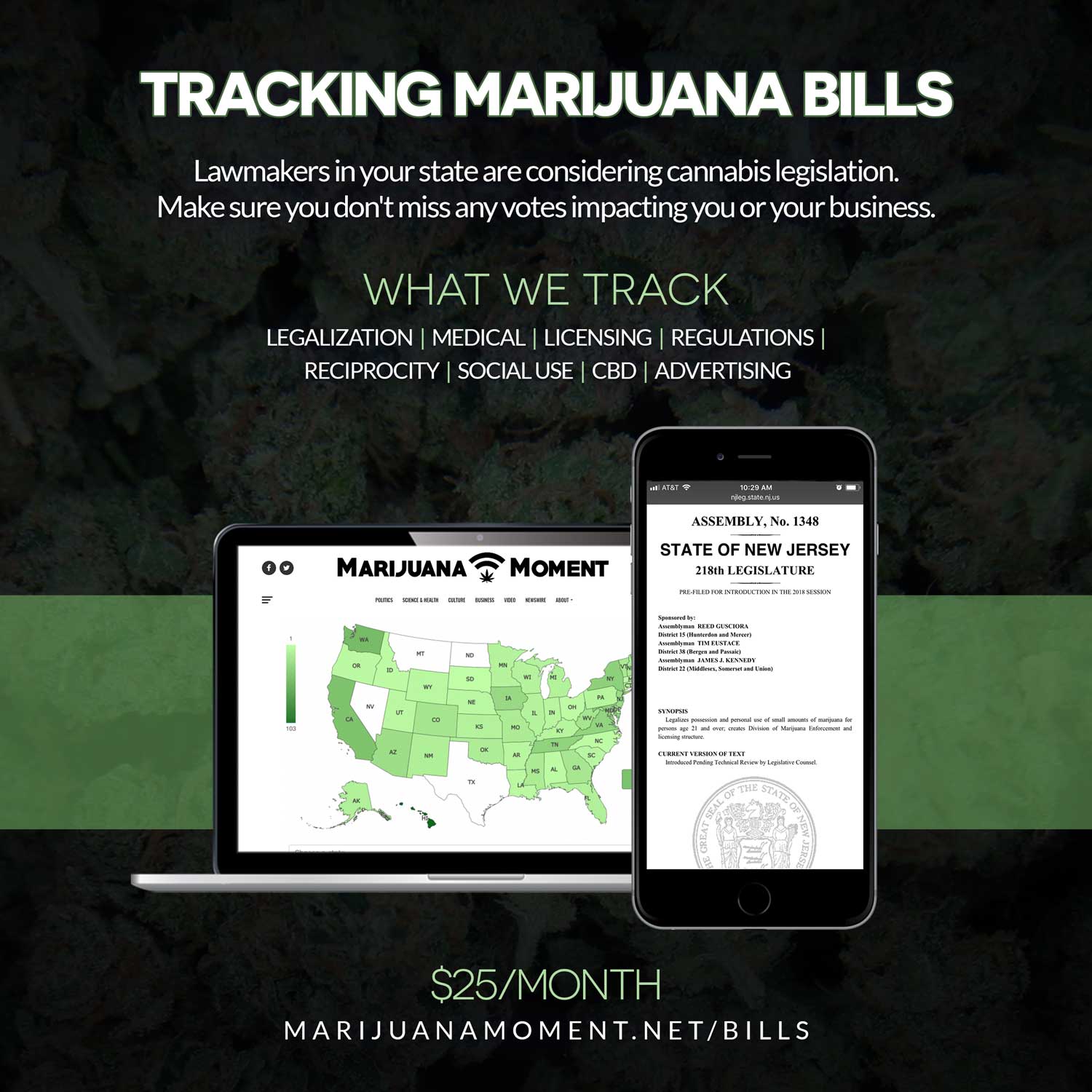
Learn more about our marijuana bill tracker and become a supporter on Patreon to get access.
—
Legislators separately held a hearing last year to discuss a bill to enact medical cannabis legalization legislatively, but there hasn’t been meaningful action on the issue in the months since.
Idaho Gov. Brad Little (R) last year signed legislation setting a $300 mandatory minimum fine for marijuana possession. A prior version of the proposal, which did not pass, would have set a $420 mandatory minimum fine for possessing cannabis.