Politics
Federal Court Lets Trump Move Ahead With Marijuana Rescheduling, Rejecting Pharma Company And Drug Testing Industry Request To Block It

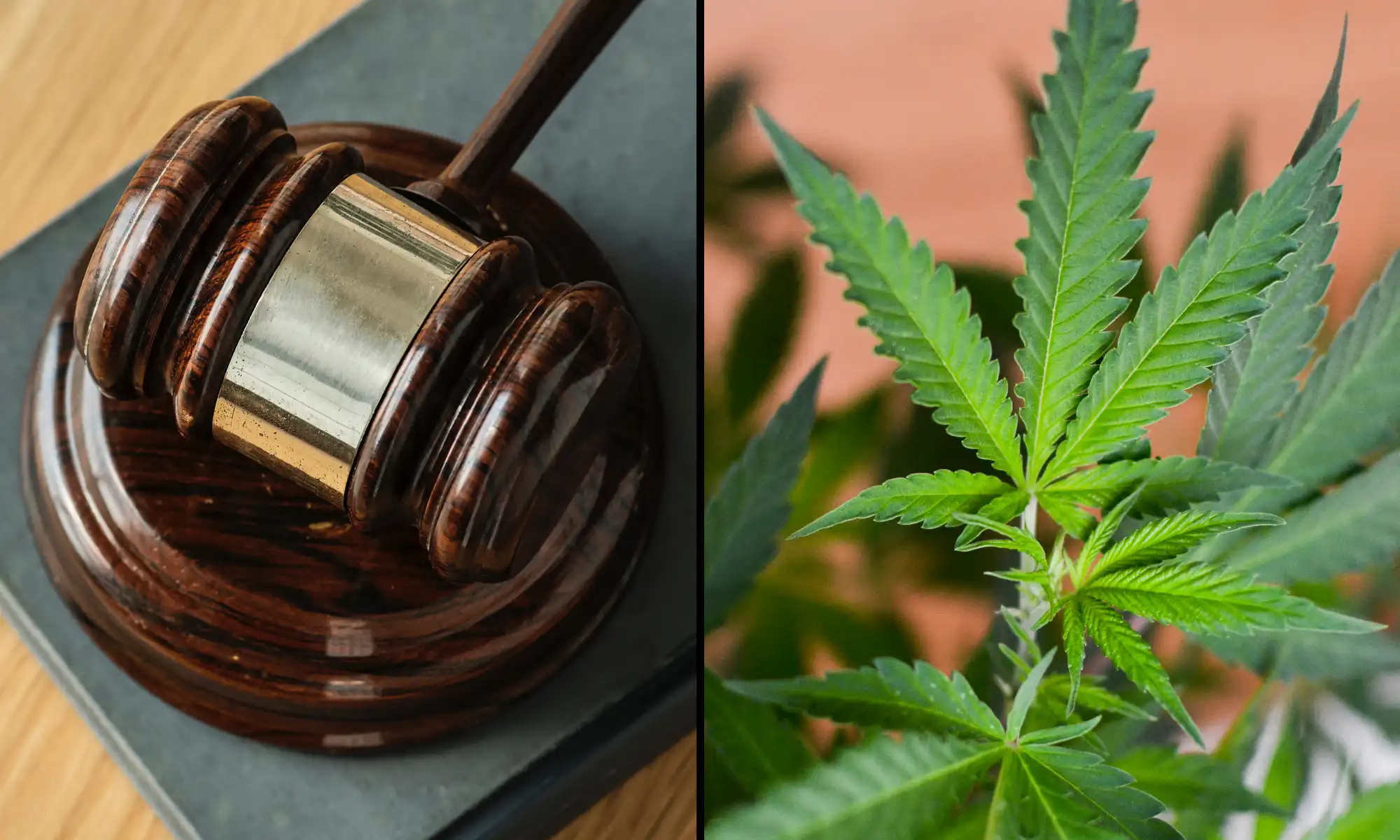
A federal appeals court has rejected a request from a drug testing industry association and a pharmaceutical company to block the Trump administration from moving forward with federal cannabis rescheduling while ongoing litigation challenging the reform is considered.
“Petitioners have not satisfied the stringent requirements for a stay pending court review,” the U.S. Court of Appeals for the District of Columbia ruled on Wednesday.
The National Drug and Alcohol Screening Association (NDASA) and MMJ International Holdings and its subsidiaries had argued in briefs supporting their motion for the court to put a stay on the rescheduling reform that “marijuana abuse has dangerous, lifelong consequences—especially for adolescents and pregnant women” and that “by cutting taxes on cannabis companies,” federal rescheduling “will stimulate the industry and increase marijuana abuse.”
The Department of Justice had opposed the request to pause rescheduling, noting in a brief that the entities challenging cannabis rescheduling have “pocketbook interests served by keeping all marijuana in schedule I” and are not suitable challengers to the reform because they are not the “intended beneficiaries” of the Controlled Substances Act (CSA).
Meanwhile, the court on Wednesday also rejected a request from two medical marijuana companies that had filed a motion to intervene in the rescheduling lawsuit by joining the side of the government and opposing the litigation from prohibitionists.
“Medical Marijuana Companies fail to demonstrate that their interests in this litigation are not adequately represented by existing parties,” the court’s order said, though it is allowing the companies to file amicus briefs in the case.
Lawyers for NDASA and the prohibitionist organization Smart Approaches to Marijuana (SAM) had filed a brief arguing that the cannabis businesses should not be allowed to join the suit.
Aside from the question of immediately blocking cannabis rescheduling from advancing via the stay, the appeals court is weighing three separate lawsuits against the overall proposal to move marijuana from Schedule I of the CSA to Schedule III that have since been consolidated.
One suit is led by SAM and NDASA, who claim they are “aggrieved” by the reform. Another comes from a coalition of anti-marijuana activists, substance misuse professionals, doctors and MMJ, a cannabis-focused biopharmaceutical corporation. A third challenge was filed by the attorneys general of Indiana, Nebraska and Louisiana—though the latter state later withdrew from the suit.
The court on Wednesday directed parties in the case to submit, within 30 days, proposed formats for briefings.
“The parties are strongly urged to submit a joint proposal and are reminded that the court looks with extreme disfavor on repetitious submissions and will, where appropriate, require a joint brief of aligned parties with total words not to exceed the standard allotment for a single brief,” it said.
“Whether the parties are aligned or have disparate interests, they must provide detailed justifications for any request to file separate briefs or to exceed in the aggregate the standard word allotment,” the court’s order said. “Requests to exceed the standard word allotment must specify the word allotment necessary for each issue.”
Kevin Sabet, president and CEO of SAM, said that “while we disagree with the court’s decision on emergency relief, today’s ruling does not decide the merits of this case or resolve the serious legal and scientific questions surrounding this unprecedented reclassification.”
“This policy sidesteps the rigorous scientific and medical standards normally required before a drug is treated as medicine,” he said. “We are confident those flaws will be fully considered as the case moves forward, and that ultimately the law and the science will prevail.”
The court’s new decision on the stay comes as the Drug Enforcement Administration (DEA) and other parties participating in a hearing on broad marijuana rescheduling have filed their final briefs on the issue.
The federal agency, which is charged with defending the proposed rescheduling move, said in its brief that “marijuana no longer fits the statutory requirements for Schedule I because it has a currently accepted medical use within the United States and it has an accepted safety for its use under medical supervision.”
The agency noted that under the law it must give “significant deference” to an “extensive ten-month study on the scientific and medical properties” of cannabis conducted by the Department of Health and Human Services (HHS), which recommended rescheduling.
“Currently there are over 30,000 practitioners treating more than six million patients in 43 U.S. jurisdictions,” DEA said. “Such practices demonstrate that there is no longer a lack of accepted safety for use of marijuana under medical supervision, and as such, marijuana does not fulfill the requirements of being a Schedule I substance.”
It also said that there is “substantial evidence sufficient to show that marijuana’s abuse and dependency profiles better align with Schedule III substances than Schedule II” or Schedule I. “The vast majority of individuals who use marijuana do so in a manner that does not result in dangers to themselves or to their communities.”
In conclusion, DEA asked the judge overseeing the hearing to “expeditiously recommend” that marijuana be transferred from Schedule I to Schedule III.
Opponents of cannabis reform—including the SAM; the states of Idaho, Indiana and Nebraska; NDASA and others—also filed briefs.
The anti-rescheduling entities argued that a new two-part test federal officials used to analyze cannabis improperly departs from a former five-part test, that marijuana does not have accepted medical value and that the reform would undermine drug testing of safety-sensitive workers, among other things.
In 2024, the Department of Justice’s (DOJ) Office of Legal Counsel (OLC) said the prior five-part test was “impermissibly narrow” and said the two-part review “is sufficient to establish that a drug has CAMU even if the drug has not been approved by FDA and would not satisfy DEA’s five-part test.”
DEA has since embraced the new approach to evaluating cannabis for CAMU and it has been used to subsequently evaluate other substances.
The DEA judge will now consider the final briefs and testimony delivered during the hearing and issue a recommendation on cannabis’s scheduling status. The final decision will ultimately be up to the DEA administrator, however.
Attorney General Todd Blanche in April issued an order that immediately reclassified state-licensed medical cannabis, as well as marijuana products approved by the Food and Drug Administration (FDA) from Schedule I of the Controlled Substances Act (CSA) to Schedule III. Under a separate order the attorney general signed, the hearing is considering more comprehensively moving marijuana to Schedule III.
The suit from SAM and NDASA challenging rescheduling was signed by attorneys at Torridon Law PLCC, where former U.S. Attorney General William Barr, led DOJ during Trump’s first term in office, is a partner.
SAM had announced in January that it was hiring Barr’s firm to legally combat cannabis rescheduling after Tump signed an executive order directing officials to complete the process expeditiously.
Meanwhile, the House Appropriations Committee voted to block federal officials from taking further steps to carry out cannabis rescheduling. Bipartisan lawmakers told Marijuana Moment, however, that they don’t expect the legislative effort to block rescheduling to succeed.
Separately, SAM, MMJ and other plaintiffs filed a lawsuit seeking to block a Trump administration program to cover certain hemp-derived products through Medicare. That case was dismissed by a federal judge in May, but that decision is being appealed.
Read the court’s ruling in the marijuana rescheduling lawsuit below:
Photo elements courtesy of rawpixel and Philip Steffan.