Politics
New Bill In Congress Would Dramatically Overhaul How The Federal Government Classifies Drugs While Legalizing Marijuana

A Democratic lawmaker has filed a lengthy new bill in Congress that would completely overhaul the federal system for classifying drugs.
The Public Health and Research Reforms In Controlled Substances Act, introduced by Rep. Steve Cohen (D-TN) on Thursday, amounts to a wholesale rewrite of the Controlled Substances Act (CSA), legislation enacted in the Nixon era that has governed federal scheduling of marijuana, psychedelics and other drugs for more than half a century.
The new 89-page bill would, among other reforms, replace the current five-schedule system with a new dual-axis framework that separately evaluates a drug’s potential for substance use disorders and threat to public health for placement on Schedules I-IV and its medical efficacy for ranking on Schedules A-E. As such, a given substance could be determined to have a relatively high abuse potential (Schedule I) as well as a high therapeutic value (Schedule A), classified as a Schedule IA drug.
The bill would also federally legalize marijuana by removing it from the CSA entirely, a process known as descheduling. That proposed reform comes as the Trump administration is moving forward with a more incremental process of rescheduling cannabis from Schedule I of the CSA to Schedule III.
Cohen’s measure would also transfer core authorities in the drug scheduling process from the Department of Justice, attorney general and Drug Enforcement Administration (DEA) to the Department of Health and Human Services (HHS), which under current law makes recommendations to law enforcement officials who ultimately make final determinations.
“Most Americans believe the ‘war on drugs’ has been a failure at cross purposes with good public policy and aimed largely at minorities with draconian mandatory minimum sentences for minor offenses that most now believe aren’t really offenses at all,” Cohen said in a press release.
“This bill would set comprehensive policies on all aspects of drug regulation while also defining the purpose of federal involvement,” the congressman said. “A thoughtful review of national drug policy is long overdue. This measure would start the process of aligning the law with coherent public policy.”
An existing eight-factor analysis that is used to evaluate drugs would be replaced with a new 14-factor review under the bill, and a new federal committee with 15-25 members with expertise in pharmacology, addiction medicine, substance use disorders and drug trends would conduct multi-criteria analysis to inform scheduling.
A priority list of substances—including psilocybin, LSD, MDMA, DMT and ibogaine—would need to be reevaluated under the new system within two years and would be rescheduled with new default placements under the bill if health officials fail to do so. All other substances would need to receive new evaluations within 8 years.
—
Marijuana Moment is tracking hundreds of cannabis, psychedelics and drug policy bills in state legislatures and Congress this year. Patreon supporters pledging at least $25/month get access to our interactive maps, charts and hearing calendar so they don’t miss any developments.
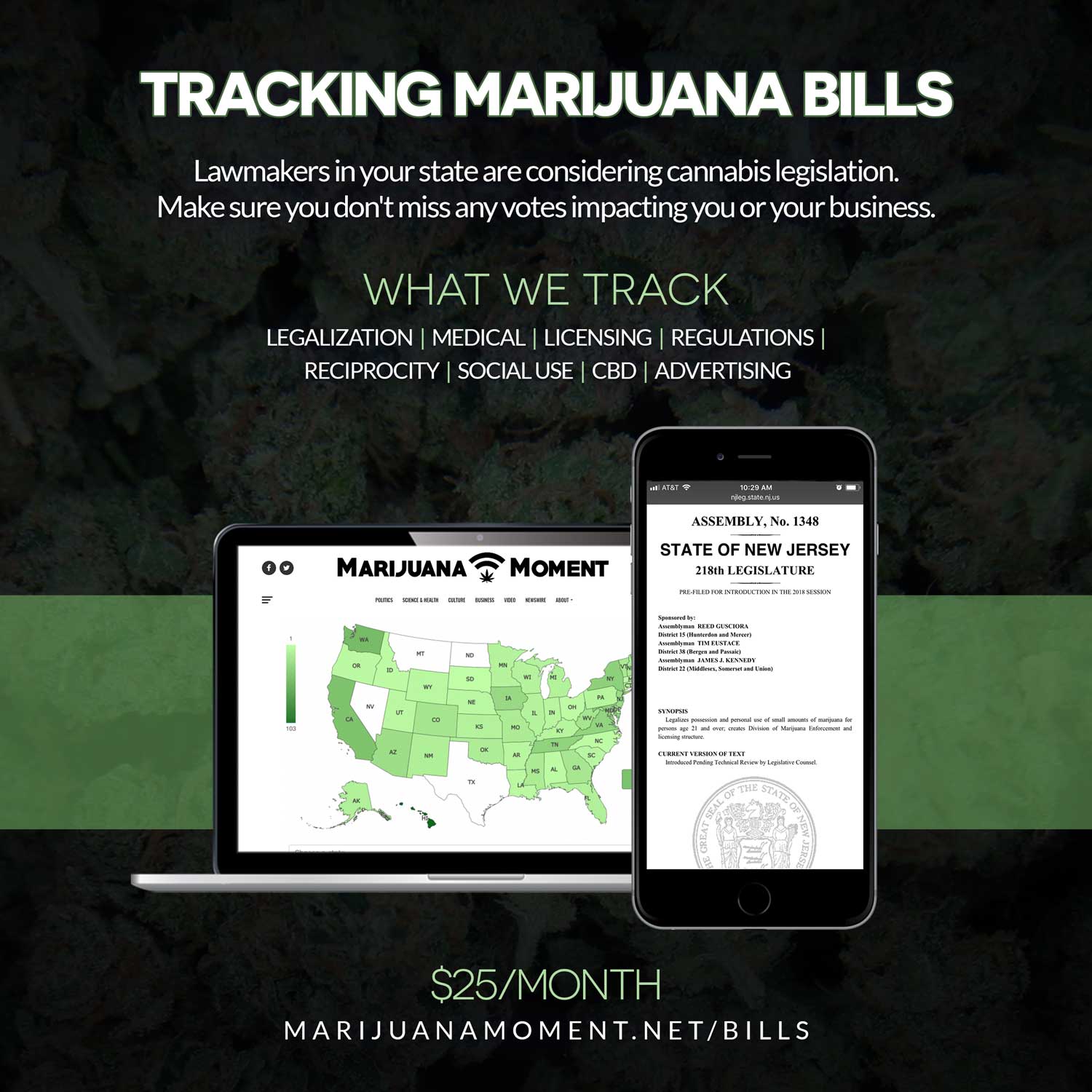
Learn more about our marijuana bill tracker and become a supporter on Patreon to get access.
—
The legislation would also eliminate weight-based, drug-specific mandatory minimum penalties and provides for the resentencing of people whose offenses would carry lower penalties under the new system. The U.S. Sentencing Commission would be directed to revise sentencing guidelines to conform with the new scheduling and penalty framework.
With respect to marijuana, HHS would need to convene “not fewer than 3 public meetings to address the regulation, safety, manufacturing, product quality, marketing, labeling, and sale of products containing cannabis or cannabis-derived compounds” within a year of the bill’s passage.
The legislation would also allow HHS to continue including marijuana within the scope of federal employee drug testing programs even after descheduling.
Cohen, who has consistently supported marijuana reform during his time in Congress, is retiring at the end of this year.
In June, he filed separate legislation to drastically overhaul how drugs are classified under the CSA, including by letting states effectively force federal rescheduling by changing their own local laws.
The new bill is being endorsed by reform organizations such as the Drug Policy Alliance (DPA), National Organization for the Reform of Marijuana Laws (NORML), Multidisciplinary Association for Psychedelic Studies (MAPS) and Students for Sensible Drug Policy (SSDP).
“For more than half a century, America’s failed drug policies have been built on the shaky and unscientific foundation of the scheduling system defined in the Controlled Substances Act,” Morgan Fox, political director for NORML, said. “This system has never accurately categorized psychoactive substances based on rigorous analysis of their real-world uses and impacts, most clearly evidenced by the placement of cannabis in the most restrictive and dangerous class. The end result has been unfathomable human suffering around the globe.”
SSDP Executive Director Kat Murti said Cohen’s new bill “recognizes that drug scheduling should follow science, not stand in its way.”
“By reevaluating outdated classifications, distinguishing a substance’s potential risks from its therapeutic value, and reducing unnecessary barriers to research, this bill would help give scientists the freedom to ask important questions and pursue answers that could save lives,” she said. “We cannot make sensible drug policy without good science, and we cannot have good science when our drug policies make that research unnecessarily difficult. Congressman Cohen understands that ending the War on Drugs means ending the harm it does to scientific progress, too.”