Politics
Nevada Lawmakers Consider Marijuana Tax Overhaul For ‘Maturing’ Market As Prices Fall

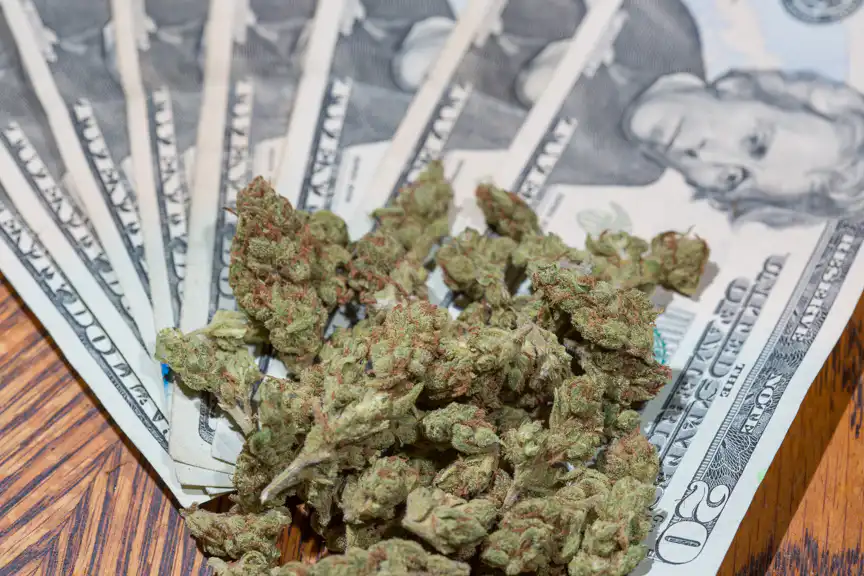
“We are getting rid of one big tax—a 15 percent excise tax on wholesale—and increasing retail tax anywhere from 2 to 5 percent.”
By April Corbin Girnus, Nevada Current
Nevada lawmakers are pondering whether the state’s “maturing” marijuana industry needs to update its tax structure.
Revenue from the state’s cannabis excise tax, which flows into the State Education Fund, peaked in 2021 and declined 40 percent by 2025. The decline is “in part due to price compression attributed to a maturing market,” according to a new report by a committee tasked with reviewing potential tax changes.
After an initial rush of a new market in 2017 when the state legalized cannabis, the industry has leveled off to more sustainable numbers. Customers and transactions have increased, and the price of cannabis has continued falling, signs the industry is maturing.
For example, the retail price of flowers/buds in Nevada went from $9.02 per gram in 2019 to $4.46 in 2025, a 50 percent drop. Similarly, infused edibles went from $19.77 per item to $11.81 over that same time span, a 40 percent drop.
“Overall the annual price trends indicate that Nevada’s cannabis market became less expensive for many of the product categories analyzed,” said Erica Scott, an economist in the Nevada Department of Taxation and chair of the subcommittee that put the report together. “This price compression could be reflective of a combination of factors, which could include market maturation, increased competition, production efficiencies, technological advancements or greater availability of lower priced products, which in this market would be illicit products and intoxicating hemp.”
The State of Nevada since legalizing marijuana in 2017 has collected a 15 percent tax on the fair market value of wholesale cannabis and a 10 percent excise tax on the retail sale of recreational cannabis. Additionally, the retail sale is subject to standard state and local sales taxes, which vary from 6.85 percent to 8.375 percent.
The formula the state uses to calculate “fair market value” has been the subject of consternation among cultivators, who have argued the metric has lagged as prices quickly fall, resulting in them being heavily overtaxed. One proposed solution, pitched most recently by Assemblywoman Danielle Gallant (R-Henderson) during the 2025 Legislative Session, was to eliminate the current wholesale tax and increase the retail excise tax to offset the lost revenue.
Gallant’s bill never advanced out of committee but language to study such a proposal was amended into another cannabis bill. That bill created the subcommittee, which presented its final report to the Interim Legislative Committee on Revenue last week.
The report, which emphasized that it was only studying impact and not recommending any specific changes, found the state would need to increase the retail tax to between 12 percent and 15 percent in order to offset the eliminated wholesale tax.
Additionally, the state would need to address the impact on local governments, regulatory operations and the State Education Fund, which all currently receive distributions from the wholesale cannabis tax.
So what could this mean for consumers?
Recreational consumers are currently paying a combined retail tax rate around 18 percent. The tax paid by wholesalers is passed along to consumers as part of the retail price.
Under the proposed restructuring, consumers would be paying a 23 percent combined retail sales tax rate in Clark County, the county with the highest local sales tax rate. In other counties, it’d be a little less.
Medical card holders are exempt from the state retail excise tax, meaning their prices would likely not change in the short term.
Scott explained that the “assumption is cultivators would not be dropping the price immediately and instead maintaining the previously paid 15 percent [wholesale] tax as profit.”
But Scott and leaders from the state’s Cannabis Compliance Board (CCB) added that industry representatives believe wholesale prices would drop in the long term.
“We are getting rid of one big tax—a 15 percent excise tax on wholesale—and increasing retail tax anywhere from 2 to 5 percent,” said CCB Executive Director Michael Miles. It’s “not guaranteed it’s going to even out, but the idea is that it should even out.”
Miles noted that Nevada is actually considered “average or below average” when it comes to its taxation rates of cannabis across the country.
The revenue committee took no action on the study but may revisit the issue next year when it meets for the 2027 Legislative Session. Several lawmakers flagged additional data or information they wanted on consumer behavior or the impact other states have seen from raising the retail excise tax. One suggested the proposed changes would be more transparent to customers.
The cannabis subcommittee also explored the emerging “intoxicating hemp” market, which popped up out of a loophole in the federal Farm Bill in 2018 that allowed for the sale of edibles and drinks containing THC. Such products can now be found in smoke shops and gas stations.
The cannabis subcommittee estimated Nevada’s intoxicating hemp market to be about $45 million annually but emphasized that local and national data is scant.
Clark County earlier this year attempted to crack down on unregulated, intoxicating hemp products. But it remains an ongoing issue, Miles acknowledged.
The future of the industry is “rife with uncertainty.”
But, assuming it sticks around, the state should aim for tax parity between intoxicating hemp products and cannabis products, the subcommittee recommended.
This story was first published by Nevada Current.