Politics
Massachusetts Officials Reject Challenge To Anti-Marijuana Initiative Signatures, Ruling It Will Appear On November Ballot

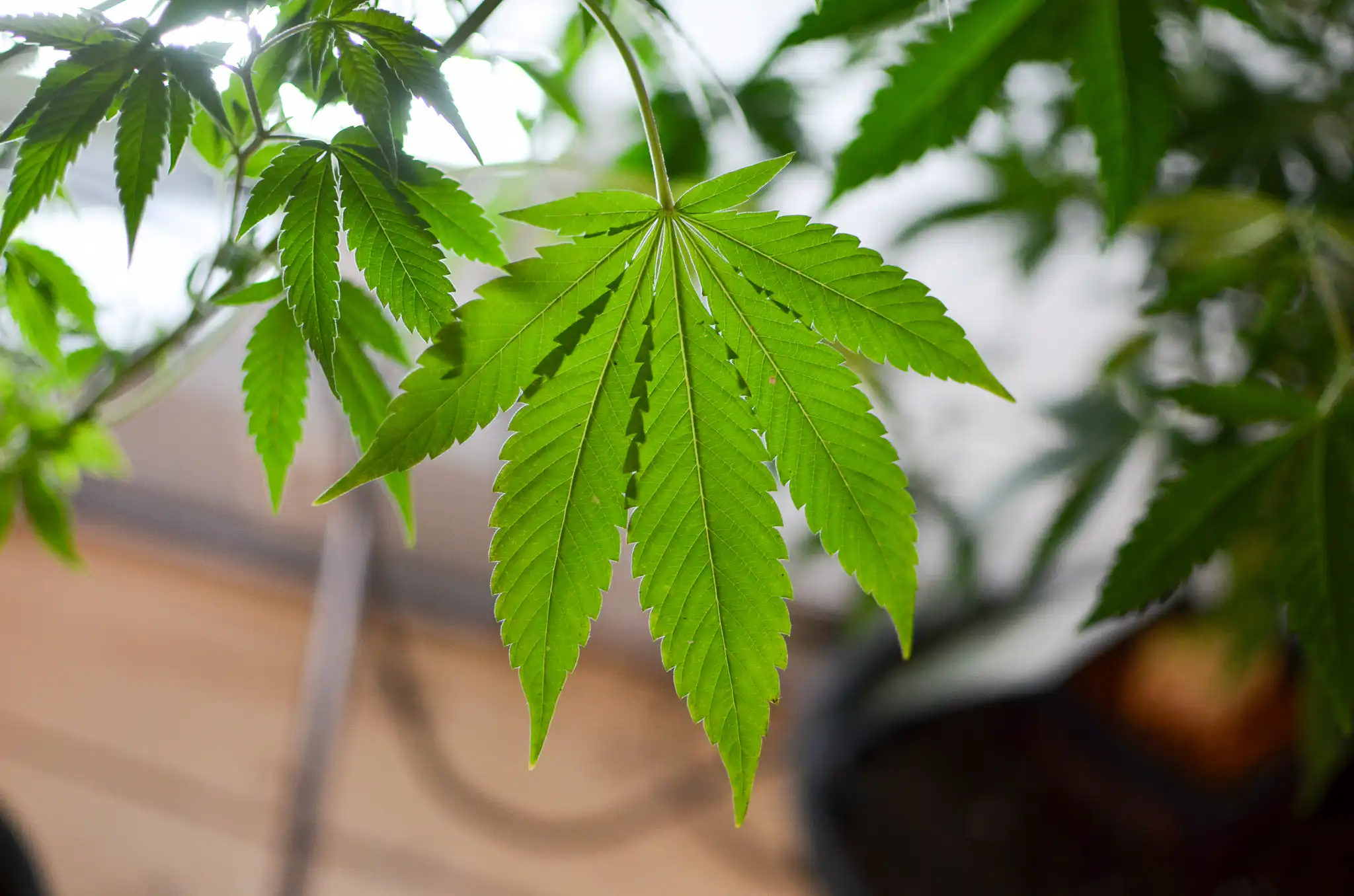
Massachusetts officials have denied a last-ditch attempt to keep an initiative to roll back the state’s marijuana legalization law from appearing on the November ballot.
The Secretary of the Commonwealth’s Office determined earlier this month that organizers for the anti-cannabis initiative had turned in enough valid signatures to put the measure before voters, but marijuana reform advocate Kevin Gilnack then filed an objection with the State Ballot Law Commission claiming that various signatures were not genuine, obtained through fraudulent means or were not “signed substantially as registered.”
Others, the complaint said, belong to people who are not registered voters at the address they claimed or who subsequently requested to have their names removed. The filing also says that some petition forms contained extraneous marks or were not “exact copies” of the form provided by the Secretary of the Commonwealth’s Office, “in that they differ from the original in paper size, color, text, or format, or otherwise fail to conform to the requirements” of the law.
After holding a hearing on the dispute last week that included testimony from a forensic document examiner and handwriting expert who appeared on behalf of the challenger, the commission on Tuesday rejected the objection.
The panel “finds, rules and concludes that the Objector has not met his burden of proof to disqualify enough signatures on the initiative petition,” it said in a 16-page decision. “The Commission overrules Objector’s challenges to the initiative petition and the Secretary is ordered to print the ballot question on the November 3, 2026, State Election Ballot.”
The body ended up invalidating only four of the challenged signatures due to missing address information while rejecting the request to throw out additional petitions over issues such as illegibility, non-genuineness or stray marks.
During last week’s hearing, Gilnack also sought to enter into the record affidavits of voters who said their signatures were obtained through fraud. The anti-marijuana campaign objected, however, as those voters were not identified in the initially filed objection, and the commission agreed.
Shortly after the commission’s ruling on Tuesday, the Secretary of the Commonwealth’s Office announced that the anti-cannabis measure will be designated as Question 8 on the ballot.
Under state law, Massachusetts ballot campaigns must turn in signatures in two waves. After the first submission, the legislature gets a chance to enact proposed ballot measures after organizers submit an initial round of petitions. Lawmakers in May declined to act on the anti-marijuana measure, however, and so organizers needed to submit additional 12,429 certified signatures by July 1 to make the November ballot.
The state Elections Division determined that 12,551 signatures of the 12,889 submitted in the latest batch were valid.
Wendy Wakeman, a spokesperson for the Coalition for a Healthy Massachusetts, which is behind the anti-cannabis initiative, said that “the people of Massachusetts deserve the opportunity to vote on this issue.”
“Today’s decision closes one chapter,” she said. “Now the real conversation begins. Between now and Election Day, we’ll make the case directly to the people of Massachusetts that it’s time to put public health and community well-being ahead of the commercial marijuana industry.”
Meanwhile, a coalition of Massachusetts marijuana business leaders, healthcare professionals and other advocates have launched a campaign to defeat the measure, which if enacted would repeal laws allowing the regulated commercial sales of recreational cannabis and home cultivation while maintaining legal possession and continuing the medical marijuana system.
Ryan Dominguez, chair of the Stop the Repeal Campaign, said legalization supporters are “disappointed that the Ballot Law Commission did not agree with our findings that hundreds of signatures gathered by those trying to repeal the legalization of recreational marijuana did not meet the threshold needed for certification.”
“Our focus remains on the important work of maintaining this law,” he said. “Our campaign of public health officials, law enforcement, small business owners and advocates will educate voters about the serious economic and public safety impact a repeal of our highly regulated marijuana industry would have on our state.”
“We are confident voters will uphold what they previously voted to legalize in 2016 and vote ‘No’ to stop the repeal effort,” Dominguez said. “My colleagues in the industry have been committed to defeating this damaging ballot question from day one, and with today’s ruling I know that we will redouble our efforts to make sure we stop this ill-advised repeal.”
In June, the anti-legalization campaign fired a signature gatherer it says was shown appearing to engage in “wholly unacceptable” conduct in a recent video.
As Marijuana Moment reported, a man petitioning for the Massachusetts initiative as well as a similar anti-cannabis proposal in Maine was depicted in recent social media posts seeming to argue that voters who support legal marijuana access should sign the petitions in order to advance or protect reform.
The campaign later said it has “zero tolerance for any circulation tactics that would mislead petition signers.”
“The identified canvasser was immediately terminated, in coordination with our vendor, upon being made aware of the alleged conduct,” the group said. “The conduct apparent in the video would be wholly unacceptable and does not reflect how this campaign operates. We demand honesty, transparency and professionalism from everyone associated with our effort.”
A video posted to Reddit of the signature gatherer shows the man collecting signatures outside a retail store in Massachusetts next to a sign that says “keep cannabis legal.”
When confronted by a marijuana reform supporter who recorded the petitioner’s interactions with voters, he appeared to be trying to convince them that it is important to qualify the anti-cannabis measure for the ballot in order to then defeat it.
“This is what we’re fighting against right here. That’s why we vote no,” he said. “If we can get this to the ballot right here, we vote no.”
The person who captured the video pointed out that Massachusetts voters already approved marijuana legalization years ago, and that the only way it could be imminently repealed is if the new ballot measure qualified for the November election. If the initiative does not get enough signatures to go before voters, the state’s laws will remain the same.
“It’s my job,” the petitioner insisted, however. “I know what I’m talking about.”
“It’s a group of rich folks from out of state that want to basically take marijuana to when it was a medical marijuana card,” he said. “We don’t want that to happen.”
The same man also appeared to also be gathering signatures for a separate measure in Maine that would similarly repeal laws allowing regulated adult-use marijuana sales and home cultivation rights for adults while keeping possession legal and adding new testing requirements for medical cannabis.
A staffer for the prohibitionist organization Smart Approaches to Marijuana (SAM), whose affiliated group SAM Action is largely funding the anti-cannabis ballot campaigns in both states, declined to comment about the petitioner’s conduct when reached by Marijuana Moment.
The campaigns have previously been accused of misleading petitioning tactics.
In Massachusetts, some voters reported that the campaign used fake cover letters for other ballot measures on unrelated issues like affordable housing and same-day voter registration during the first round of petitioning. Legal cannabis supporters filed a formal complaint about the prohibitionist effort’s tactics, but the State Ballot Law Commission rejected the challenge.
The measure faced a legal challenge from cannabis industry operatives who argued it contains “impermissibly unrelated subjects,” and that the state attorney general’s official summary is “misleading and deficient.” The state Supreme Judicial Court heard oral arguments on the litigation challenging the anti-marijuana initiative but it ultimately ruled against the challenge.
Separately, the Massachusetts House of Representatives passed a bill this month containing provisions to create a five-year pilot program allowing the use of psychedelics to treat mental health conditions.
Read the commission’s decision rejecting the challenge to the anti-marijuana ballot initiative below:
Photo courtesy of Philip Steffan.