Business
More Maryland Social Equity Marijuana Dispensaries Are Finally Starting To Open, Years After Market Launch

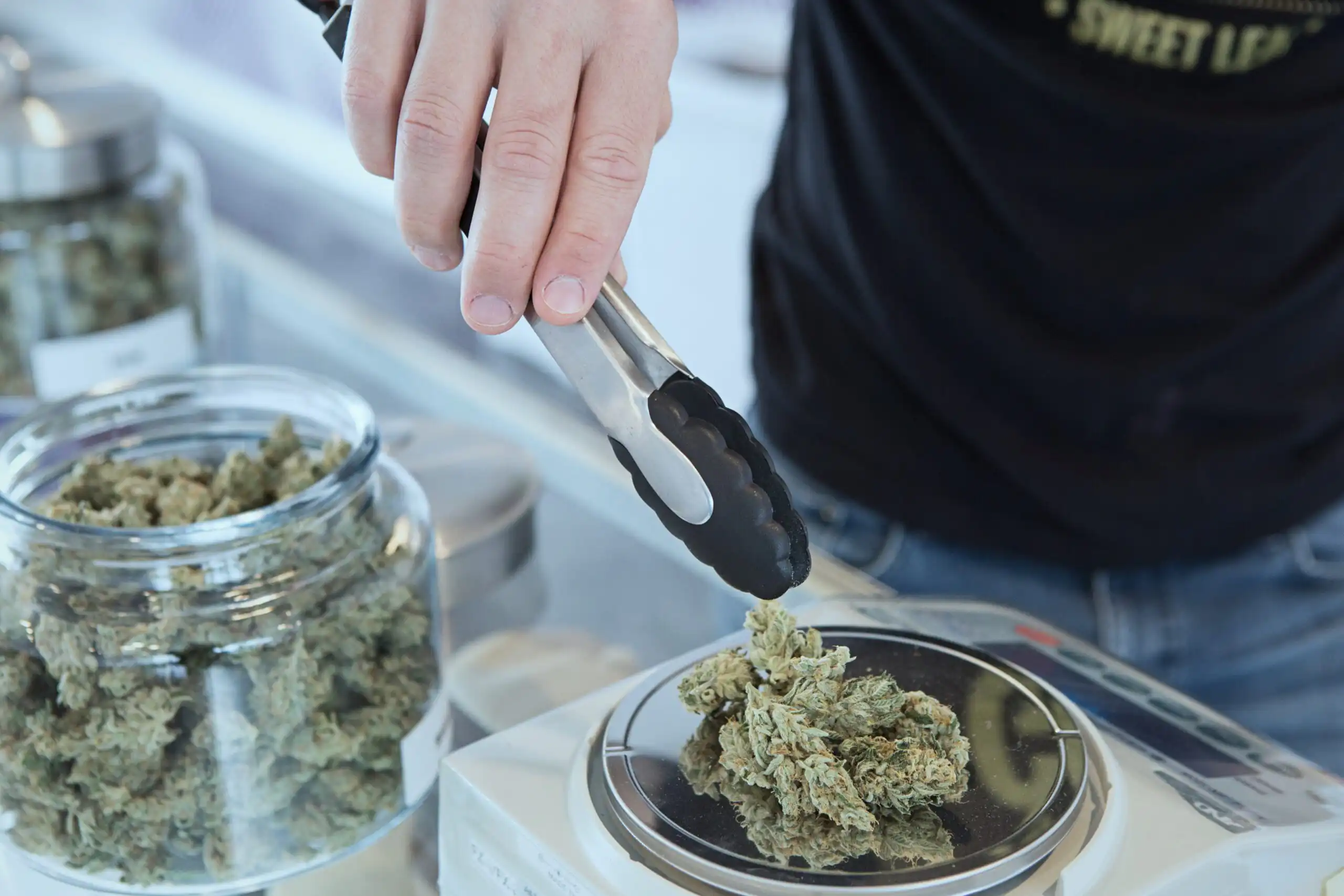
“The sad part was people who were targeted when there was prohibition on cannabis, those same individuals were excluded from the cannabis industry.”
By Will Hammann, Maryland Matters
When Candice Peters opened Coastal Cure Cannabis in Delmar on June 1, it was the culmination of more than two years of hard work on a decade-old dream.
And that’s a fast turnaround compared to many of her peers.
Of the 83 “social equity” licenses for dispensaries that have been distributed by the state since 2023, only 17 are currently in operation, twice the number that were open at the start of this year as more and more finally get their businesses off the ground.
In addition to the challenges faced by any wishful entrepreneur, license holders say they also struggle with unique zoning issues, limited investors and unwilling real estate partners as the still-pervasive stigma around their product hangs in the air.
“It’s been a journey,” said Peters. “And there have been a lot of long nights, and longer days trying to jump…all of these hurdles.”
Peters, a physician who had long been interested in medical use of cannabis, first sought a license after marijuana was legalized for medicinal use in Maryland more than 10 years ago. But she didn’t come away with one then.
“There were no minorities, or very few minorities that got these licenses,” she said. “They were supposed to be a very blind application process. That turned out not to be true, which is how we end up here.”
The Cannabis Reform Act, which made recreational sales legal in 2023, also created the Maryland Cannabis Administration and the Office of Social Equity. It created the social equity licenses, for new dispensaries, growers and processors who came from Maryland communities—or who attended schools in communities—disproportionately affected by the war on drugs.
“The sad part was people who were targeted when there was prohibition on cannabis, those same individuals were excluded from the cannabis industry,” Peters said. “Multimillions of dollars have been made, and no one who was affected by it, decades ago, was able to really profit from that.”
That was echoed by Malcolm Gillian, founder of the Maryland Coalition for Cannabis Equity, a trade association representing social equity licensees like Peters.
“Cannabis should never have been illegal—the enormous impact and harm on folk in arrests and everything else—I definitely want to see that be corrected,” said Gillian, who said he is a few months away from opening his own dispensary.
He said his coalition, made up mostly of self-financed entrepreneurs, works to “make sure social equity licensees have the right funding opportunities, and frankly, when they get to market, have a chance to compete,”
Gillian said Maryland’s law, and the Cannabis Administration, have “created a very healthy, very robust, legal marketplace versus other states that are still challenged with killing the illegal markets.”
Sales have increased each year since recreational cannabis was legalized in 2023, according to data from the Cannabis Administration, totaling $3.46 billion since then and hitting a monthly record in April of $105 million in combined medical and recreational sales.
“The MCA remains committed to providing a safe, equitable and accessible medical and adult-use cannabis industry for qualifying patients and adult consumers,” the administration said in a statement.
Most dispensaries in the state began as medicinal-use operations that converted their licenses to sell recreational cannabis as well. There are 99 non-social equity equity licensed dispensaries currently operating in the state, according to MCA data.
Peters noted that part of regulating the industry has been ensuring that new businesses weren’t founded or swept up by larger investors with multiple locations, sometimes across multiple states.
“The resources that these multistate operators have, I mean, they’re so far above what we have access to,” she said. “Not just financially but in who we know, who we can contact to get expedited services.
“This round of licenses was critical to, not even evening the playing field, but at least allowing us to have a seat at the table,” Peters added. “If half those licenses are bought up by multistate operators, the other half of us would never be able to compete with those numbers.”
Making sure that social equity licenses stay in local hands is just one of the challenges the new businesses have faced. Peters, Gillian and Frank Hayes, an owner of Crabtree Cannabis in Kensington, said the law requiring that 65 percent of equity is held by the qualified applicant can make it especially difficult for social equity licensees to raise capital.
Hayes, who sits on the board of the Maryland Dispensary Association, has spent time lobbying to strike a balance between attracting investors and keeping ownership in the hands of the people the special licenses were meant for.
“We’re very limited in terms of what we can do from a marketing and advertising perspective,” he said. “We’ve lobbied to try to loosen up some of those restrictions with pretty little success.”
There are other challenges. Hayes and co-owner Felicia Covel Rami, owner of a catering business and Baltimore native who won a social equity license in the state’s lottery in 2024, were renovating a former bank to become their dispensary when the state ordered work halted after complaints from two nearby churches. State regulations prohibit dispensaries within 500 feet of places of worship.
It turned out the churches themselves lacked permits, and they were forced to move. Months after filing a lawsuit, the order was lifted, and their renovation could continue.
Hayes said just finding a location was a challenge, as many landlords or their major tenants are unwilling to share space with a cannabis dispensary, even if it complied with zoning laws.
“I think there is still certainly a stigma associated with cannabis because it’s federally illegal,” said Hayes, whose dispensary opened April 14. “I think a lot of that stigma originates from the war on drugs, which in my opinion was pretty misguided on behalf of the federal government.”
Acting Attorney General Todd Blanche in April reclassified medical cannabis from a Schedule I to a Schedule III drug. That put cannabis on the same level as pain medicine and ketamine, in the eyes of the federal government, instead of side by side with drugs like heroin and LSD.
That’s progress, said Peters and Hayes, who hope to see more cannabis research now that the rescheduling opens the door. But the order also created an uneasy future for the recreational side of dispensaries, since the federal Drug Enforcement Administration (DEA) still considers recreational cannabis illegal.
“If anything, this April decision has just created a lot of confusion,” Hayes said. “Some licensees have chosen to register and apply with the DEA, others have chosen not to, but I don’t think either camp has confidence [nor] clarity on the path forward.”
He and Covel Rami decided to register after their suppliers said they planned to do so, since registered businesses can’t deal with unregistered partners. Peters was already registered because of her medical career. But she noted that the DEA is the same agency that led the war on drugs that inspired the social equity license program and, “Choosing to trust them now, even for good reason, does cause me to pause.”
“To now include something that’s federally illegal, and submitting information to the DEA is a little frightening,” she said.
Hayes and Gillian, both of whom previously worked in California’s cannabis industry, said high taxes there in the past on adult-use cannabis had allowed an illegal market to continue to flourish. That is not the case in Maryland, which charges a 12 percent sales tax on the use of recreational cannabis, they said,
“There is no longer like a local weed guy [in Maryland], everyone just goes to the dispensary,” Gillian said. “It’s safe, it’s clean.”
“We’re in a state that has supported us,” Peters said. “I think Maryland does want us to be successful, so I’m hoping that they will support us going forward and moving through this whole process.”
As Peters moves forward, she said she hopes the unique perspective of social equity licensees can fulfill the program’s purpose.
“We’re intentionally trying to hire returning citizens, we’re intentionally trying to hire people of the underserved communities, and we’re intentionally trying to get the products out to those people as well,” she said. “I think as we destigmatize this, we’re only going to get more people that are using cannabis in a safe way.”
This story was first published by Maryland Matters.