Politics
I Went To DEA’s Marijuana Rescheduling Hearing, And It Was The Strangest Proceeding I’ve Ever Sat Through (Op-Ed)

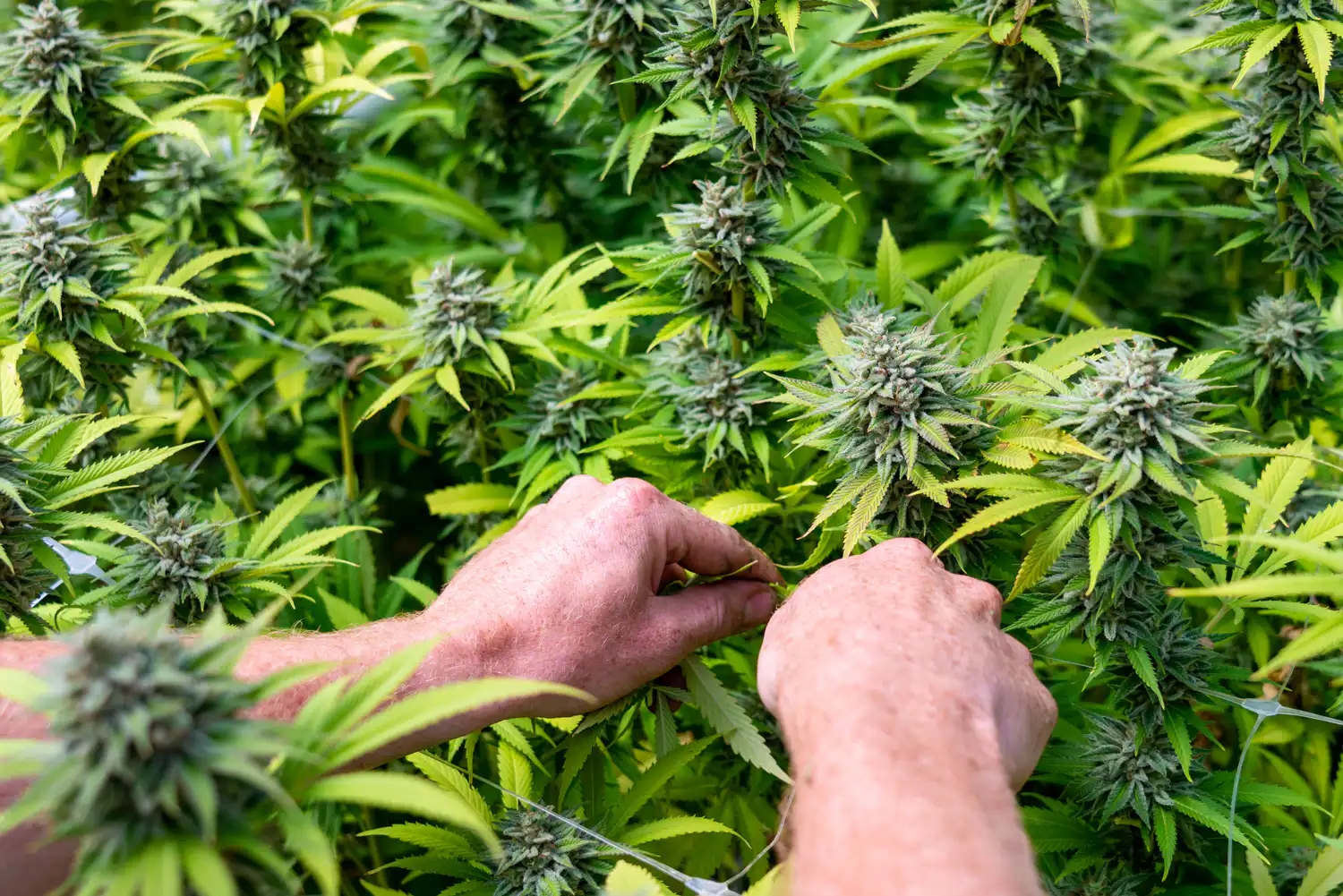
“I wanted to hear what a federal record about this plant sounds like while it is being built. It sounds like a lot of very credentialed people describing a plant that almost none of them have grown.”
By Max Jackson, Cannabis Wise Guys
For two weeks this summer I slept in my van in a lot across from the Pentagon and walked most mornings into a Drug Enforcement Administration (DEA) hearing room, to watch the federal government decide what to do with the plant I used to grow for a living. My converted ambulance gave me a two-minute commute to the strangest proceeding I have ever sat through.
I should say who I am. I ran a licensed cannabis grow in Trinity County, California—thirteen thousand plants, and enough three-in-the-morning equipment failures to teach me what the work costs. Not a lawyer, not a scientist, not a lobbyist. As far as I could tell, I was almost certainly the only person in that room who has grown this plant commercially.
The gallery holds about twenty people, and most days found it largely filled with DEA agents, not the public. No cameras or laptops are allowed inside; you take the day down by hand or not at all, and I filled two notebooks.
The Structure Is The Opposite Of What People Assume
The government—DEA and the Department of Justice, presenting the Food and Drug Administration (FDA) and Department of Health and Human Services (HHS) analysis—is the proponent of moving cannabis to Schedule III, and carries the burden of proof. All seven designated interested parties oppose rescheduling. DEA designated no pro-rescheduling party at all.
That inversion confuses almost everyone I have explained it to. People assume the witnesses testifying about psychosis and cartels and pediatric poisonings are the government’s. But they are witnesses against the government’s own position.
The government put on two witnesses—an FDA controlled substances official and a pain physician—and rested. That was not a retreat. Its burden was narrow: show that marijuana does not belong in Schedule I. It asked for little beyond what served that, made the narrow case.
They Cross-Examined Almost Nothing, Until The Week They Didn’t
Natalie Fertig, the veteran federal cannabis reporter, sat in the same room and put it bluntly: “They asked three questions the entire time. Three questions.”
That was the pattern for two weeks, and I would be shading the truth if I stopped there, because it broke.
In the final week, an emergency physician called by pro-se participant Phillip Drum testified about her patients using a slideshow. DEA’s cross-examination of her was methodical and longer than any other.
Counsel walked her deck image by image and established that much of her visual evidence came off the open internet with no verified provenance—a toddler-with-a-bong photo from Google, a baby with a pipe from a Reddit parenting subgroup, an astronaut meme she could not source. Asked how she knew the baby in the photo was real, she said she didn’t. Then case after case—the teenager with the vapes, the minor who ordered cannabis under a false name, the accidental pediatric ingestions—each met with the same question: was this an example of illegal diversion, and each answered yes.
The Witness Who Wrote The Study
The states of Nebraska, Idaho and Indiana called Dr. Deepak Cyril D’Souza—a Yale professor of psychiatry, staff psychiatrist at VA Connecticut, inaugural director of the Yale Center for Cannabis and Cannabinoids and author of more than 200 papers. He was the first psychiatrist of the proceeding, and the states told the judge he was the only expert quoted in both HHS’s 2023 recommendation and DEA’s eight-factor analysis.
He testified that potency has risen five- to tenfold in three to four decades, that adolescence is a period of particular vulnerability, and—invoking pioneering epidemiologist Bradford Hill and analogizing to cigarettes and lung cancer—that smoking marijuana is causally contributory to schizophrenia. Asked whether cannabis’s benefits outweigh its risks at this time, confining himself expressly to psychiatric use, he answered no.
D’Souza also declined, twice, to carry his own side’s framing.
That side’s opening statement had closed on the line that marijuana should be treated consistently with other Schedule I hallucinogens. Asked about it, he testified that he knows the government calls cannabis a hallucinogen but that it is not one—”for it to be a hallucinogen it needs to reliably induce hallucinations.”
He also told the room there is no standard dose for marijuana, and no FDA-approved treatment for cannabis use disorder.
Then the government cross-examined D’Souza. Counsel established he had done media interviews, then read a recent one back to him in which he had said the overwhelming majority of cannabis users will have no negative outcome. He agreed not everyone who uses cannabis will have mental health problems, then said most people will not develop psychosis. He qualified it honestly—there is no good way to identify who is at risk, gene patterns and a family history of schizophrenia raise the likelihood, but he said the model is not perfect.
The government also walked D’Souza through benzodiazepines: a controlled substance, yes; abuse potential, yes; dangerous in combination with alcohol or opioids, yes; withdrawal, yes—including irritability, restlessness, seizures, suicidal ideation and hallucinations. Then, immediately: could cannabis withdrawal lead to harm for the patient? He said it is self-limiting and depends on the taper. On his direct, withdrawal had been offered as real and as the reason quitting often fails. Both answers are in the record.
Here is the thing I keep turning over:
D’Souza’s landmark 2004 work gave 22 healthy volunteers 2.5 and 5 milligrams of THC intravenously, straight into a vein. They had used cannabis before but had never been diagnosed with a cannabis abuse disorder. His 2008 follow-up gave the same doses to frequent users and found they reacted far less. He confirmed the basis himself on direct: his Exhibit 7 is a meta-analysis of ten intravenous-THC studies.
An injection into a vein is not how anybody consumes cannabis. No smoke, no edible, nothing you can pace by how you feel—it goes straight into the blood, all at once.
I never heard anyone ask him about it. Not on direct, not on cross, not on redirect, in the sessions I sat through—the word “intravenous” never came up in his examination as I heard it. The government came adjacent once: asked whether the studies support medical use, he answered no and drew the distinction himself, saying the compounds in question are isolated THC, not marijuana. But that was about approved pharmaceuticals, and I did not hear anyone follow it back to how the THC in his own study was given.
He also volunteered a recent JAMA review by Kevin Hill, citing it against medical use—”the evidence supporting the effectiveness of cannabis and CBD is severely limited.” That was his citation, not the government’s.
The Sheriff
The states’ other witness was Sheriff William Honsal of Humboldt County, California—31 years in law enforcement, sheriff since 2017, running the county’s Marijuana Enforcement Task Force.
On direct examination, Sheriff Honsal described diversion running in both directions. He described licensed product leaving the legal market—what he called legal grows with back doors, chasing better prices out of state—and he described illicit product being inverted back into the licensed supply chain. He did not quantify the split between them.
What made it hard to police, he said, was that illegally grown cannabis—no permit, no oversight—comes out looking identical to the licensed product next to it. You cannot tell them apart on a shelf. Asked directly whether Metrc, the state’s track-and-trace system, works, he said it doesn’t—that it is the only thing in place, that it can be manipulated, and that it comes down to trusting people. He gave the economics as roughly $300 a pound legal against $1,000 or more out of state and untaxed, three to four times the value.
Sheriff Honsal used the word “legalization” in his testimony, to which the judge asked him what he meant by this. “Legalization to me is Prop 215 (CA Medical) and Prop 64 (CA Recreational), with Prop 64, we finally had regulation,” he said, referring to voter-approved cannabis reform ballot measures.
What Happens Now
Post-hearing briefs are due August 17, capped at 50 pages. Chief Administrative Law Judge Derek Julius, who is overseeing the proceedings, then writes a recommendation, which is non-binding, and the DEA administrator decides. There is no verdict.
There is also no public transcript yet—an attorney in the room told me to expect the corrected version around September, though DEA has announced no date. Everything above comes from handwritten notes taken where no recording device or laptop was allowed, and I have tried to keep straight what I wrote as a quotation and what I wrote as a summary. When the transcript posts, some of it will be more precise than my notes. I would rather be corrected than confident.
I was not there for all eleven days of the hearing, and I have said above where something comes from a reporter who sat in a room I did not. But I went because I wanted to hear what a federal record about this plant sounds like while it is being built. It sounds like a lot of very credentialed people describing a plant that almost none of them have grown.
Max Jackson is the founder of Cannabis Wise Guys and specializes in translating between cannabis operations, investment and public policy. He provides operational and policy consulting to cannabis markets in Virginia, New Jersey and beyond.