Politics
Houston City Council Officially Makes Marijuana A Low Priority For Police After Voters Approve Ballot Measure

Local officials in Houston, Texas have officially amended the city charter to make misdemeanor marijuana possession the “lowest possible enforcement priority” for local police after voters approved the reform on the ballot this month.
The initiative, which passed with more than 70 percent of the vote, was placed on the ballot after activists with Ground Game Texas submitted nearly 40,000 signatures in support of the Houston Freedom Act, which also bans no-knock warrants in the city.
The City Council on Tuesday formally canvassed the results of the election and adopted the amendment to the city charter.
The cannabis initiative says that its purpose was to “carefully allocating scarce city resources, reducing the risk of discriminatory enforcement practices, and focusing city resources on the highest priority public safety concerns.”
“The City shall update its annual budget, police department manual, and relevant policies and procedures to ensure that public safety resources are not wasted on misdemeanor marijuana enforcement, and are instead targeted at other programs that best promote the health, safety, and general welfare of the people of Houston,” it says.
The measure says the city should support diversion options such as referrals to treatment or participation in community service programs as an alternative to arrest for people accused of Class A or Class B misdemeanor marijuana possession.
Officers will still be allowed to seize any substance that they have probable cause to believe is marijuana, however.
—
Marijuana Moment is tracking hundreds of cannabis, psychedelics and drug policy bills in state legislatures and Congress this year. Patreon supporters pledging at least $25/month get access to our interactive maps, charts and hearing calendar so they don’t miss any developments.
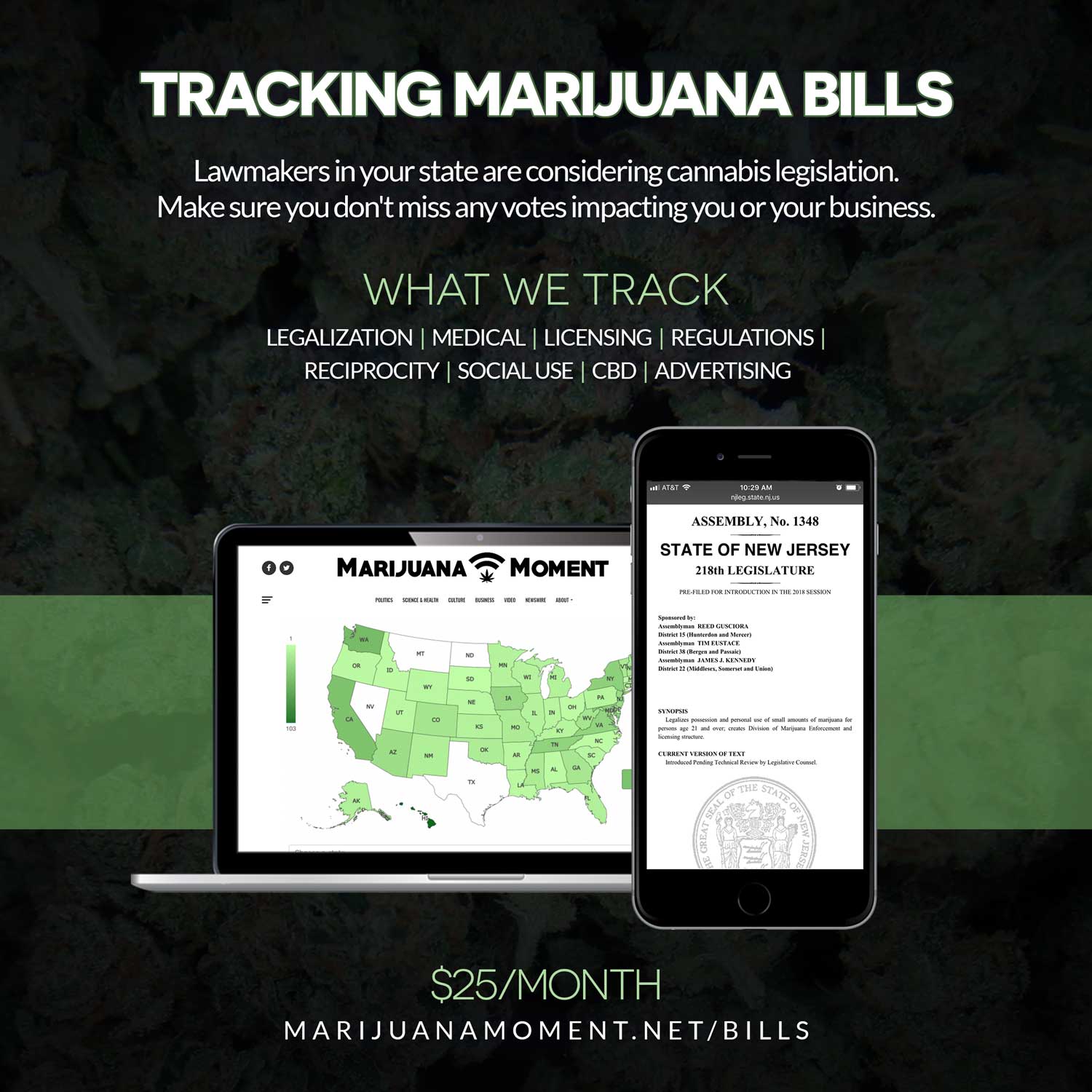
Learn more about our marijuana bill tracker and become a supporter on Patreon to get access.
—
Now that the measure has been enacted, the city manager will need to ensure that budgets and reporting account for “total funds and staff time” spent on THC testing of cannabis-related substances.
There will also need to be a one-time audit of all misdemeanor marijuana enforcement conducted by city police within the past five years, including a breakdown of arrests made and citations issued, with demographic breakdowns for age, gender, race and ethnicity.
“To the best of their ability, the City shall determine: (a) the average total staff hours required per misdemeanor marijuana charge, including officer time, transit time, and any staff processing time; (b) the average total cost to the City per misdemeanor marijuana charge; (c ) the estimated total spent by the City on THC testing for each year under review; and (d) the estimated total spent by the City on misdemeanor marijuana enforcement, including staff and testing costs, for each year under review.”
Going forward, local officials will additionally need to issue annual reports on implementation of the lowest-enforcement priority policy for cannabis possession arrests.
A spokesperson for the Houston Police Department did not immediately reply to Houston Public Media’s questions about how the newly adopted charter amendment will change local law enforcement policy.
Ground Game has previously organized efforts to put more far-reaching measures to decriminalize marijuana under local law on the ballot in several cities across Texas, with some passing and some failing.
In general, the measures that have been approved in Austin, Denton, Elgin, Harker Heights, Killeen and San Marcos were aimed at preventing police from making arrests or issuing citations for Class A or B misdemeanor cannabis possession offenses, unless it’s part of a high priority felony investigation for narcotics or violent crime.
State Attorney General Ken Paxton (R), however, has sued to block enactment of those local cannabis decriminalization laws—saying that “we don’t allow cities the ability to create anarchy by picking and choosing the laws they enforce.”
Paxton lost a race for U.S. Senate to Democrat James Talarico, who supports marijuana legalization.
Attorney General-elect Nathan Johnson (D) also backs legalizing cannabis.
The Texas Supreme Court sided with the current outgoing attorney general in his quest to overturn the local voter-approved cannabis laws.
Meanwhile in Texas, lawmakers are preparing a push to legalize marijuana in the 2027 session.
State regulators have moved to ban certain hemp-derived THC cannabis products, including those containing delta-8 and delta-10 THC. Now classified as Schedule I drugs, possession is treated as a felony, carrying a punishment of 180 days to two years in prison and fines of up to $10,000.
The restrictions are being challenged through litigation filed by hemp companies.