Politics
Hawaii Police Department’s Recognition Of Medical Marijuana Patients’ Gun Rights Is Long Overdue (Op-Ed)

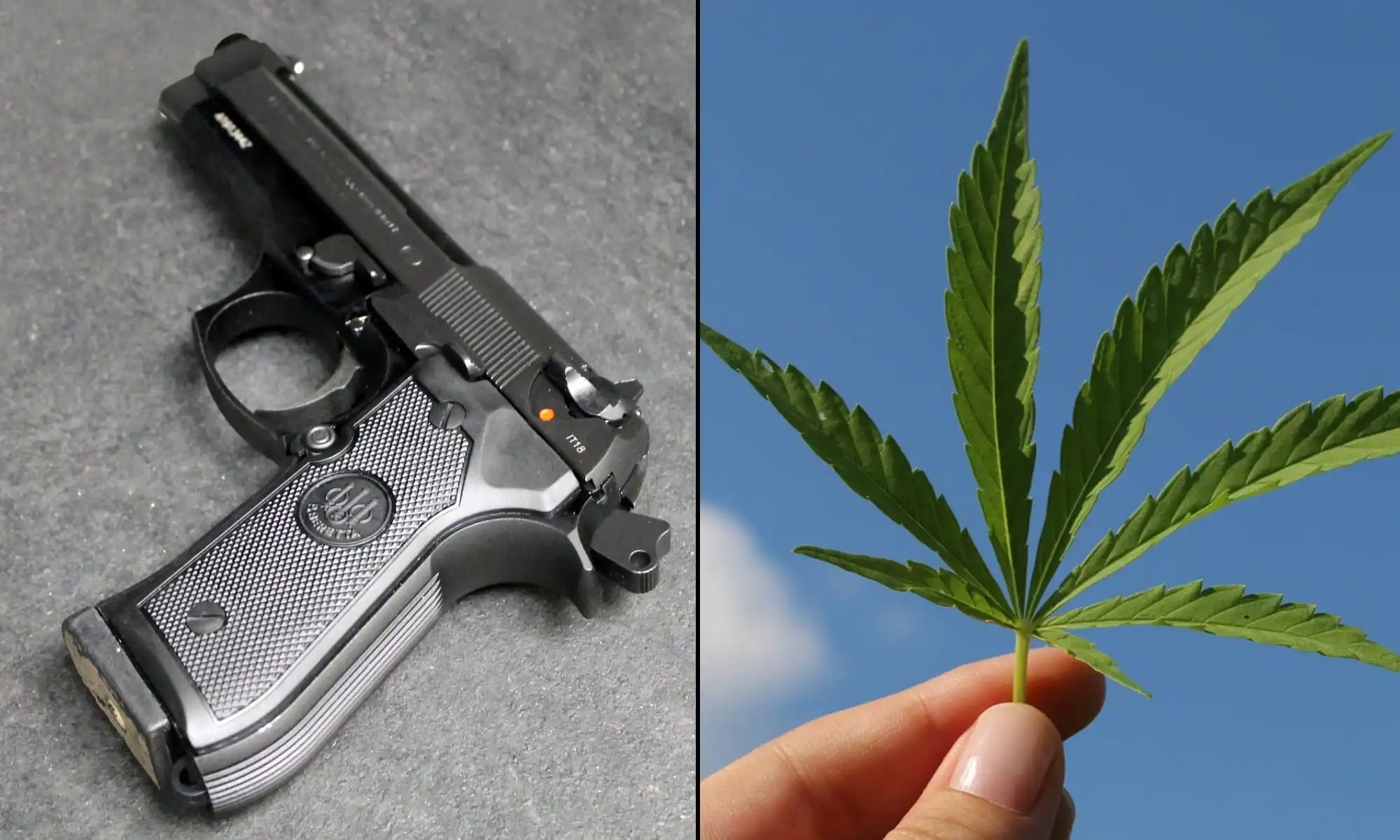
“A lawful medical cannabis patient should not be automatically presumed unfit. A constitutional right should not be denied by stereotype. A permit decision should be based on the person, the facts, and the law—not prejudice.”
By Jim Berg, Greener Healing Ways
For many years, lawful medical cannabis patients in Hawaiʻi County have lived under a painful contradiction. On one hand, the State of Hawaiʻi recognizes their right to use cannabis as medicine. On the other hand, those same patients have often been treated as if their patient status automatically disqualified them from exercising another lawful right: applying for a firearm permit.
That contradiction has finally begun to change.
A June 29 letter from the Hawaiʻi Police Chief Reed K. Mahuna confirmed that the department has reviewed the recent U.S. Supreme Court decision concerning firearm rights and marijuana use and will ensure its firearm-permitting policies conform to the ruling. Most importantly, the letter states that possession of a valid medical cannabis license “will not be treated as an automatic disqualifier for a permit” and that decisions will be made under applicable law through individualized assessment rather than blanket disqualification.
This is a major and welcome development for medical cannabis patients on the Big Island who are also gun owners, hunters, farmers, homeowners, veterans, elders or ordinary citizens seeking to be treated fairly.
For years, patients who followed Hawaiʻi law were placed in an unfair and humiliating position. They could be responsible adults and law-abiding citizens, yet the mere possession of a medical cannabis card could be treated as if it proved they were unfit to apply for a firearm permit.
Many of these patients use cannabis to manage chronic pain, cancer symptoms, insomnia, PTSD, seizures, anxiety or other serious conditions. Some use cannabis in order to reduce reliance on opioids, sedatives, alcohol or other medications. Their medical status alone should never have been treated as proof of dangerousness.
That was never fair. It treated a medical patient as a suspect. It confused lawful therapeutic cannabis use under Hawaiʻi law with unsafe conduct. It imposed a stigma on people who were doing exactly what the State of Hawaiʻi allowed them to do: work with a physician, register legally and use cannabis as medicine.
The recent Supreme Court decision in U.S. v. Hemani changed the legal landscape. The court rejected the federal government’s theory that marijuana use alone could automatically strip a person of the Second Amendment right to possess a firearm, without individualized proof of dangerousness, incapacity, intoxication while armed, addiction, violence or other disqualifying conduct. The decision was narrow, but its central message matters: broad automatic disqualification based only on marijuana use is constitutionally suspect.
This does not mean firearm permits should be handed out automatically. No serious person is arguing that. Public safety still matters. Background checks still matter. Criminal history, violence, threats, unsafe behavior, intoxication while handling firearms, serious impairment and substance misuse still matter. The police still have a duty to evaluate applicants carefully, lawfully and responsibly.
But what should no longer happen is automatic discrimination against a person simply because that person holds a valid Hawaiʻi medical cannabis card.
That distinction is crucial. A medical cannabis license should not be a scarlet letter. It should not function as a permanent civic disability. It should not erase the difference between a responsible medical patient and a dangerous person. The proper standard is individualized assessment, not blanket prejudice.
That is why HPD’s response is so important. HPD did not say that every medical cannabis patient will receive a firearm permit. It said something more modest, more lawful and more just: medical cannabis status alone will not be an automatic disqualifier. Each case will be reviewed according to applicable law and individual facts.
This is exactly the kind of balance Hawaiʻi needs. Our community can respect medical cannabis patients and respect public safety at the same time. We can honor responsible firearm regulation without treating every cannabis patient as irresponsible. We can recognize that cannabis remains complicated under federal law while also acknowledging that constitutional rights should not be denied by broad stigma alone.
For many patients, this change is more than a technical policy update. It is a restoration of dignity. It tells them that their medical choices do not automatically make them second-class citizens. It tells them that the law must look at who they are and how they behave, not simply label them by their patient status.
Still, there remains an important federal problem that patients and firearm dealers must understand: ATF Form 4473.
When a person buys a firearm from a federally licensed firearms dealer, the buyer must complete ATF Form 4473. The current ATF Form 4473 still asks whether the buyer is an unlawful user of, or addicted to, marijuana or another controlled substance. The current warning still states that the use or possession of marijuana remains unlawful under federal law regardless of whether it has been legalized or decriminalized for medicinal or recreational purposes in the buyer’s state.
That means the county permit issue and the federal purchase issue are related but not identical. HPD may no longer treat a valid medical cannabis card as an automatic disqualifier for a county firearm permit. But a federally licensed dealer must still follow federal law, the current ATF form, and the NICS background-check process. If a buyer truthfully answers “yes” to the current marijuana question on Form 4473, the dealer may not complete the transfer. If a buyer answers falsely, that creates serious federal criminal risk.
Patients should not be placed in the position of having to choose between honesty and the exercise of a constitutional right.
ATF has posted a proposed draft revision of Form 4473. That draft changes the marijuana warning. Instead of the current broad warning that marijuana remains unlawful under federal law regardless of medicinal or recreational legality, the draft says that a person can be an unlawful user under federal law even if possession is legal under state law, and that federal law does not permit the use or possession of marijuana for recreational purposes. This wording appears to move away from the older blanket warning against medical cannabis patients, and it may signal a future change in federal treatment of state-legal medical cannabis.
But the draft is clearly marked “DRAFT — DO NOT USE.” It has not replaced the current Form 4473.
So the good news must be stated carefully. In Hawaiʻi County, possession of a valid medical cannabis license should no longer be treated as an automatic disqualifier for a firearm permit. That is a major step forward. But for a purchase from a federally licensed dealer, the current Form 4473 problem still remains unless and until ATF finalizes and implements a revised form or federal law changes more clearly.
This leaves patients in a confusing and unfair bind. A person who already lawfully owns a firearm may now have a stronger constitutional argument after the Hemani ruling, especially if there is no evidence of dangerousness, impairment, violence, addiction or unsafe firearm conduct. But a person attempting to buy a firearm through a federally licensed dealer still encounters the current ATF form and its marijuana question. Local permit reform is therefore necessary, but it is not yet the whole answer.
That is why the next step matters. ATF should promptly clarify how Hemani applies to Form 4473, to federal firearms dealers and to state-legal medical cannabis patients. Congress should also confront the federal contradiction directly. The law should not treat a responsible medical patient as dangerous simply because the patient uses a medicine allowed by the patient’s state.
This is not about being “pro-gun” or “anti-gun.” It is not about being “pro-cannabis” or “anti-cannabis.” It is about fairness under the law.
A lawful medical cannabis patient should not be automatically presumed unfit. A constitutional right should not be denied by stereotype. A permit decision should be based on the person, the facts, and the law—not prejudice.
For that reason, this moment deserves recognition. It is a long-overdue correction and good news for medical cannabis patients across Hawaiʻi Island. It is also a reminder that the work is not finished. Hawaiʻi County has taken an important step toward fairness. Now federal forms and federal policy must catch up.
Jim Berg, MD is a retired integrative family doctor on the Big Island of Hawaii who has practiced for over twenty years as a specialized authority on cannabis medicine through Greener Healing Ways.
Read the Hawaii Police Department’s clarification of its policy on medical cannabis and gun permits below: