Politics
Federal Marijuana Prosecutions Hit Another Record Low In 2025 As State Legalization Expands, Government Report Shows

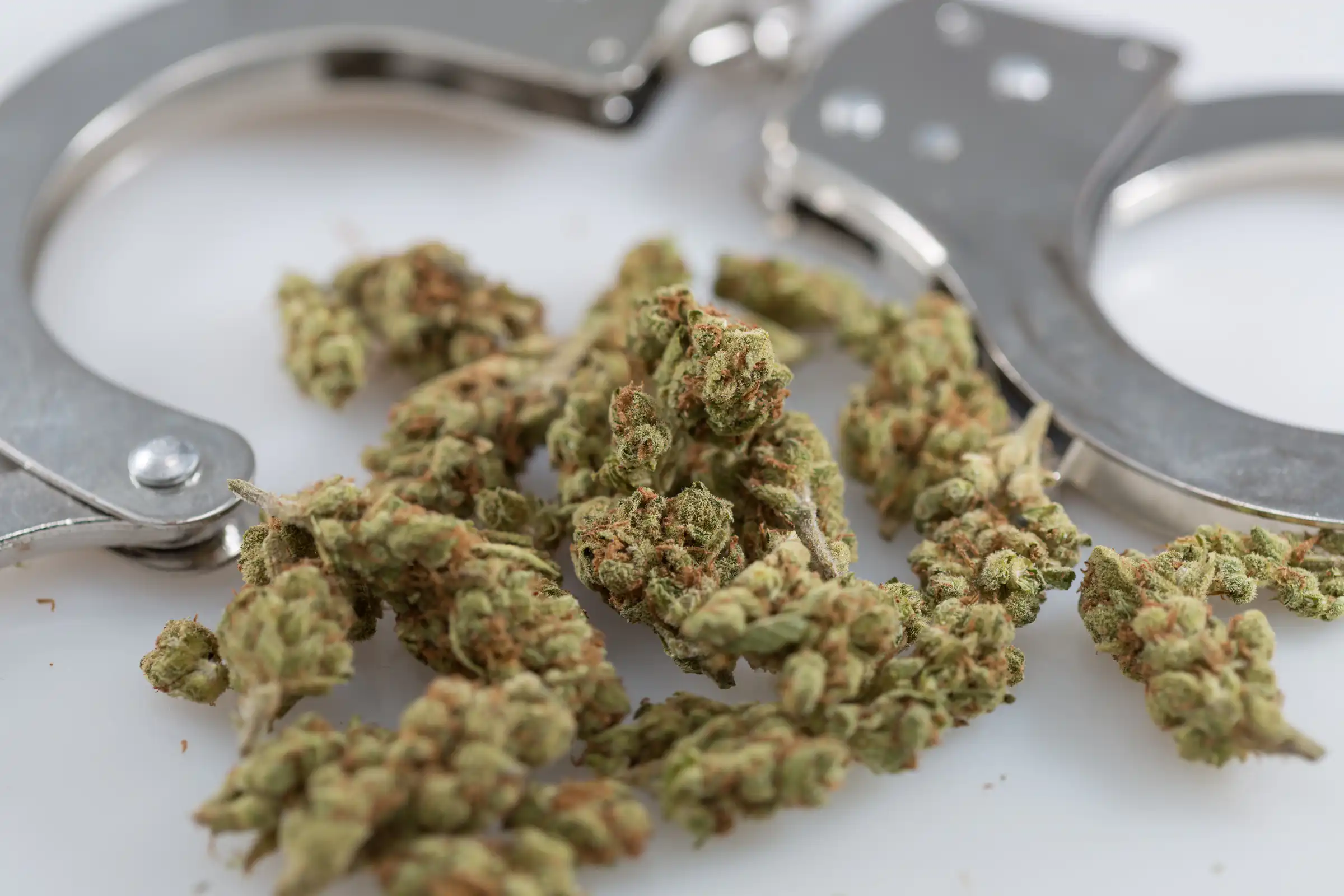
Federal marijuana trafficking cases fell to another record-low in 2025, with a new report from the U.S. Sentencing Commission (USSC) revealing a continued trend amid the expanding state-level reform movement that has given consumers more places to buy legal cannabis.
A recently published USSC fact sheet on drug prosecution trends shows just 383 federal cannabis trafficking cases in the last fiscal year. That marks a decline from the 471 cases reported in 2024.
More broadly, USSC said, marijuana trafficking prosecutions have dropped 62 percent from fiscal year 2021 to 2025.
Shifting federal priorities, which seem to have coincided with state-level marijuana reform efforts, have gradually pushed cannabis near the bottom of the list of drug trafficking cases.
The 383 cases from last year stands in stark contrast to the nearly 3,500 cannabis trafficking cases that were reported in 2015. Just two years before that, in 2013, the marijuana prosecutions amounted to approximately 5,000.
Colorado and Washington State became the first two states to approve recreational marijuana legalization in 2012.
Methamphetamine trafficking cases have dominated the list over the past decade, the USSC document published last month shows. In 2024, cases targeting fentanyl took over as the second most common drug trafficking target, followed by crack cocaine and powder cocaine. The number of heroin trafficking cases (356) was marginally lower than marijuana last year.
A separate USSC data tool shows that the number of people sentenced in federal courts for drug trafficking or possession involving marijuana has declined from 5,554 in 2015 to just 400 last year.

Advocates for cannabis legalization have long argued that providing access to regulated marijuana markets for adults would drive down demand for unlicensed products, translating into less illegal trafficking and fewer arrests for illicit production and sales. The latest USSC data continues to reinforce that argument by illustrating a gradual decline in federal cannabis trafficking cases as more states have enacted legalization.
USSC’s 2025 Sourcebook of Federal Sentencing Statistics, published in April, separately notes that of all federal drug cases last year—for manufacture, sale and transportation—cannabis accounted for about 2.4 percent.
Criminal sentences were also lowest for marijuana among all drug trafficking cases, averaging 44 months—representing an increase from the average 36 months in last year’s report.

Via USSC.
Notably, federal guidelines from USSC advising judges to treat prior marijuana possession offenses more leniently officially took effect in late 2023.
Federal judges have historically been directed to take into account prior convictions as aggravating factors when making sentencing decisions in new cases. But as more states have moved to legalize marijuana, advocates had pushed for the updated guidelines to make it so that a person’s cannabis record didn’t necessarily add criminal history points that could lead to enhanced sentences.
USSC also released a report in 2023 showing that hundreds of people received more serious federal prison sentences in the prior fiscal year because of cannabis possession convictions in states that have since reformed their marijuana laws.
What remains to be seen is whether recent changes in federal marijuana laws under the Trump administration will translate into further declines in cannabis-related prosecutions. The Justice Department last month moved medical cannabis authorized under state programs from Schedule I to Schedule III of the Controlled Substances Act (CSA), and that reclassification could be expanded depending on the outcome of a pending administrative hearing process.
Meanwhile, a coalition of Democratic members of the U.S. House of Representatives and Senate are pushing President Donald Trump to commute the sentences of people who are still serving time in federal prison for marijuana. The move, they say, is a logical next step amid the rescheduling actions.
For what it’s worth, marijuana arrests are driving the overall war on drugs in states where cannabis remains illegal, according to a 2025 NORML analysis of FBI data. And most of those busts are for simple possession.
Data from U.S. Customs and Border Protection (CBP) in 2024, meanwhile, showed that seizures of cannabis at southern border declined again in 2023, as the state marijuana legalization movement continued to expand.