Politics
Delaying Marijuana Sales In Virginia Isn’t A ‘Negative,’ Governor Says After Vetoing The Reform

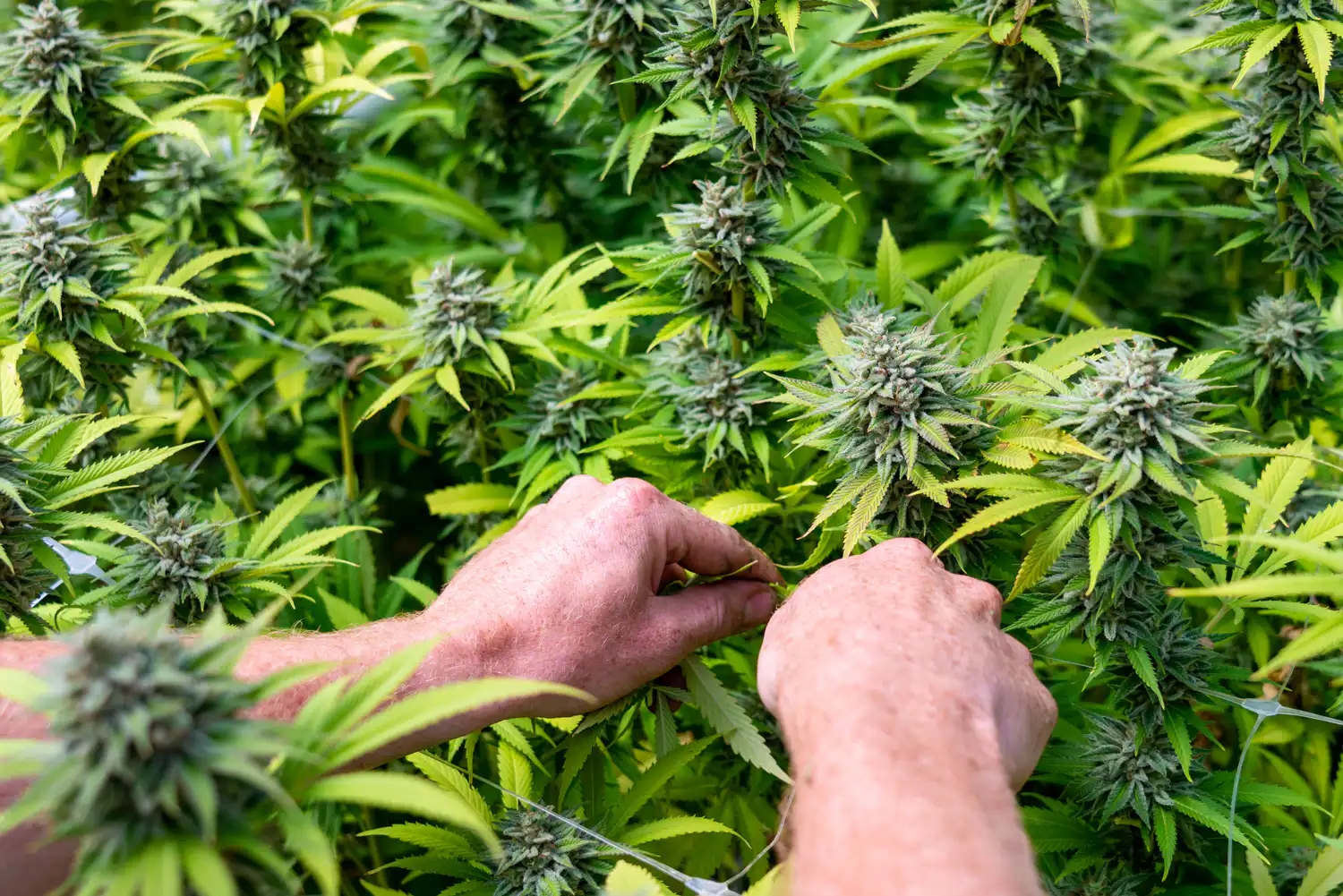
The governor of Virginia is continuing to try to explain her veto last month of legislation to legalize recreational marijuana sales—including by saying it is her view that “taking a little bit longer” to launch the market is not something she sees as “negative” because it is more important to get the details right than to do it fast.
“If I’m going to be responsible for a monumental consequential change to how we do one type of business in Virginia, then do it right,” Gov. Abigail Spanberger (D) said in an interview with Cardinal News that was published on Friday. “The devil’s in the details.”
“The fact that we’re going to be talking a little bit longer about how do you set up a retail cannabis market correctly—I don’t see that as something that is a negative,” she said. “Do people want me to sign a bill or do people want me to get it right, and as the person doing the implementing, what’s most important to me is get it right.”
Lawmakers passed the cannabis sales bills in March, but the governor then suggested changes to the legalization proposal—including delaying the start date for sales by six months, increasing taxes and instituting new criminal penalties for cannabis consumers. The legislature in April declined to take up the amendments during a one-day reconvened session, however, effectively rejecting them. Spanberger then issued a veto.
“Not only did it not give the state enough time to set up for success, but also establishes so many licenses that you can’t sort of tiptoe into, OK, let’s start with X number of licenses and then you’re going to rush the regulatory framework,” the governor said in the new interview. “Where’s the time to hire any of the law enforcement? We’re going to create an entire new law enforcement agency. When do we get them ready? When do they learn the laws that they’re enforcing when the regulators haven’t even built out their framework? When do you apply for your license? If you are able to open your doors as a store come January, when do you get your license? You walk back from that.”
Spanberger believes that the delay will ultimately be good for businesses, and especially for ensuring that the market isn’t cornered by small number of large players.
“There are still a lot of regulatory pieces of how do you make sure we’re expanding the market so it isn’t only the people who are already part of the medical legal market, so they don’t automatically dominate the entirety of the market,” she said.
“These are also businesses: You don’t want to have failed businesses. If you’re flooding the market without any real understanding of what retail interest might be—opening up a full number of licenses at maximum capacity without a full understanding—you’re basically putting people in a place where if they one day say, I might want to have a retail cannabis shop, like move now or you might miss that chance. So now they’re starting to open a business they know potentially nothing about, without any regulatory framework to dig into, potentially bringing all of their personal capital to bear to try and fund this.”
“I’m responsible for getting it right,” Spanberger said. “And if I were to sign a bill that I don’t think sets us up to get it right, then a year and a half from now, it’s headline after headline about, whether it’s like, somebody who lost their shirt because they started this business and they were set up for failure or a public health issue or confusion within the law enforcement community and that is all on me.”
The governor also raised concerns about “challenges” on the federal level for marijuana businesses.
“And then you deal with the issues that, from a lending perspective at the federal level, there’s still real challenges with getting your money in the banking system,” she said. “All of these things need to be figured out, and the biggest problem in all of this is there’s no time to get it right. And when you’re doing something so consequential that has major public safety implications, you’ve got to do it right.”
As she has in past interviews since issuing the cannabis veto, Spanberger said her action was informed by discussions she had about the issue with governors of other states that have enacted legalization.
“Not all experiences are created equal,” she said. There are states who did things that they wish they hadn’t, and we should be endeavoring to learn from whether it’s called their mistakes or the best practices that they’ve sort of led us to. That’s what we as Virginians would want to do.”
The governor additional said she has “respect” for the “tremendous amount of work” that lawmakers did in crafting the now-vetoed cannabis sales legislation.
“Their role is to put forth a bill,” she said. “In the process we have in Virginia, the governor has the option of signing, vetoing or amending. And if I wasn’t supposed to take that option of amending seriously, it wouldn’t be an option in our process… I should utilize it because it’s a responsibility that I use it.”
“I wrote amendments. They are welcome to take up my amendments. The thing about it is like, there was a bill I would have signed, and they passed by all my amendments. That is fully their prerogative. But it is incorrect to say, ‘My goodness, she said she supported this. Now she won’t sign a bill.’ No, I won’t sign that bill, and you won’t even consider my amendments. That creates a space where now we have to potentially go back to the discussion table—which is fine, right, and that’s the reality of it. There is a bill I would have signed. They didn’t want that, but I’m not going to sign just any bill because they don’t want to have a conversation about amendments, and I think that is the tension. And it is wholly the legislature’s prerogative to reject, to accept or even to pass by my amendments. But it was also wholly the prerogative of the governor to say these amendments are so consequential and important to me… Maybe it’s a different story if they had taken up the amendments…. People agree with me, they don’t disagree with me. That’s a different discussion, right?”
Meanwhile, top lawmakers are openly discussing the possibility of including provisions to legalize adult-use cannabis sales in still-outstanding budget legislation that they are due to pass by July 1.
“I wouldn’t say that the cannabis retail market is totally dead yet for this year,” Senate Majority Leader Scott Surovell (D) said recently.
Lawmakers are scheduled to reconvene this month to tackle the budget. If they finalize that legislation close to the July 1 deadline, it could effectively force the governor to quickly sign any deal, even if she doesn’t like its provisions, in order to avoid a potential shutdown of the state government.
Spanberger, for her part, pushed back on the idea that lawmakers would put marijuana in the budget as a tactic to force her to sign it.
“The idea that we, that members of the General Assembly would be holding localities and their budgets in this purgatory space so that they can try and jam me with a budget is two things: one, kind of an outrageous possibility, and two, broadly something that most legislators I have spoken to wholly oppose,” she told The Richmond Times-Dispatch.
A recent survey found that bipartisan majorities of Virginia voters wanted Spanberger to sign the cannabis legislation into law, and that they specifically disagreed with her desire to slow the launch timeline for legal sales.
The governor recently acknowledged in an interview that “a lot of people are not pleased” with her veto of the cannabis legislation. “Friends and family are displeased as well,” she said.
Spanberger has repeatedly responded to criticism of her cannabis amendments from the bill sponsors and advocates by saying the suggested changes came after she spoke to the leaders of other states that have already implemented adult-use marijuana markets.
A spokesperson for Spanberger was not able to name any other governors she talked to about cannabis in response to a question from Marijuana Moment last week, however.
The governor separately recently sought to explain her veto in an earlier interview last week, reiterating that she supports launching a legal cannabis market but worried about what she called a “rushed timeline” and “far more stores across Virginia” than she thinks are appropriate.
Prior to vetoing the cannabis commerce bill, the governor did sign separate legislation to provide resentencing relief for people with past cannabis convictions.
Personal marijuana possession and home cultivation of marijuana has been legal in Virginia since 2021, but then-Gov. Glenn Youngkin (R) twice vetoed bills to provide consumers with a way to legally purchase regulated adult-use cannabis.
Sen. Lashrecse Aird (D), and Del. Paul Krizek (D), the sponsors of the legalization bills, had urged colleagues to vote against the governor’s amendments last month—even if that meant risking a veto from Spanberger when the legislation returned to her desk, which has now occurred.
Here are the other key details of the cannabis bills—SB 542 and HB 642—as approved by lawmakers and with the governor’s suggested amendments:
- Lawmakers voted to allow adults to be able to purchase up to 2.5 ounces of marijuana in a single transaction, or up to an equivalent amount of other cannabis products as determined by regulators. That would represent an increase from the limit in current law of 1 ounce. The governor, however, wanted the amount increased to only 2 ounces.
- Under the legislature’s plan, legal sales could begin on January 1, 2027, but the governor proposed to push that back to July 1, 2027.
- Lawmakers voted to impose an excise tax of 6 percent on cannabis sales as well as a 5.3 percent retail sales and use tax, while allowing municipalities to set an additional local tax of up to 3.5 percent. The governor’s plan was largely the same, though it would have increased the excise tax to 8 percent starting on July 1, 2029.
- Under the legislation as approved by lawmakers, revenue would have been distributed to the Cannabis Equity Reinvestment Fund (30 percent), early childhood education (40 percent), the Department of Behavioral & Developmental Health Services (25 percent) and public health initiatives (5 percent). The governor, however, wanted to put all revenue into the general fund while earmarking it “for purposes such as early childhood education, behavioral health, public health awareness, prevention, treatment, and recovery services, workforce development, reentry, indigent criminal defense, and targeted reinvestment in historically disadvantaged communities.”
- The Virginia Cannabis Control Authority would have overseen licensing and regulation of the new industry, and would have also taken on oversight of hemp, which is currently under the Department of Agriculture and Consumer Services.
- Local governments could not have opted out of allowing marijuana businesses to operate in their area.
- Delivery services would have been allowed.
- Serving sizes would have been capped at 10 milligrams THC, with no more than 100 mg THC per package.
- The governor proposed to make public marijuana use a class 4 criminal misdemeanor instead of civil violation punishable by a $25 fine as under current law. She also wanted to make possessing cannabis by people under the age of 21 a class 1 misdemeanor, punishable with a mandatory minimum fine of $500 or 50 hours of community service, as well as the suspension of drivers licenses for at least six months. Illegally selling or distributing 50 pounds or more of marijuana would have been a class 2 felony punishable by life in prison.
- The governor sought to eliminate support for the Cannabis Equity Reinvestment Fund.
- Existing medical cannabis operators could have entered the adult-use market if they pay a licensing conversion fee that was set at $10 million.
- Cannabis businesses would have had to establish labor peace agreements with workers.
- As passed by lawmakers, the bill would have directed a legislative commission to study adding on-site consumption licenses and microbusiness cannabis event permits that would allow licensees to conduct sales at venues like farmers markets or pop-up locations, but the governor proposed to remove that language.
A coalition of cannabis reform organizations sent the governor a letter this month urging her not to veto the sales legalization legislation even though her amendments were rejected.
“Together, these bills address the real issues surrounding cannabis in the Commonwealth today: an already-existing, unregulated marijuana market operating openly across the state while consumers, communities, and law enforcement are left without the protections of a legal framework,” the groups wrote.
“Let’s be clear: these bills do not create a marijuana market in Virginia. That market already exists,” the letter said. “What these bills do is replace today’s predatory and unaccountable illicit operators with a regulated marketplace, enforceable rules, oversight, product safeguards, age verification, and the strict consumer safety standards already in use for Virginia medical cannabis.”
The letter was signed by Virginia NORML, Marijuana Justice, Virginia Cannabis Association, Marijuana Policy Project and other groups.
Separately, a coalition of hemp businesses that joined with a major alcohol retailer in asking Spanberger to veto the marijuana bill before she did so said the move presents an “opportunity” to craft better cannabis policy.
Meanwhile, the governor signed several other reform bills last month—including measures to protect the parental rights of marijuana consumers and allow patients to access medical cannabis in hospitals.