Politics
Virginia Governor Says Marijuana Bill Amendments Came After Speaking To Colleagues In Other States That Have Legalized

The governor of Virginia is responding to criticism of amendments she is proposing a bill to legalize recreational marijuana sales by saying the suggested changed came after she spoke to the leaders of other states that have already implemented adult-use cannabis markets.
Gov. Abigail Spanberger (D) told local news outlets on Tuesday that the message she got from governors of other states is that “across the board, the top priority that people continue to put forth is do it methodically—because you have to do it right the first time.”
“I’ve spent a lot of time talking to governors and folks from other states about those who do have a legalized recreational cannabis market, retail market,” the governor said. “Every one of them said some version of, ‘Make sure you get it right the first time and don’t rush it because there will be things that come up.’”
The local news reports did not say whether Spanberger specified which other governors she spoke to about cannabis, and a spokesperson in her office did respond to Marijuana Moment’s request for clarification.
On Monday, Spanberger proposed amendments to the cannabis commerce legalization measure—including delaying the start date for sales by six months, increasing taxes and instituting new criminal penalties for cannabis consumers.
The move sparked backlash not just from marijuana reform advocates but also from the sponsors of the legislation, who said the governor’s proposal “creates a less accessible legal marketplace” and “represents a significant departure from the framework passed by the General Assembly, raising serious concerns about fairness, access and public safety.”
The governor, for her part, told WRIC-TV that “my goal is to make sure that there’s great clarity both in implementation and in the ending retail market that we end up with.”
She also told Virginia Scope that her move was intended to “clearly define what a legal market is.”
“It’s about making very clear that while we have a legal recreational marijuana market, or we are moving towards a retail recreational marijuana market, that it’s still clear that there are certain things that continue to be illegal,” she said.
Here are the other key details of the cannabis bills—SB 542 and HB 642—as approved by lawmakers and with the governor’s suggested amendments:
- Lawmakers voted to allow adults to be able to purchase up to 2.5 ounces of marijuana in a single transaction, or up to an equivalent amount of other cannabis products as determined by regulators. That represents an increase from the limit in current law of 1 ounce. The governor, however, wants the amount increased to only 2 ounces.
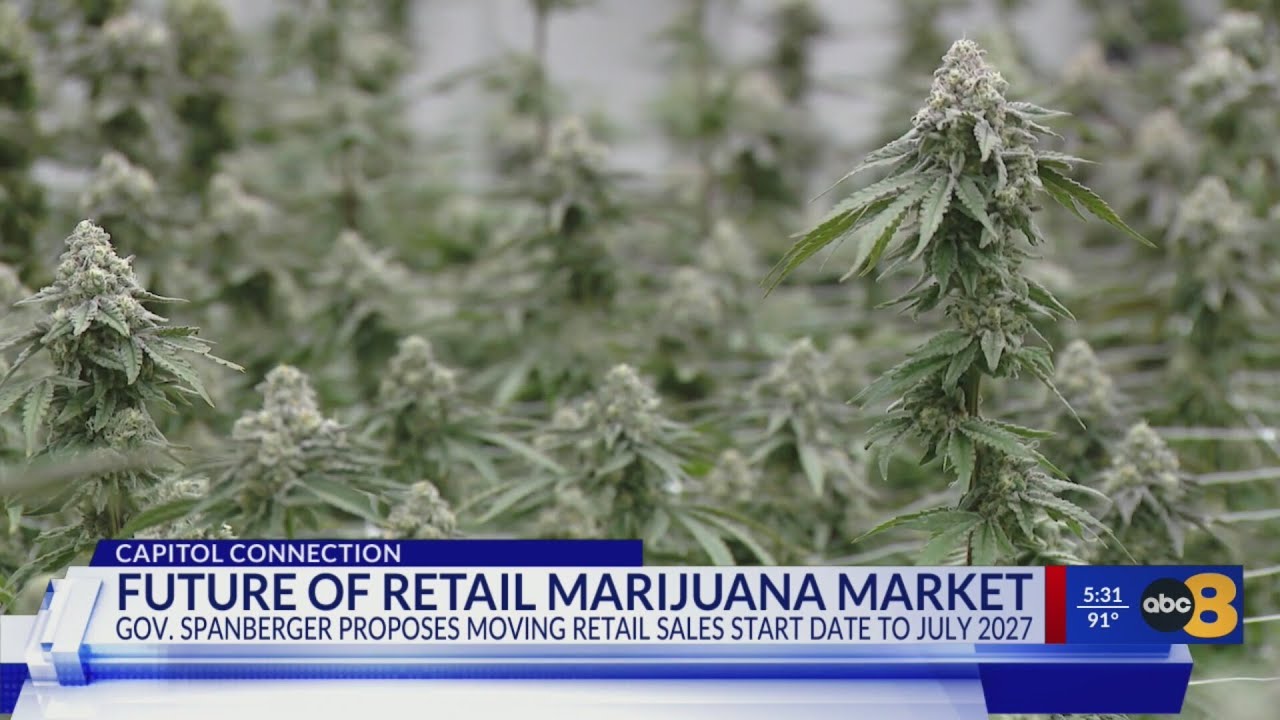
- Under the legislature’s plan, legal sales could begin on January 1, 2027, but the governor is proposing to push that back to July 1, 2027.
- Lawmakers voted to impose an excise tax of 6 percent on cannabis sales as well as a 5.3 percent retail sales and use tax, while allowing municipalities to set an additional local tax of up to 3.5 percent. The governor’s plan is largely the same, though it would increase the excise tax to 8 percent starting on July 1, 2029.
- Under the legislation as approved by lawmakers, revenue would be distributed to the Cannabis Equity Reinvestment Fund (30 percent), early childhood education (40 percent), the Department of Behavioral & Developmental Health Services (25 percent) and public health initiatives (5 percent). The governor, however, wants to put all revenue into the general fund while earmarking it “for purposes such as early childhood education, behavioral health, public health awareness, prevention, treatment, and recovery services, workforce development, reentry, indigent criminal defense, and targeted reinvestment in historically disadvantaged communities.”
- The Virginia Cannabis Control Authority would oversee licensing and regulation of the new industry, and would also take on oversight of hemp, which is currently under the Department of Agriculture and Consumer Services.
- Local governments could not opt out of allowing marijuana businesses to operate in their area.
- Delivery services would be allowed.
- Serving sizes would be capped at 10 milligrams THC, with no more than 100 mg THC per package.
- The governor is proposing to make public marijuana use a class 4 criminal misdemeanor instead of civil violation punishable by a $25 fine as under current law. She also wants to make possessing cannabis by people under the age of 21 a class 1 misdemeanor, punishable with a mandatory minimum fine of $500 or 50 hours of community service, as well as the suspension of drivers licenses for at least six months. Illegally selling or distributing 50 pounds or more of marijuana would be a class 2 felony punishable by life in prison.
- The governor is seeking to eliminate support for the Cannabis Equity Reinvestment Fund.
- Existing medical cannabis operators could enter the adult-use market if they pay a licensing conversion fee that is set at $10 million.
- Cannabis businesses would have to establish labor peace agreements with workers.
- As passed by lawmakers, the bill would have directed a legislative commission to study adding on-site consumption licenses and microbusiness cannabis event permits that would allow licensees to conduct sales at venues like farmers markets or pop-up locations, but the governor is proposing to remove that language.
The legislature is set to reconvene to address the governor’s proposal on April 22.
Meanwhile, Spanberger also suggested significant amendments to separate legislation that would provide resentencing relief to people with prior marijuana convictions.
Separately, the governor signed several other reform bills this week—including measures to protect the parental rights of marijuana consumers and allow patients to access medical cannabis in hospitals.