Politics
Congress Should Regulate THC Products, Businessman In Both The Marijuana And Hemp Industries Says (Op-Ed)

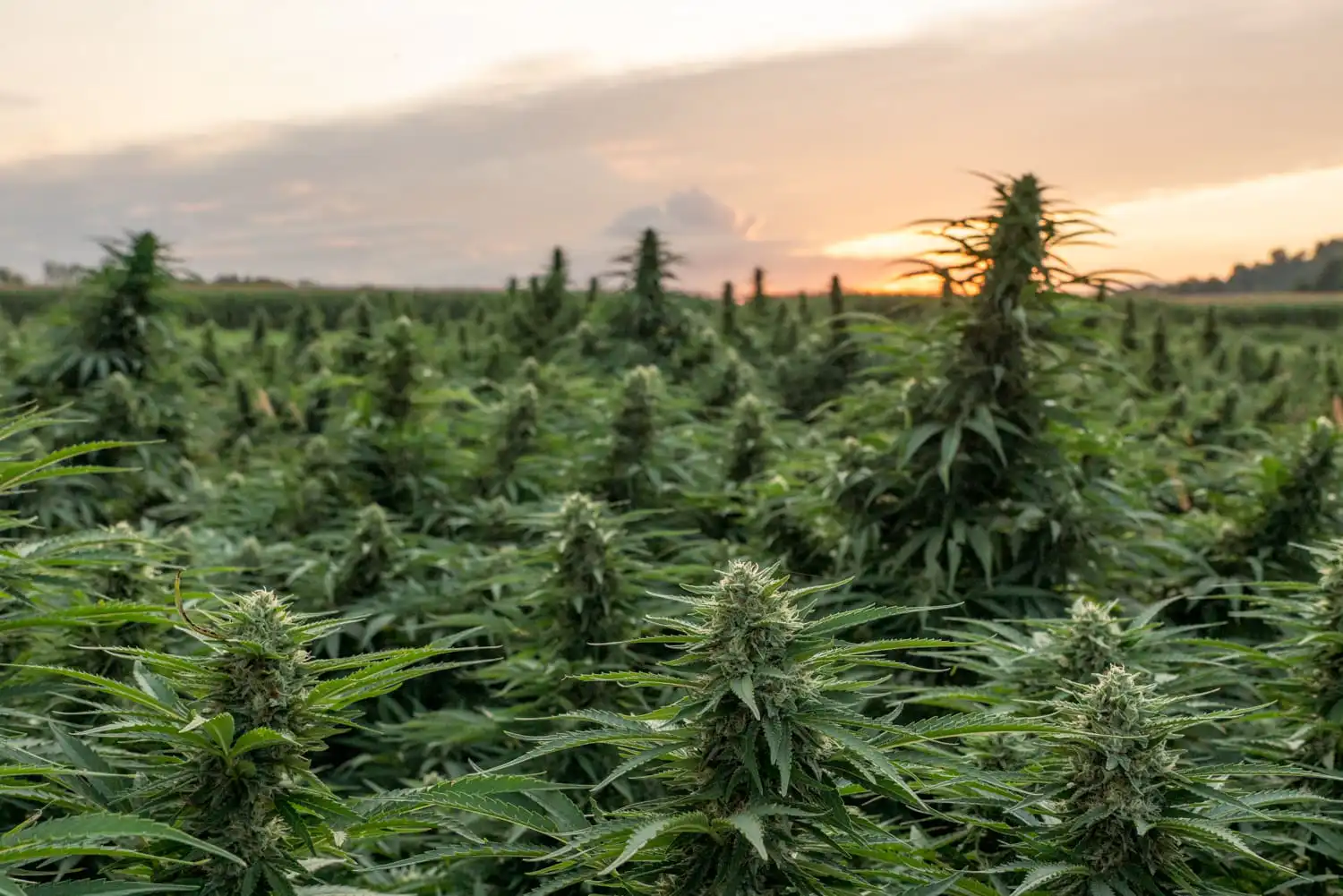
“Eliminating a competing channel is not the same as regulating it… Responsible operators on both sides should want rules that protect consumers and make it harder for bad actors to compete.”
By Dylan Raap, Upstate Elevator Supply Co.
President Donald Trump signed a stopgap spending bill last week that keeps the federal government funded through December 11. Tucked inside it is a provision that could decide whether companies like mine are still operating next spring. A federal ban on most hemp products containing THC had been set to take effect November 12. It now takes effect December 11.
That is a twenty-nine-day reprieve, and I’ll take it. The House voted 370 to 48 and the Senate 90 to 6, which should tell us something: there is still room for bipartisan agreement on hemp. But a month is not certainty. And one piece of the ban wasn’t delayed at all. Cannabinoids that the cannabis plant cannot produce on its own still become illegal on November 12. I have no quarrel with that part.
I run Upstate Elevator, a hemp company in Vermont. We make full-spectrum CBD products, and hemp-derived beverages that contain THC. Through a second company that carries the same name, I also hold a license in Vermont’s regulated adult-use cannabis market. I have an obvious stake in how this ends, and I see it from both sides of a line most people in this debate stand on only one side of.
Which is why I think my industry needs to be candid about how we got here. Congress is not wrong that hemp needs rules.
The 2018 Farm Bill legalized hemp by defining it as cannabis containing no more than 0.3 percent delta-9 THC by dry weight. That created a national market with interstate commerce and products on shelves across the country.
It also created openings nobody anticipated. Alongside the wellness companies, a market for high-dose intoxicants sold with little oversight grew, sometimes without an age check and sometimes in packaging that would look at home in the candy aisle. I don’t defend those products, and the rest of the hemp industry shouldn’t either.
If you make something intoxicating, you should expect it to be regulated.
What Congress passed last November was a different thing entirely. The new federal definition allows finished hemp products to contain no more than 0.4 milligrams of total THC per container. The units are the whole story. Not per serving. Per container. And “total THC” captures trace amounts that occur naturally in the plant, including in varieties bred to produce almost none of it.
Consider a one-ounce bottle of full-spectrum CBD tincture, the kind a 68-year-old buys for her knees. Thirty servings, and a few milligrams of THC across the entire bottle. Nobody is getting high on it. Under the new definition, that bottle is illegal—not because of anything it does to the person taking it, but because it fails a math test written for a different problem. That is collateral damage, not consumer protection.
We already know how to write a better standard, because we wrote one for alcohol. Federal law lets a drink labeled non-alcoholic contain up to half a percent alcohol by volume, because that standard is built around what a product does to the person drinking it rather than what an instrument can detect in the bottle.
The president saw the same distinction. In April, he called on Congress to update the law so Americans “can continue to access the full-spectrum CBD products they have come to rely on,” while preserving Congress’s intent to restrict products that pose real health risks. That should be common ground.
The state-licensed cannabis industry has a stake in getting this right too. Upstate Elevator operates in both channels, and I understand why licensed cannabis businesses are frustrated. On the adult-use side, we pay for testing, tracking, packaging rules, inspections and a tax structure that hemp operators don’t face.
But eliminating a competing channel is not the same as regulating it. A mislabeled product or a gummy marketed to a minor damages trust in the whole cannabinoid category. Responsible operators on both sides should want rules that protect consumers and make it harder for bad actors to compete.
Meanwhile, the ban is arriving ahead of schedule as core service providers start to pull out. Square has told sellers to pull CBD and hemp items from their catalogs by October 15, nearly two months before the ban now takes effect. At least one national carrier is cancelling hemp policies with October effective dates. Banks and chain retailers are running the same calculation on the same kind of timeline.
Twenty-nine extra days doesn’t give my own company much to work with either. We buy raw material six months ahead of the products it goes into. Co-packing runs are booked ninety days out or more. Packaging is printed by the tens of thousands. Farmers made planting decisions this spring for crops they are harvesting right now. And no retailer will write a purchase order for inventory whose legal status expires in a few weeks.
A one-month reprieve is not long enough to make product, and it is not long enough to hold inventory either.
That is the lesson of the past year. Hemp is not one thing anymore. It is fiber and grain, seed, CBD, full-spectrum extracts carrying trace amounts of THC and yes, gummies and beverages that can get you high. One number in the law, applied as though all of that carries the same risk, is how we ended up here.
Regulate products by what they do to the person who uses them, and put hard rules on the intoxicating ones. But don’t outlaw a bottle of full-spectrum CBD because a lab can detect a trace of THC in it.
Congress can still finish a durable framework by December 11, and it should. Proposals are already drafted, including one from Rep. Andy Barr (R-KY) and Angie Craig (D-MN) to broadly regulate hemp products and another from Reps. Beth Van Duyne (R-TX) and Greg Landsman (D-OH) that would treat hemp beverages roughly the way we treat beer and wine.
If December 11 arrives without a finished bill, the fallback should be a real bridge, an extension long enough for the next Congress to finish the job, not another few weeks bolted onto the next government funding fight.
Either way, my industry should meet Congress with a package rather than a plea, and much of that package is already written.
Hemp beverages are adult beverages and should be labeled and sold that way: 21 and over, with potency limits that cap what a serving and a package can contain, labeling clear enough that a customer knows what they are buying, independent batch testing and packaging no one could mistake for a children’s product.
Rules like those cost money to comply with, and good actors are already doing most of it voluntarily. They are still the better trade than a definition that makes a bottle of CBD tincture illegal by arithmetic.
Congress bought itself a month. It should spend that month writing clear federal rules that protect consumers and the jobs that depend on getting this right, because prohibition does not reliably take products off the market. It takes out the companies that label them, test them and check ID, and it leaves behind the operators who never did any of that. That is the opposite of what the members who voted for this ban were trying to accomplish.
Twenty-nine days isn’t much. It’s more than we had last week. Use it.
Dylan Raap is the founder and CEO of Upstate Elevator Supply Co., a Vermont-grown, family-owned hemp company.