Politics
Alcohol Lobbyists Encouraged Law Enforcement Officials To Push For Federal Hemp Crackdown, Report Says

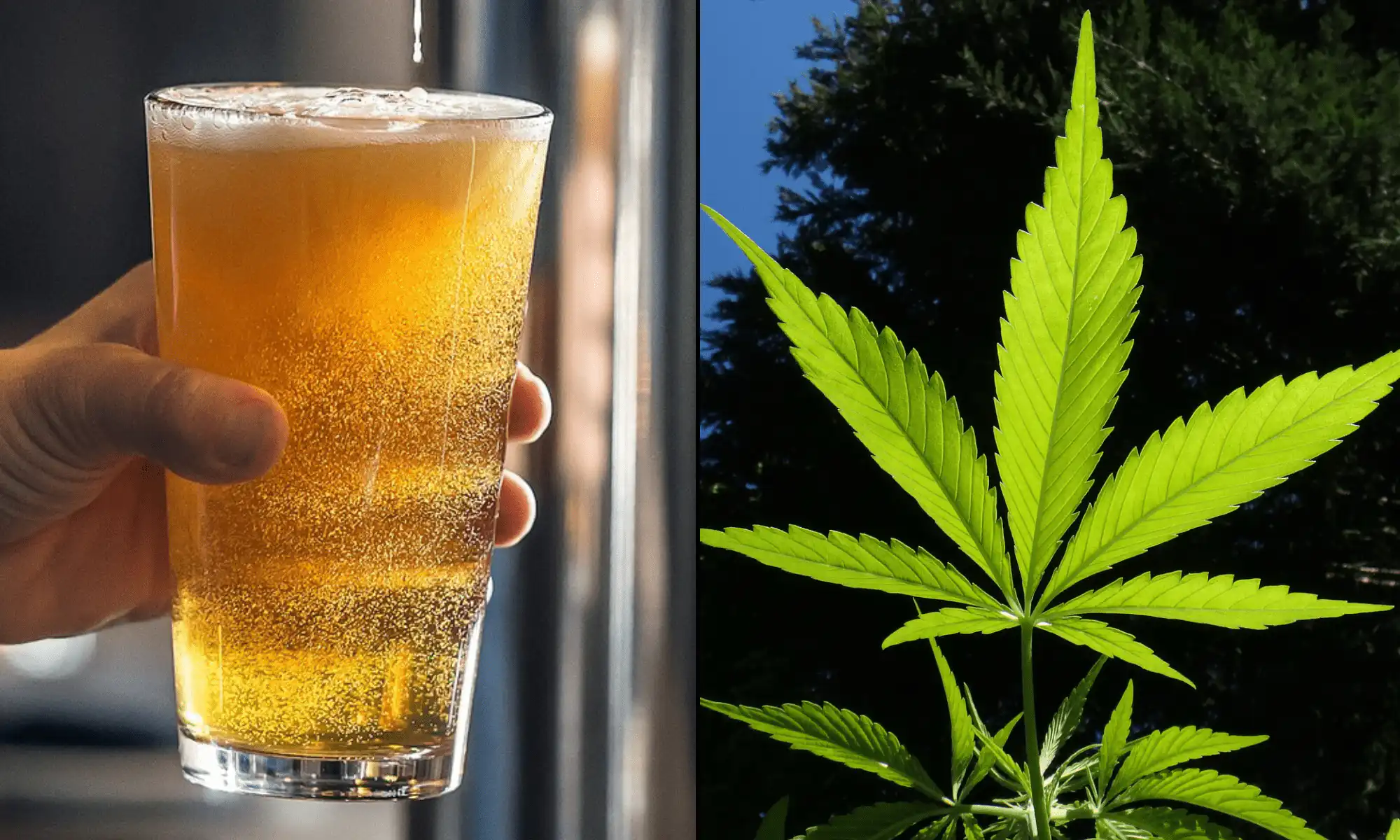
Alcohol industry lobbyists have pushed top state law enforcement officials to pressure Congress in support of keeping the federal recriminalization of hemp THC products on track, according to a new report.
Politico on Thursday reported it had obtained a “collection of emails” in which lobbyists for major alcohol companies such as Anheuser-Busch, Molson Coors and Diageo urged state attorneys general to sign a letter that asked Congress not to reverse course on the scheduled hemp product ban.
“There are a couple fringe U.S. Senators who would like to extend the loophole by another year in the CR being debated this weekend on Capitol Hill,” Todd Kranda, a partner at the firm Kelsch, Ruff, Kranda, Nagle and Ludwig, wrote in a July email to North Dakota’s attorney general, referring to a continuing resolution to fund the government, the outlet reported.
Kranda said in the email that he was working on behalf of Anheuser-Busch, Politico reported, adding that it and other similar emails were “obtained by a hemp industry representative through public records requests and shared” with the outlet.
In August, North Dakota Attorney General Drew Wrigley (R) joined a bipartisan coalition of 34 other state and territory attorneys general in sending a letter asking federal lawmakers to reject “any effort to delay, repeal, suspend, or weaken” the hemp ban and ensure it “takes effect as enacted and remains in place thereafter.”
Hemp derivatives with less than 0.3 percent delta-9 THC on a dry-weight basis were federally legalized under the 2018 Farm Bill that President Donald Trump signed during his first term in office. But late last year, the president signed new legislation containing provisions that redefined hemp to make it so only products with 0.4 milligrams of total THC per container would remain legal after November 12.
Now, however, under provisions included in a funding bill Trump signed last month, the effective date of the ban for most products is being pushed back to December 11 to give lawmakers more time to craft regulations for hemp derivatives. There is a carve-out, however, to allow the recriminalization on November 12 of synthetic cannabinoids “that are not capable of being naturally produced by a Cannabis sativa L. plant.”
Meanwhile, a Republican congressman is raising the possibility that provisions to reverse the still-planned federal recriminalization of hemp THC products could be included in a broader budget reconciliation bill during the lame-duck session of Congress following next week’s midterm elections.
“I think we need to get my THC regulatory bill passed, and if we could get that into a reconciliation bill before the 11th of December, that’d be fabulous,” Rep. Morgan Griffith (R-VA) told Roll Call this week, referring to the current date by which hemp THC products are set to become federally illegal again.
Earlier this year, Griffith and Rep. Marc Veasey (D-TX) filed the Hemp Enforcement, Modernization, and Protection (HEMP) Act, which would keep hemp products legal and enact new regulations on the market.
The GOP lawmaker also told Roll Call that he thought provisions of his legislation could be “combined with a measure related to taxes on hemp-derived products,” such as a beverage-focused bill from Rep. Beth Van Duyne (R-TX) that would keep hemp THC drinks legal while taxing and regulating them like alcohol.
Griffith acknowledged that certain other Republican lawmakers such as Rep. Andy Harris (R-MD) and Sen. Ted Budd (R-NC) “just want to stop” intoxicating hemp products, but he argued that “if we don’t do something before that December 11 deadline, that it’s going to create all kinds of issues.”
“So, now the question becomes: Do you want to have good products that are third-party tested, that [have] a restriction on the age of purchase, that has all this other stuff? Some of the states are doing that,” he said. “But if you’re going to look at it from a federal level, I don’t think we can stop it.”
Herb Light, a company that makes low-dose THC beverages, recently launched a promotion that lets customers who are purchasing a 12-pack of THC drinks add a six-pack for their congressional lawmakers.
The company says it will handle delivery to lawmakers and will include a letter urging support for a pending bill in Congress to keep hemp THC drinks federally legal under a new system of regulations.
Members of Congress are debating how and whether the crop’s derivatives should be regulated as an alternative to prohibition.
Several Republican lawmakers recently spoke to Marijuana Moment about the kinds of rules they would like to see enacted to keep hemp THC products legal.
A number of lawmakers from both chambers and both parties have filed or are circulating a growing number of bills to prevent the scheduled federal recriminalization of hemp THC drinks and other products. Until now, none of those proposals have gained traction with congressional leaders.
In addition to the bills from Griffith and Van Duyne, Rep. James Comer (R-KY), who chairs the House Oversight and Government Reform Committee, is circulating legislation that would delay a planned federal ban on hemp THC products and institute some regulations—including packaging requirements, testing rules and age limits.
Separately, Rep. Andy Barr (R-KY), filed a lengthier proposal to prevent the federal recriminalization of hemp THC products and put in place a number of regulations for manufacturing, labeling, sales and taxation of hemp-derived products, including an age limit of 21.
Trump and White House officials repeatedly pressed Congress to delay, alter or reverse the ban in recent months.
In a letter to House Speaker Mike Johnson (R-LA) in June, for example, White House Office of Management and Budget (OMB) Director Russell Vought said the Trump administration wants lawmakers to “ensure the fair treatment of hemp products”—specifically citing Barr’s earlier amendment to keep many hemp products legal while adding regulations and taxes.
The administration “welcomes the opportunity to work with the Congress to, at a minimum, update the statutory definition of final hemp-derived cannabinoid products to allow Americans to benefit from access to appropriate full-spectrum CBD products,” OMB separately said in June, “while preserving the Congress’s intent to restrict the sale of products that pose serious health risks.”
Also in April, the president himself urged congressional lawmakers to again redefine hemp to avoid recriminalization of full-spectrum CBD products.
“I am calling on Congress to update the Law to ensure that Americans can continue to access the full-spectrum CBD products they have come to rely on, and that help them, while preserving Congress’s intent to restrict the sale of products that pose Health risks,” Trump said in a Truth Social post.
“We must get this done RIGHT and FAST, especially for those who saw that CBD helps them,” he said. “Plus, I am told it will also help our GREAT FARMERS, who we love, and will always be there for.”
Some members of the alcohol industry have also urged Congress to regulate, rather than ban, hemp products.
The National Restaurant Association recently sent a letter urging congressional leaders to delay the federal recriminalization of hemp THC beverages and replace it with a regulatory framework that “ensures consumer safety while meeting growing market demand” for the products as an alternative to alcohol.
Major retailer Target, meanwhile, recently moved to expand its sales of hemp THC drinks into more states.
Meanwhile, the hemp product issue has proved controversial within the cannabis reform movement.
The Marijuana Policy Project (MPP) recently sent an action alert asking its supporters to pressure Congress to reverse the scheduled ban on hemp THC products and institute a system of regulations for all cannabinoids as an alternative to criminalization.
A former MPP staffer who now works for the American Trade Association for Cannabis and Hemp (ATACH), pushed back in an op-ed for Marijuana Moment, however, arguing that “the charade of hemp intoxicants must end” and that “sneaking in the back door with synthetic drugs nobody asked for is not the path to legalization.”