Politics
Virginia Lawmakers Warned That Increasing Fines For Public Marijuana Use Will Worsen Racial Disparites

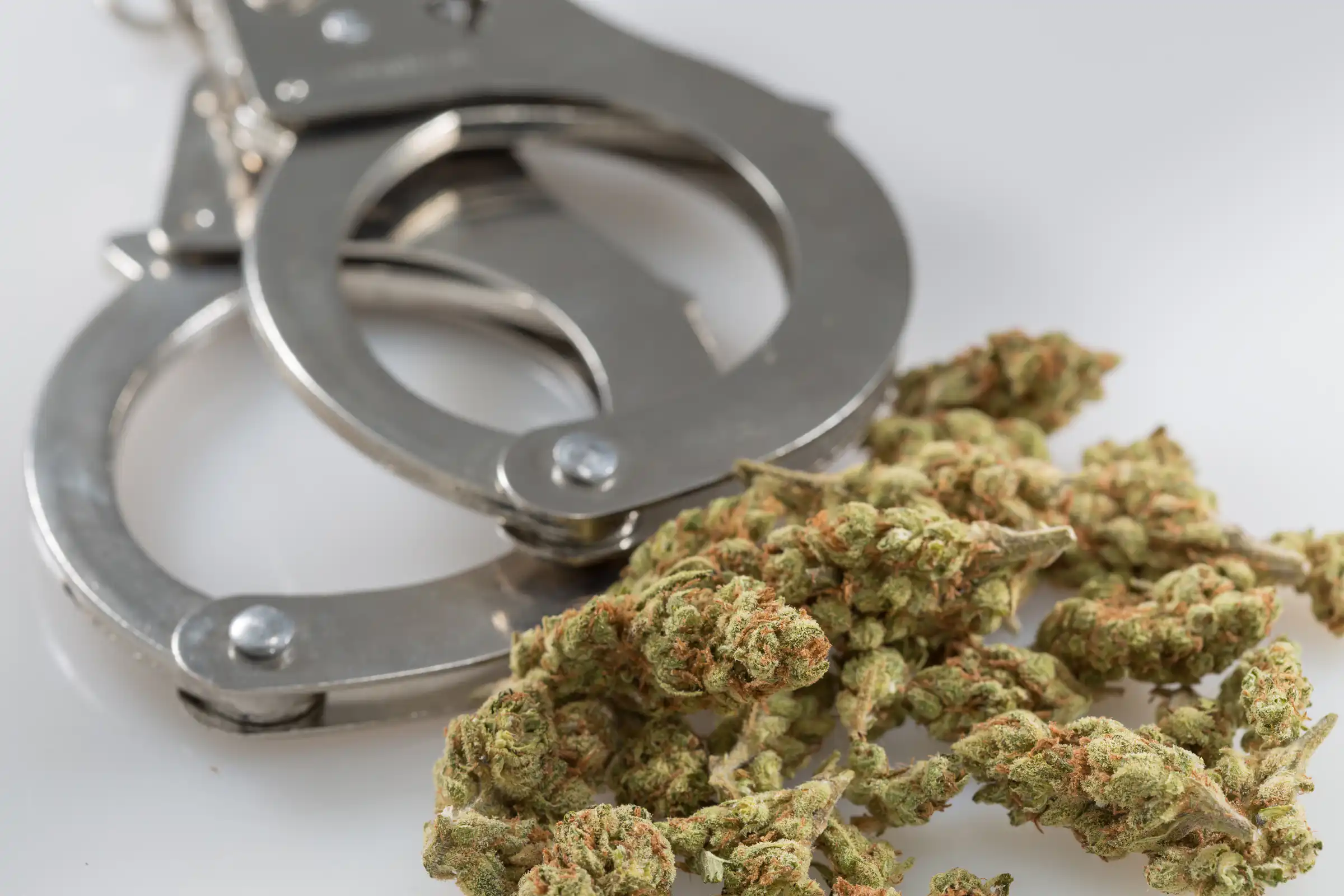
“If Black Virginians only make up 19 percent, how is it that they are 47.7 percent of those who are receiving the citations?”
By Markus Schmidt, Virginia Mercury
Youth advocates are urging Virginia lawmakers to reconsider stiffer penalties for public marijuana use before the state opens its legal adult-use market next summer, warning that the changes could place a disproportionate burden on young people, their families and Black communities.
The maximum civil penalty for consuming or offering marijuana in public is set to rise from $25 to $250 on July 1, 2027, the same day retail sales are scheduled to begin. A second offense also carries a $250 fine and requires substance-use education or treatment, or both, if available, while a third or subsequent offense is a Class 4 misdemeanor.
Valerie Slater, executive director of RISE for Youth, told the Joint Commission to Oversee the Transition of the Commonwealth into a Cannabis Retail Market earlier last week that the higher fine would take effect as marijuana enforcement involving young people increasingly begins in schools.
“What’s really troubling is how increasingly the enforcement has moved into the schoolhouse while we are also looking at an increased impact on Black adults,” Slater said.
Her presentation was one part of a broader commission meeting that also examined marijuana offense trends and plans for enforcing the new market.
The Virginia Cannabis Control Authority is expected to lead that work, with temporary assistance from the Virginia Alcohol Beverage Control Authority while the cannabis agency builds its enforcement staff.
Complaints shift towards schools
Marijuana-related juvenile intake complaints fell 30 percent between fiscal 2019 and fiscal 2024, from about 2,700 to 1,904, according to Virginia Department of Juvenile Justice data cited by RISE for Youth. But the share originating in schools rose from 17 percent to 54 percent, while the share involving 16- and 17-year-olds fell from 68 percent to 48 percent, indicating a shift toward younger adolescents.
Girls also grew from 25 percent to 30 percent of the youth involved in marijuana-related complaints, although the decline in total complaints means the figures do not necessarily show an increase in the number of girls referred.
“We did not stop enforcing, just where we went with it changed,” Slater said. “We stopped looking at the community, and we started looking at schools.”
Current Virginia law separately imposes a civil penalty of up to $25 and mandatory education or treatment for underage marijuana possession or consumption. Possessing or consuming marijuana on public school grounds during school hours or activities can be charged as a Class 2 misdemeanor.
Slater warned that a young person could face several consequences from the same incident, including school discipline, juvenile intake, the underage penalty and the higher public-consumption fine. Whether those provisions could overlap would depend on the circumstances and how authorities decide to charge the case.
“It’s not going to be that middle schooler who’s going to be paying for it,” Slater said. “It’s going to be their family. That’s who’s going to shoulder that burden.”
Slater also noted Black Virginians make up about 19 percent of the state’s population but accounted for 47.7 percent of public-use citations in data analyzed by RISE for Youth.
“If Black Virginians only make up 19 percent, how is it that they are 47.7 percent of those who are receiving the citations?” she said. “If indeed 47.7 percent of all of the public-consumption citations are against Black Americans, then we move now to $250 as the amount that is being assessed against Virginians, I can promise you, that’s a whole lot of money.”
RISE for Youth’s written report also pointed to disparities throughout Virginia’s juvenile justice system. In fiscal 2025, Black youth represented 44.2 percent of intake cases, 53.4 percent of detainments and 70.9 percent of direct-care placements, according to DJJ data cited in the report.
The figures measure different groups at separate stages of the system and do not establish that marijuana enforcement caused the disparities. Slater argued, however, that they show the risks of increasing penalties within a system where Black youths already experience disproportionate outcomes.
Del. Cia Price, D-Newport News, said the presentation placed firm numbers alongside experiences long described by affected communities.
“It does not come as any surprise based on what was happening to the adults, but it is sickening and disheartening to see that it is following our youth,” Price said.
Advocates seek changes before the market opens
Slater asked lawmakers to leave the public-consumption fine at $25. If the increase remains, she said, minors should be explicitly exempted.
RISE for Youth also wants lawmakers to eliminate criminal penalties and delinquency treatment for youth marijuana possession and consumption, adopt a cannabis education curriculum developed by Stanford Medicine and dedicate 30 percent of retail marijuana tax revenue to youth education, treatment and other services administered by the Department of Behavioral Health and Developmental Services.
“Why are children using, not how can we get money out of our families?” Slater said. “Why are children using, and what should we be doing to ensure that they are not using?”
Del. Paul Krizek, D-Fairfax, who sponsored the cannabis retail legislation in the House, said lawmakers should focus on changing behavior rather than increasing a penalty that has not been shown to work.
“Having data that shows $25 doesn’t work, $250 is just going to double down on something that’s not working,” Krizek said.
He also raised concerns that unpaid fines could be sent to collection agencies, potentially damaging young people’s credit before they turn 18 or leaving their families responsible for the debt.
“It’s a bad cycle, and we all know it is, and so we need to figure out what we can do that will change that,” Krizek said. He added that revenue from legal sales could support educational programs for young people.
Separate data presented by the Virginia Criminal Sentencing Commission showed that marijuana possession charges under the state’s former criminal statute have nearly disappeared, falling from 31,837 in fiscal 2018 to three in fiscal 2026.
The commission’s principal measure of marijuana distribution charges also declined from 5,439 in fiscal 2019 to 1,342 in fiscal 2026. The figures do not include Fairfax Circuit Court or juvenile court data.
This story was first published by Virginia Mercury.