Politics
The Latino Community Is The Invisible Backbone Of The Cannabis Industry (Op-Ed)

“Continuing down the path of aggressive and over-punitive immigration policies poses a direct threat to the future of this industry.”
By Ishaq Ali, Latino Cannabis Alliance
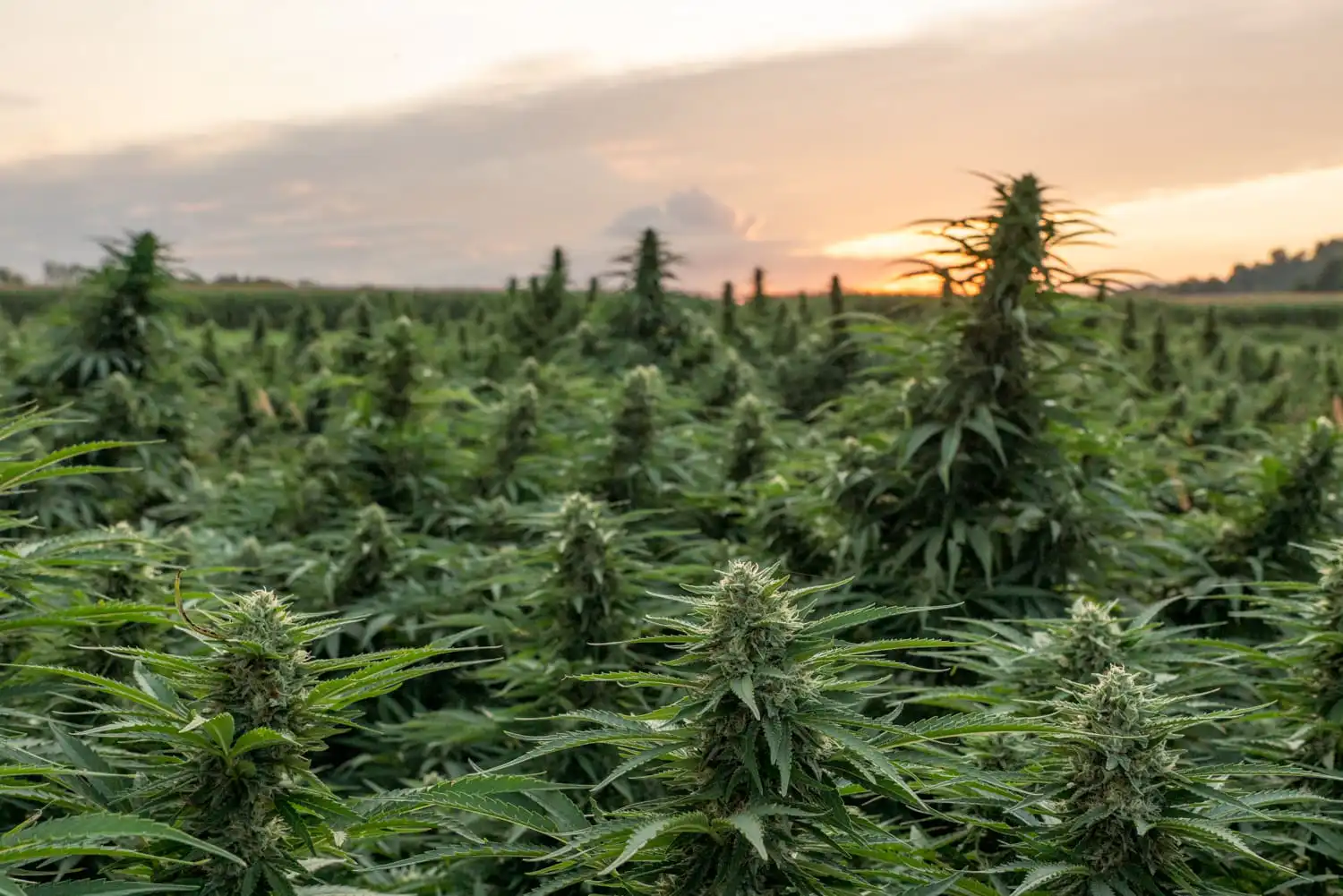
Behind the sleek tech-adjacent branding and modern marketing of today’s cannabis industry lies a far older, unvarnished truth: cannabis is, at its heart, an agricultural product and Latinos are the majority of the agricultural labor, making up a staggering 92 percent of California’s overall agricultural workforce and 77 percent of the U.S. agricultural workforce.
The cannabis industry mirrors this demographic reality; Latinos are the largest ethnic group of workers in the legally regulated cannabis sector at 38 percent, a figure that surges to 56–65 percent in cultivation-specific roles.
If we do not regulate cannabis with the Latino community in mind or immigration implications included, we miss critical aspects about how the sector can be developed and more importantly who works in that sector. Continuing down the path of aggressive and over-punitive immigration policies poses a direct threat to the future of this industry.
To avoid these pitfalls, it is imperative that Latino voices are properly represented in data and policy.
At a ‘legacy industry’ retreat in 2023, a panel of California cannabis regulators were asked whether they considered cannabis an agricultural product. Not one raised their hand, yet moments earlier, the same panel had unanimously agreed that cannabis is medicine. They readily embraced a clinical framing while rejecting the agricultural reality of a plant that is grown, harvested and cultivated like any other crop, revealing how disconnected they were from the industry they regulate.
From early investors treating cannabis like the next tech boom to traditional supply chain professionals acting like it is “just any other consumer packaged good product” that can be scaled with basic business principles, many fundamentally misunderstand the core issue at stake. Cannabis cultivation is agriculture, which means that it must be legislated, regulated and operate as such—including its predominantly Latino workforce.
Recently, the Trump administration’s Department of Justice announced the rescheduling of certain medical marijuana products, yet the plant itself remains largely federally illegal. Its success is inextricably linked to the land, the specialized labor of those who tend it and the applicable laws and policies that affect it.
The cannabis industry is heavily influenced by an immigrant workforce and the Latino community, especially in California. UCLA Labor Center and UC Berkeley Cannabis Research Center’s Dr. Robert Chlala, who authored a detailed report on California’s cannabis workforce, emphasized in an interview that his research lens was motivated by the fact that the “infrastructure, the ideas and the actual plant and technical knowledge of cannabis was built by people of color and immigrants.”
The Human Cost Of Enforcement
The intersection of state-legal cannabis and federal immigration enforcement creates an unstable environment for their workforce.
Recently we observed a somber landmark for the industry as we remembered the anniversary of the tragic death of Jaime Alanis Garcia in July 2025. Garcia, a 57-year-old farmworker with a ten-year tenure, died from a 30-foot fall during a joint Immigration and Customs Enforcement (ICE) and Drug Enforcement Administration (DEA) raid at Glass House Farms in Camarillo, California.
This is widely regarded as one of the first ICE-related deaths in the U.S. and marked a pivotal moment for the Latino community in California and the broader industry when it brought to light the long-standing, violent relationship between immigration enforcement and cannabis enforcement.
This incident highlights a broader issue around the crossover of deportation and cannabis enforcement. Between 2002 and 2020, more than 47,000 people were deported for simple cannabis possession or use according to a report by Human Rights Watch and the Drug Policy Alliance.
The Trump administration has continued to label immigrants with simple cannabis possession as “the worst of the worst” and prioritized them for deportation.
This current rhetoric around immigration policies pose a direct threat to an already unstable industry. Approximately 8 percent of the legal workforce, and a significantly higher portion of the unlicensed sector, possess cannabis records that subject them to losing both their livelihood and their legal status according to Chlala;s 2o25 study.
This legal jeopardy is not limited to people with records; working in the state-legal industry itself jeopardizes a person’s immigration status.
Findings From The UCLA Labor Center
The 2025 UCLA Labor Center/Cannabis Worker Collaborative report offers a detailed look into these workplace realities. The study highlights several critical areas:
- A Workforce in the Shadows: While the legal market employs approximately 78,000 workers, the total workforce including the unlicensed sector, exceeds 235,000, leaving over 150,000 workers without any legal protections and more exposure to dangerous conditions.
- Economic Fragility: Despite being designated “essential workers” during the COVID-19 pandemic, 43 percent of women and 29 percent of men in the industry reported difficulty paying for food or groceries in the past year.
- Wage Theft and “The Latino Tax”: A massive 63 percent of retail, delivery and cultivation workers reported experiencing wage theft, including late payments and off-the-clock labor. These violations occur at significantly higher rates for Latino and Black workers compared to their peers.
- Occupational Hazards: Cultivation workers face severe health risks, with 31 percent reporting skin infections and 46 percent suffering from chronic musculoskeletal pain due to intensive labor conditions.
Dr. Rob Chlala On Racial And Immigrant Justice
Dr. Chlala’s research centered heavily on racial and immigrant justice by utilizing a “worker-researcher” model through which peers helped design the survey, conduct interview and analyze the data.
This helped capture more authentic stories from Latino workers who are frequently dismissed in policy debates. The methodology successfully bridged the trust gap, revealing a vibrant, multicultural frontline labor force working beneath a layer of management that often lacks that same diversity.
A primary hurdle Chlala identified was the systemic disconnect between cannabis policy and the realities facing Latino communities. As a means to disseminate information and education about cannabis products, healthy use and cultivation, Chlala points to the “Promotora Model,” a community-centered health framework originating in Latin America.
He noted that because “cannabis workers are already piloting that [information sharing] in their everyday [lives]” through informal networks, formalizing this peer-led approach can build a protective education system “rooted in a shared sense of identity.”
The Latino Cannabis Alliance’s Path Forward
The Latino Cannabis Alliance plays a vital role in turning this data into actionable power, ensuring that the workers who built this industry are finally granted the protection, dignity and opportunity they deserve.
This is why we recently led a webinar focused on how the cannabis industry can support the immigrant rights movement, and support removing marijuana from the federal Controlled Substances Act (CSA) by passing the MORE Act.
In May of 2026, the Latino Cannabis Alliance took this message to Washington, D.C. and advocated for the passage of the MORE Act. We visited over 16 congressional offices, focusing on prominent members of the Congressional Hispanic Caucus, to share how marijuana’s placement on the CSA keeps cannabis prohibition as the law of the land, meaning that it can continue to be used as a tool for the punitive immigration enforcement and labor law violations we see today. The MORE Act is the only federal legislation that removes cannabis from the CSA while restoring rights and advancing protections for immigrant and Latino communities, as well as other communities harmed by the war on drugs.
The industry is at an inflection point. State legalization assumed that a licensed market could protect itself from federal prohibition. For the workers at the industry’s core, that protection does not exist.
As long as cannabis stays in the Controlled Substances Act, a state-legal job, a past possession record or a workplace raid can carry immigration consequences that no state license can undo. Partial rescheduling of medical products does not change that.
As such, the stability of California’s cannabis sector and the safety of its immigrant workforce are not separate policy questions. They are the same question. The industry and the immigrant rights movement face the same obstacle, and neither has had the political weight to remove it alone.
Ishaq Ali is a founding board member and the Director of Research & Education for the Latino Cannabis Alliance, and a researcher and strategist at the UC Berkeley Cannabis Research Center. He is studying the evolution of cannabis markets, firm ownership, and regulatory impacts in California. Ishaq is also Program Director at the Environmental and Consumer Compliance Organization, leading clean product certification and retail education initiatives.