Politics
Senate Vote On Hemp THC Products Splits Usual Partisan Coalitions

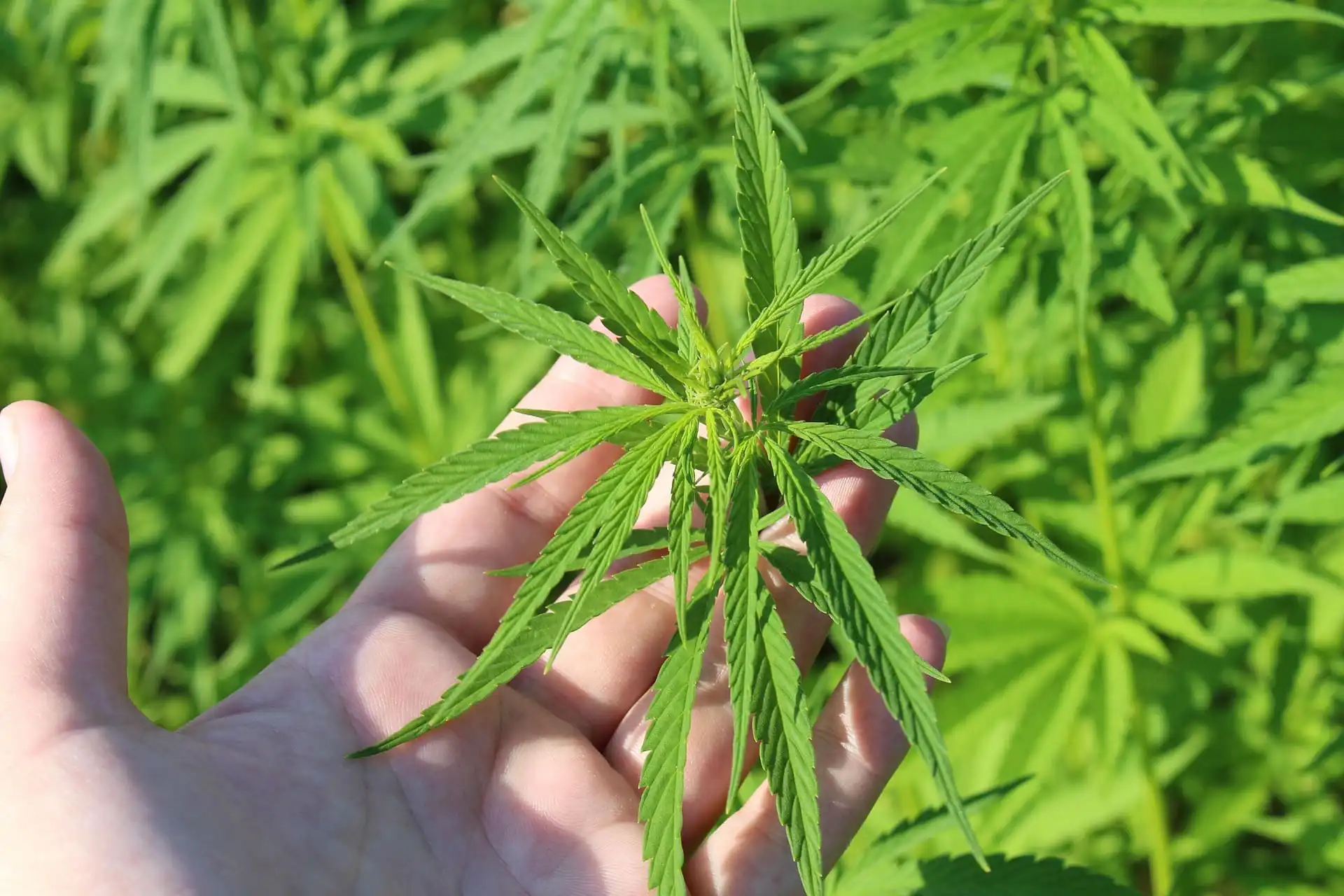
A U.S. Senate dispute over whether to implement a forthcoming ban on hemp THC products on time as scheduled or instead delay it in order to give lawmakers more time to craft regulations as an alternative to prohibition has transcended typical partisan and ideological lines.
Hemp derivatives with less than 0.3 percent delta-9 THC on a dry-weight basis were federally legalized under the 2018 Farm Bill that President Donald Trump signed during his first term in office. But late last year, the president signed new legislation containing provisions that will redefine hemp to make it so only products with 0.4 milligrams of total THC per container will remain legal after November 12.
The Senate over the weekend, however, approved a funding bill that includes a provision to delay the effective date of the ban until December 11. Sen. Ted Budd (R-NC) had filed an amendment to strip that language and keep the prohibition on track as scheduled, but the body approved a motion to table the proposal from Sen. Amy Klobuchar (D-MN) in a vote of 61-32.
34 Democrats and one independent who caucuses with Democrats took the pro-hemp position by voting to table Budd’s amendment, as did 26 Republicans.
That includes Senate Majority Leader John Thune (R-SD), Senate Minority Leader Chuck Schumer (D-NY) and Sens. Cory Booker (D-NJ), Ted Cruz (R-TX), John Fetterman (D-PA), Rand Paul (R-KY), Bernie Sanders (I-VT), Tim Sheehy (D-MT) and Ron Wyden (D-OR).
“The delay will give Congress more time to get a long-term fix, and I’m working on that too,” Klobuchar said in a video posted to social media after the vote. “We cannot allow this to go into effect.”
On the other side of the debate, 21 Republicans voted to keep Budd’s anti-hemp amendment alive, and they were joined by 11 Democrats.
The bloc that sided with Budd on keeping the hemp product delay on schedule includes Sens. Susan Collins (R-ME), John Cornyn (R-TX), Dick Durbin (D-IL), Kirsten Gillibrand (D-NY), Chuck Grassley (R-IA), Jeff Merkley (D-OR) and Lisa Murkowski (R-AK).
“My opponents have asked: What is the harm in a monthlong delay? I am going to tell you,” Budd said on the Senate floor ahead of the vote. “The goal is not an extra month to work on policy, as many have said.”
“The well-oiled hemp lobbying machine has already had nine months to do that,” Budd said. “The real goal is to jam us in December on a must-pass package and to permanently entrench their intoxicating products into the machinery of government.”
All told, majorities of both Democrats and Republicans voted to quash Budd’s anti-hemp amendment, which was also opposed by the Trump administration. Seven senators were not present for the vote.
Paul, for his part, criticized his colleagues who want to ban hemp products, telling Marijuana Moment ahead of the vote that “people take all kinds of prescription drugs to help them sleep, and they’re making a judgment that somehow taking Ambien, Percocet is somehow better than taking hemp.”
“Really, I think it’s none of their damn business,” he said of fellow lawmakers. “I think people, adults ought to be able to make a decision on what they want to take for sleep.”
Paul also told Marijuana Moment that “there are a couple industries that are opposed to hemp that also sell hemp—meaning the cannabis industry.”
“The cannabis industry and some of the alcohol industry don’t like it because it competes,” he said.
Advocacy organizations within the cannabis space took differing views about the forthcoming ban and the move to delay it.
The U.S. Cannabis Roundtable, which represents some of the largest marijuana businesses in the country, said in a social media post after the vote that it is “disappointed” in the result.
“During the August recess, House members will have the opportunity to hear directly from their constituents on whether unregulated and synthetic hemp products should be widely available for sale, including to minors,” the group said.
The language that was approved by the Senate includes a carve-out to allow the immediate recriminalization on November 12 of synthetic cannabinoids “that are not capable of being naturally produced by a Cannabis sativa L. plant.”
But marijuana industry groups point out that cannabinoids such as HHC and THC-P, which can be produced in low-levels by the plant, would still be able to be chemically converted from hemp-derived CBD under the legislation.
Michael Bronstein, president of the American Trade Association for Cannabis and Hemp, said that “the Senate’s actions will be seen as undermining state laws and efforts to regulate synthetic hemp products such as delta-8 THC, delta-10 THC, and THCP.”
“These products are not ‘hemp’ and they aren’t even marijuana. Cannabis and hemp licensees want responsible legalization and regulation—not a reprieve for lab created intoxicants, which have no business on gas station shelves or being sold to kids online,” he said. “The Senate’s vote in the short term will embolden those who rely on the loophole to bypass the law, selling synthetics and deceptively market marijuana as THCA ‘hemp’ flower, while penalizing real and compliant businesses.”
On the other side of the debate, the U.S. Hemp Roundtable said in an alert to supporters that the Senate’s action “preserves access to lawful hemp products, protects American jobs and businesses, and ensures Congress has additional time to finish the important work of developing a comprehensive federal regulatory framework.”
Thomas Winstanley, president of Edibles.com, which is part of Edible Brands, the parent company of the iconic Edible Arrangements, said that “Congress did not solve the hemp issue” with the Senate vote but instead “preserved the opportunity to solve it correctly.”
“This extension gives Congress the time needed to establish a durable national framework built on consumer safety, responsible commerce and meaningful enforcement,” he said. “The industry has consistently aligned around these principles, and today’s outcome reflects the growing bipartisan consensus that regulation—not prohibition—is the right path forward.”
One vote that surprised hemp industry stakeholders was that of Merkley, who despite being a long-time champion of hemp reform voted against tabling Budd’s amendment to keep the ban on schedule. Marijuana Moment reached out to the senator’s office to find out why he voted the way he did but communications staff did not immediately reply.
To that end, Merkley’s home-state colleague Wyden, who took the pro-hemp stance in this weekend’s vote, told Marijuana Moment ahead of the vote that there has been confusion around the issue “for a long time.”
“We’re hoping to do something that’s good for farmers, good for retail and good for public health,” he said.
Sheehy, who along with Klobuchar is expected to soon introduce a standalone bill to regulate hemp as an alternative to prohibition, posted a video before the vote explaining why he wants to keep the products legal despite his view that “we’ve seen legalization of weed happen all over the country, and for the most part, the results have been absolutely terrible.”
“There are very, very legitimate uses of many of these hemp products,” he said, “primarily for pain management , which America’s had a tough relationship with pain management for the past 20 years, 30 years.”
“We’ve seen opioids destroy communities from coast to coast, especially in rural America, especially for our veterans who come home from our nation’s longest war,” he said. “Many of them dealing with chronic pain—whether it’s TBIs, PTSD or musculoskeletal injuries—and hemp-derived products have provided, in many cases, a natural, healthy way to ease this pain.”
“That’s been life-changing for a lot of people,” Sheehy said. “A lot of them I know personally, which is why I’ve taken up this cause.”
The House of Representatives, which previously passed a separate funding bill that does not include language to extend the hemp ban’s effective date, is scheduled to return from its recess on August 31.
Hemp industry advocates will be fighting to get the Senate-passed provision through that chamber intact while also working to convince leadership in both bodies to advance a regulatory framework prior to December 11.
The LCB contributed reporting from Washington, D.C.