Politics
Republicans In Congress Are Still Trying To Block Marijuana Rescheduling Even As Trump Moves Forward

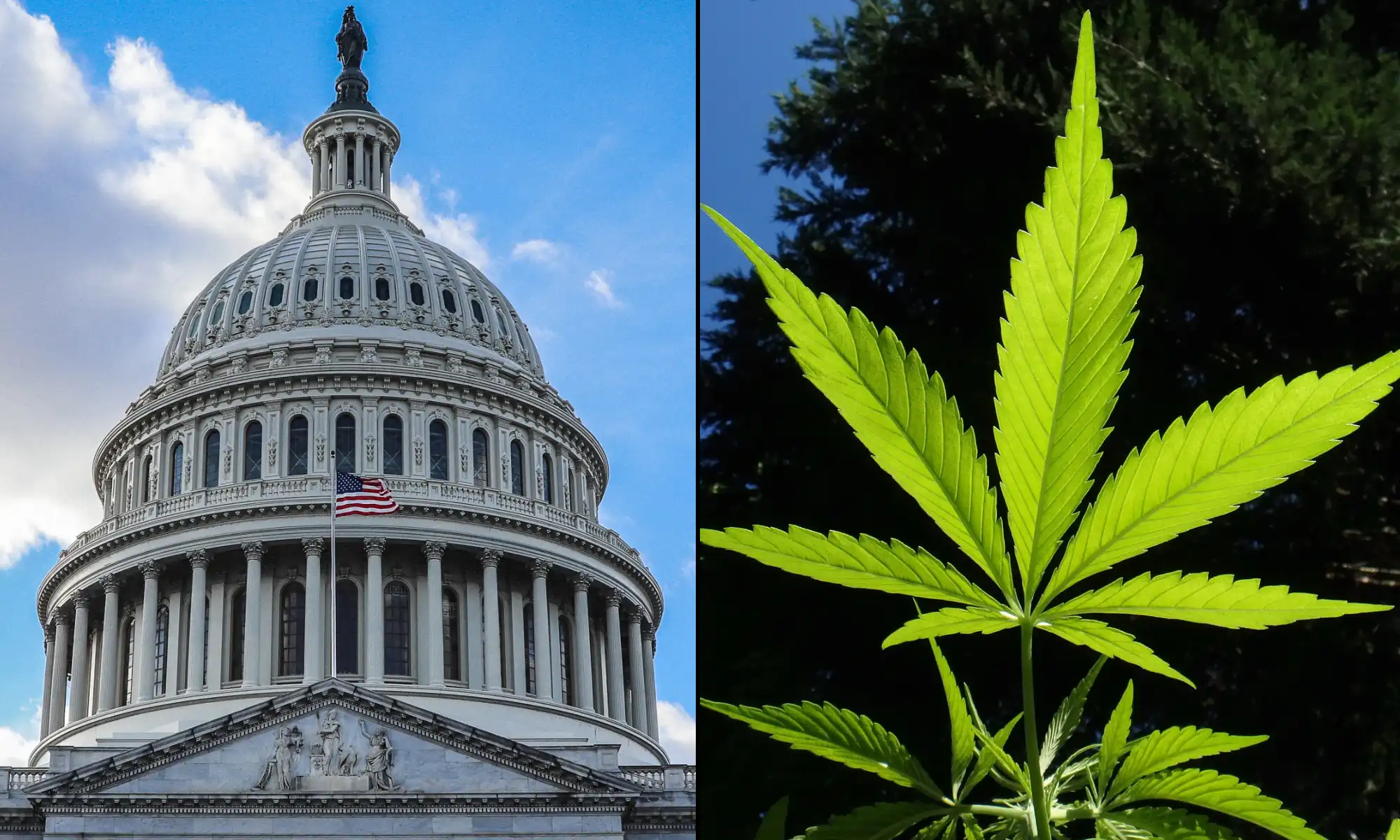
Republican leaders of a powerful congressional committee are advancing legislation aimed at blocking the federal rescheduling of marijuana—even though the Trump administration announced last week that it is moving ahead with the reform.
The House Appropriations Subcommittee on Commerce, Justice, Science, and Related Agencies on Wednesday released the text of a funding bill containing a provision that, if enacted, would prevent federal officials from taking further steps to carry out cannabis rescheduling.
“SEC. 591. None of the funds appropriated under this Act or otherwise made available by this Act may be used to reschedule marijuana (as such term is defined in section 102 of the Controlled Substances Act (21 U.S.C. 802)) or to remove marijuana from the schedules established under section 202 of the Controlled Substances Act (21 U.S.C. 812).”
The committee, which is set to take up the legislation on Thursday, has advanced similar language in the past years as the federal government has weighed marijuana rescheduling, but those provisions were never passed into law.
The Department of Justice announced last week that marijuana products regulated by a state medical cannabis license immediately moved to Schedule III, as did any marijuana products that are approved by the Food and Drug Administration (FDA). An administrative hearing scheduled for this summer will consider broader cannabis rescheduling.
Meanwhile, the current funding bill being considered this week also contains an updated version of a longstanding rider that since 2014 has protected state medical cannabis programs from federal interference.
“SEC. 531. (a) None of the funds made available under this Act to the Department of Justice may be used, with respect to any of the States of Alabama, Alaska, Arizona, Arkansas, California, Colorado, Connecticut, Delaware, Florida, Georgia, Hawaii, Illinois, Indiana, Iowa, Kentucky, Louisiana, Maine, Maryland, Massachusetts, Michigan, Minnesota, Mississippi, Missouri, Montana, Nebraska, Nevada, New Hampshire, New Jersey, New Mexico, New York, North Carolina, North Dakota, Ohio, Oklahoma, Oregon, Pennsylvania, Rhode Island, South Carolina, South Dakota, Tennessee, Texas, Utah, Vermont, Virginia, Washington, West Virginia, Wisconsin, and Wyoming, or with respect to the District of Columbia, the Commonwealth of the Northern Mariana Islands, the United States Virgin Islands, Guam, or Puerto Rico, to prevent any of them from implementing their own laws that authorize the use, distribution, possession, or cultivation of medical marijuana.
(b) Funds made available under this Act to the Department of Justice may be used to enforce violations of 21 U.S.C. 860.”
This year’s provision for the first time includes Nebraska, after advocates pointed out the state was omitted from previously enacted appropriations legislation even though voters there approved medical cannabis legalization in 2024.
The latter subsection of the medical cannabis rider has never been enacted before, and it seeks to stipulate that the Justice Department can still enforce a section of U.S. code that calls for increased penalties for distributing cannabis within 1,000 feet of an elementary school, vocational school, college, playground or public housing unit.
Separately, the bill also includes another longstanding rider that protects state hemp research programs from federal interference.
“SEC. 530. None of the funds made available by this Act may be used in contravention of section 7606 (‘‘Legitimacy of Industrial Hemp Research’’) of the Agricultural Act of 2014 (Public Law 113–79) by the Department of Justice or the Drug Enforcement Administration.”
The release of the spending bill’s text comes amid several pending efforts on Capitol Hill to delay or alter the implementation of a law that stands to federally recriminalize hemp THC products later this year.
Rep. Alexandria Ocasio-Cortez (D-NY) told Marijuana Moment this week that she supports the Trump administration’s cannabis rescheduling move—even if it “doesn’t quite make all the wrongs right” by leaving behind people who “had their lives destroyed by the war on drugs.”