Politics
Louisiana Governor Asks Schools To Publicize New Marijuana Penalties That Will Jail People For Smoking Near Campuses

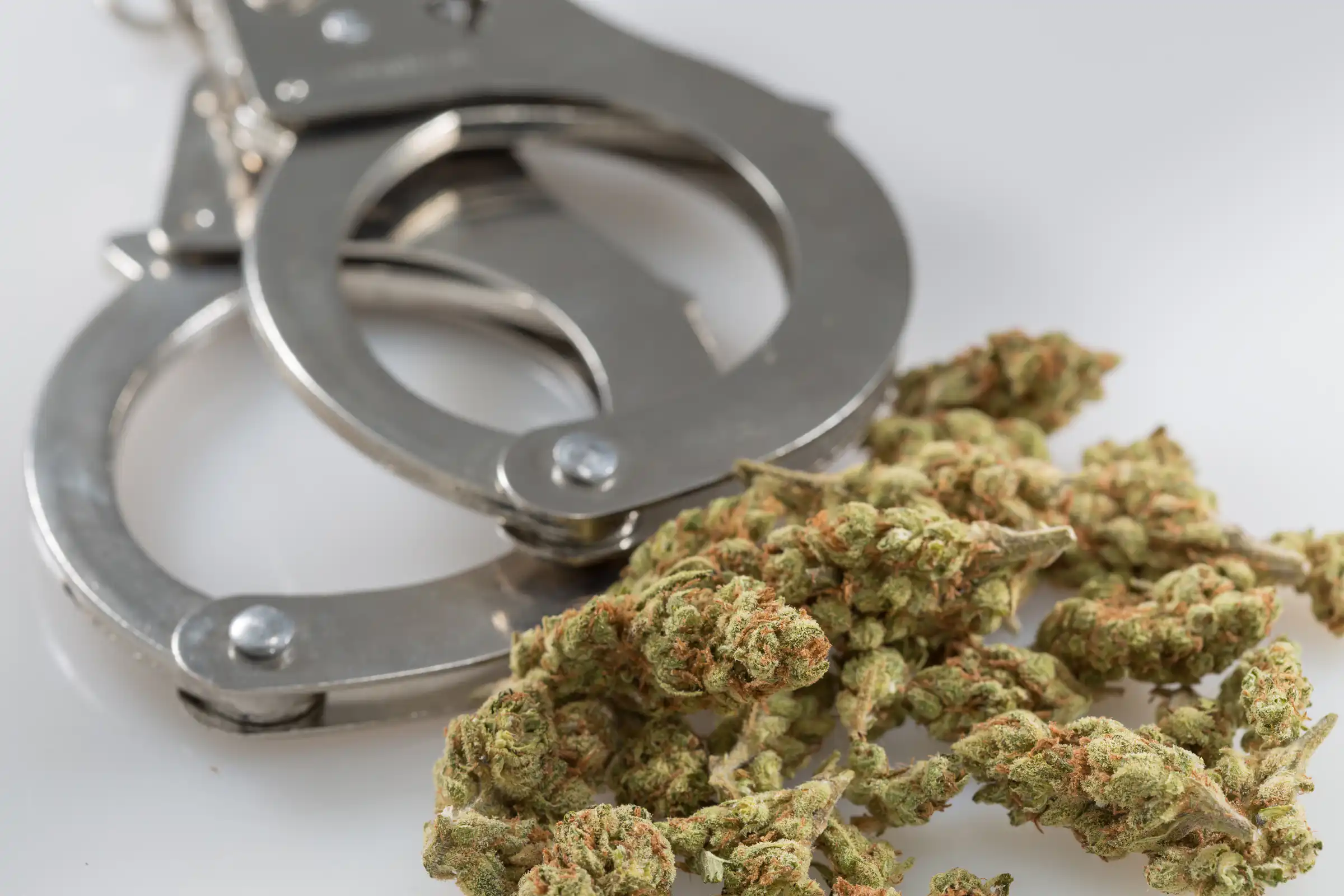
Louisiana’s governor is asking schools to publicize a new law he signed that threatens to send people to jail for up to one year if they smoke marijuana within 2,000 feet of a school property—including a college campus.
The legislation that Gov. Jeff Landry (R) signed in May applies to people who violate drug laws “while smoking, vaping, or otherwise abusing such controlled dangerous substance while on any property used for school purposes by any school, within two thousand feet of any such property, or while on a school bus.”
In a letter to the executive director of the Louisiana High School Athletic Association, the governor is asking the organization to “make its member schools aware of this change now, and to ask them to carry it to their student-athletes, coaches, event staff, and fans.”
“Fall sports are underway, and on most Friday nights thousands of students, parents, and other spectators gather on and around school campuses across Louisiana,” he wrote.
The enhanced cannabis penalty zone “extends two thousand feet past the property line, so it covers streets, sidewalks, bus stops, parks, and homes that students do not think of as school property,” Landry said, adding that it applies to “any person, not only students.”
“A parent, an alumnus, or any other spectator who smokes or vapes marijuana in a stadium parking lot, at a tailgate, or in the stands during a contest is exposed to the same penalty as a student,” he said. “The same analysis applies to contests played away from a member school’s own campus whenever the host site is a school or sits within two thousand feet of one.”
The governor emphasized that the consequences of a marijuana arrest at a school sports game “do not stop at the courthouse.”
“A student arrested for a felony-grade offense carries a criminal record, and questions about eligibility and college recruitment follow, all for conduct that was a citable offense last spring. Adult spectators face the same criminal exposure. Member schools are better served by making this known before the first incident than by explaining it afterward.”
Landry provided a flyer he wants schools to display about the new penalties, asking them to post it “where students and spectators gather at athletic facilities, including gymnasiums, field houses, locker rooms, concession areas, and stadium and gate entrances.”
“The people who will handle these incidents should be briefed,” he said in the letter, which was first reported by WGNO-TV. “Athletic directors, coaches, game administrators, event security, gate and ticket staff, bus operators, contest officials, and school resource officers assigned to events should understand the new penalty before they encounter it, because an arrest for conduct that was a citable offense last spring now exposes a student or a spectator to a felony sentence.”
In June, Landry posted a video saying he signed the marijuana penalty bill because he is “tired” of smelling cannabis at football games.
“Like most of you, I’m tired of going to our college and high school campuses and being inundated with the smell of marijuana,” he said. “And I’m tired of seeing drugs littering our high school and college campuses, hurting our students.”
“These drugs take away from the family-friendly environments that our colleges are supposed to be, especially on game days,” the governor said.
Landry’s staff previously testified in favor of the legislation at a committee hearing.
Rep. Gabe Firment (R), who sponsored the bill, said that it “strengthens enforcement of Louisiana drug-free school zone laws by creating a clear behavior-based offense, so that when someone is openly smoking or vaping illegal drug in the school zone, law enforcement can act and prosecutors can prove the case.”
“For marijuana, the bill establishes a clear and consistent penalty—up to a year in jail and $1,000 fine, ensuring that violations in school zones result in real, enforceable consequences,” he said.
Kevin Caldwell of the pro-legalization Marijuana Policy Project (MPP), said the group is “disappointed to see this deeply flawed legislation become law with the signature of Gov. Jeff Landry.”
“His personal lobbying efforts forced many legislators to vote for a bill they know will have profound negative life altering consequences for potentially thousands of Louisianans,” Caldwell told Marijuana Moment. “His solution to every perceived problem has been a return to incarceration. These failed policies of the past should remain in the past.”
“No child in Louisiana will be any safer after this legislation goes into effect,” he said. “But historical data clearly shows who will bear the brunt of this policy. The governor and legislature are seriously out of touch with the people of Louisiana.”
In 2021, then-Gov. John Bel Edwards (D) signed a bill decriminalizing marijuana by removing the threat of jail time for possessing up to 14 grams.
—
Marijuana Moment is tracking hundreds of cannabis, psychedelics and drug policy bills in state legislatures and Congress this year. Patreon supporters pledging at least $25/month get access to our interactive maps, charts and hearing calendar so they don’t miss any developments.
Learn more about our marijuana bill tracker and become a supporter on Patreon to get access.
—
Meanwhile, a Louisiana bill to let patients with terminal and irreversible conditions use medical marijuana in hospitals took effect without Landry’s signature.
Separate legislation to create a psychedelic-assisted therapy pilot program, using opioid settlement dollars to fund clinical trials aimed at developing alternative treatments such as psilocybin, ibogaine and MDMA also took effect without the governor’s support.
Also this session, a lawmakers filed a proposal that would have created a new state task force to “study and develop findings and recommendations regarding the potential legalization of recreational marijuana.”
Another lawmaker also introduced a bill to create an adult-use marijuana legalization pilot program in the state to determine whether the reform should eventually be expanded and permanently codified.