Politics
There Are ‘Positive Uses’ Of Hemp And Congress Shouldn’t Ban It, Kentucky Governor Says

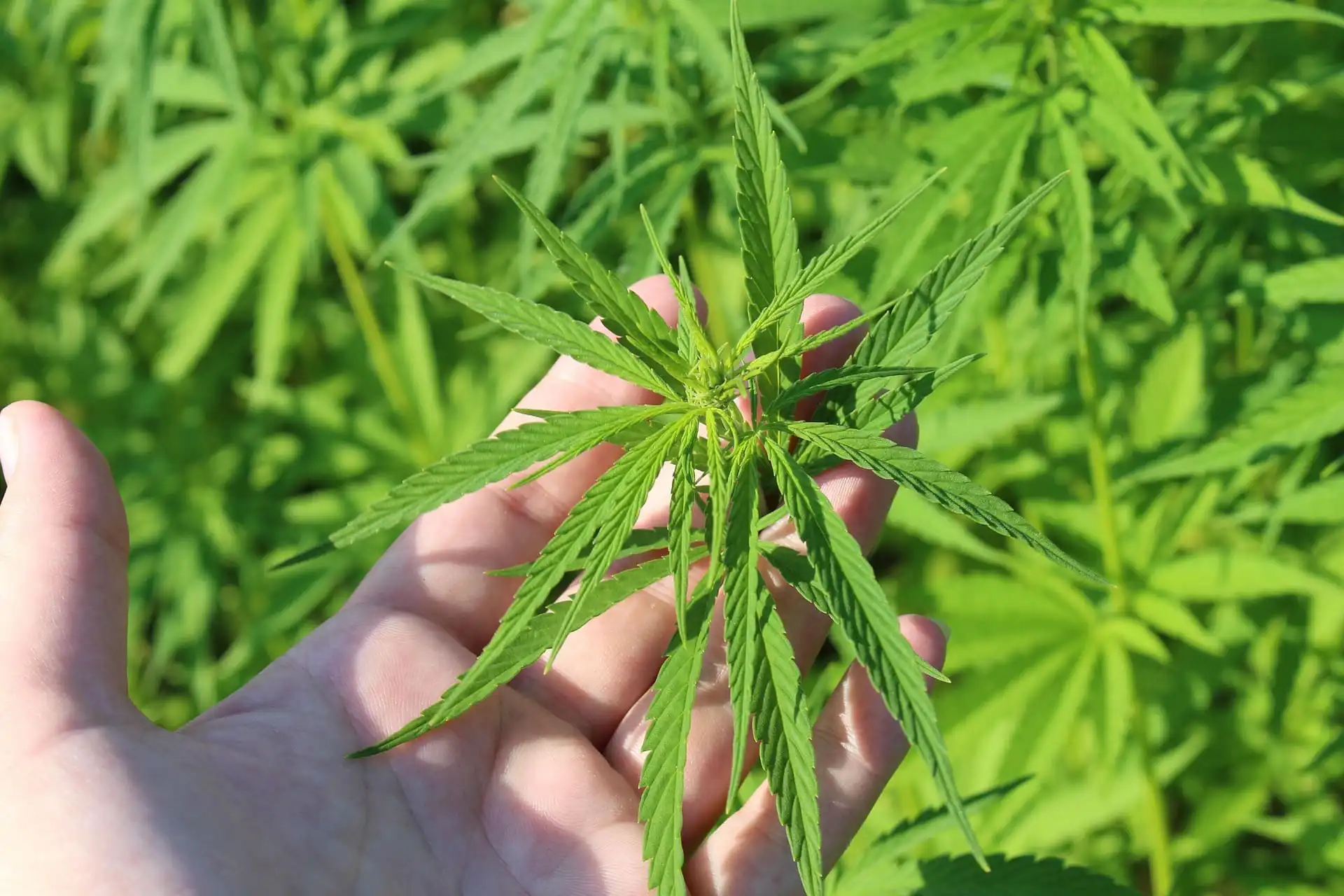
The governor of Kentucky says that hemp is “important” to the state, and voters shouldn’t reelect any members of Congress who are seeking to ban it.
“Hemp is really important to Kentucky. It supports a lot of Kentucky farmers, and there are positive uses of hemp,” Gov. Andy Beshear (D) said at a press conference on Thursday. “Do we need to make sure that children are protected from the delta-8 or other products? Yes, but we, as a [state] government, ought to be able to do that.”
Hemp derivatives with less than 0.3 percent delta-9 THC on a dry-weight basis were federally legalized under the 2018 Farm Bill that President Donald Trump signed during his first term in office. But late last year, the president signed new legislation containing provisions that will redefine hemp to make it so only products with 0.4 milligrams of total THC per container will remain legal after November 12.
That said, Senate recently approved a funding bill that includes a provision to delay the effective date of most parts of the hemp product ban until December 11—a move that was supported by the White House. While that change has not yet been approved by the House of Representatives or enacted into law, industry supporters believe it could give them more time to convince Congress to enact a regulatory structure for hemp products as an alternative to broad prohibition.
Beshear said that the currently planned ban on hemp THC product would “decimate the hemp industry.”
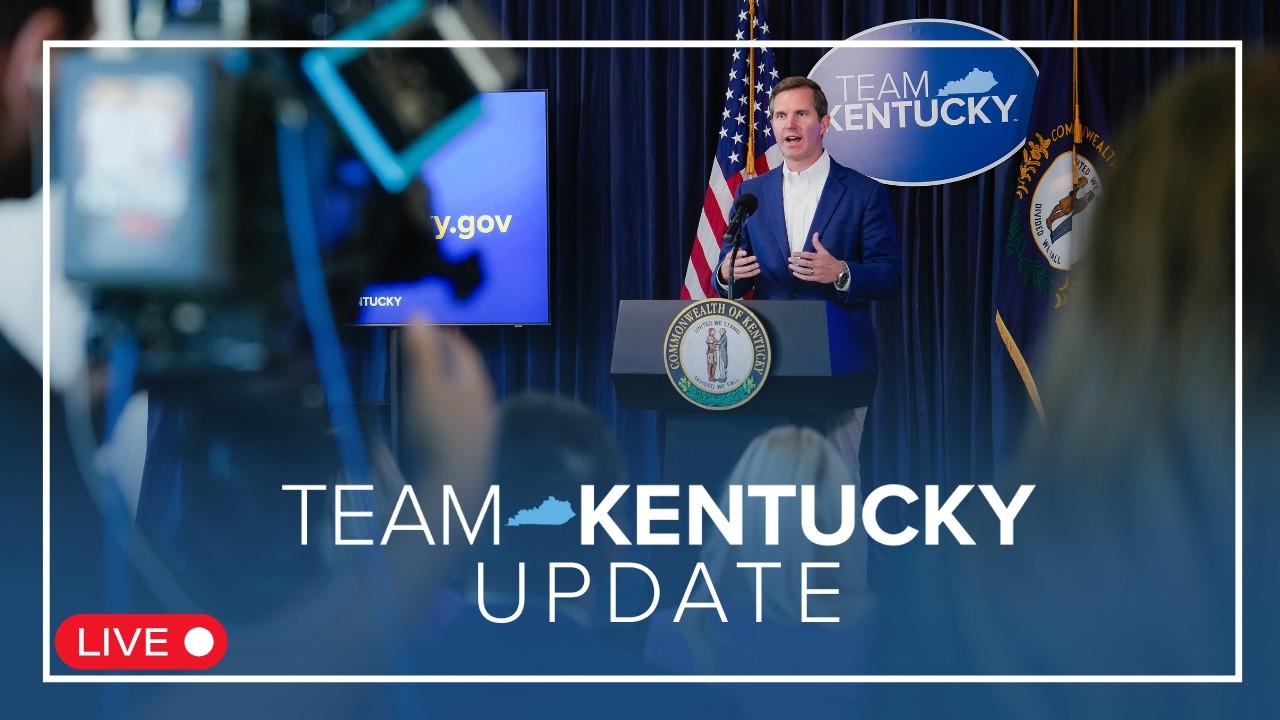
“I do not support it,” he said. “Give states the ability to to fully and fairly regulate it. We’ll protect kids or put a reasonable structure in place, but don’t hurt Kentucky farmers who are already struggling.”
The governor asked listeners to think about a soybean farmer who is considering growing hemp because their current operation is “getting hammered” by the impact that tariffs and the Trump administration’s war with Iran are having on diesel fuel and fertilizer prices.
“If we are going to eliminate another product you could grow, then the federal government’s actions or Congress’s actions towards Kentucky farmers is just devastating,” Beshear said. “And people should look for an alternative to the current person who would vote yes on something like that.”
The comments on hemp came at the same press conference at which the governor also said the state’s efforts to get medical cannabis dispensaries open is now past the “halfway mark” to becoming “fully operational.”
The governor, who signed medical cannabis legalization legislation in 2023 that took effect at the beginning of last year, said he is “proud” that the state is “moving forward in every step of the process.”
“So far, more than 25,209 Kentuckians have been approved for medical cannabis cards,” he said. “We now have over 490 practitioners registered to issue certifications. And we have 41 businesses up and running. That includes 11 cultivators, two safety compliance facilities, five processors and 23 dispensaries. Those numbers will continue to grow.”
The increasing access to medical marijuana means that “more Kentuckians won’t have to turn to addictive opioids” and will be able to “deal with chronic conditions, will get the relief they deserve, will be able to to address the PTSD that they may have gotten while serving our country.”
With the Blue Sage Dispensary opening in Lebanon on Friday, Beshear said, the state will be “over the halfway mark of Kentucky becoming fully operational when it comes to dispensaries.”
“Medical cannabis is helping our people in need live fuller lives with less pain,” the governor said. “It is a win-win.”
Beshear signed an executive order in June to broaden the list of health conditions that make patients eligible to legally obtain medical cannabis.
But days later, House Majority Whip Jason Nemes (R) asked Attorney General Russell Coleman (R) to ensure that state agencies “not cooperate” with the governor’s marijuana directive, which he called “unlawful.”
“Any organization, any licensee, that participates in this unlawful expansion should be prosecuted,” Nemes said during a legislative committee hearing. “This is not the way forward.”
The governor pushed back, however, saying that the GOP lawmaker exhibited a “complete lack of humanity.”
“It’s helping a lot of people, and I was really surprised to see an attack from one lawmaker who called on the attorney general to prosecute people dying of a terminal illness for securing medical cannabis,” Beshear said. “I mean, that’s a complete lack of humanity. It is really low. I mean, an individual with ALS, you want to prosecute? That is certainly not leadership, and even for that individual, is a new record low.”
After the legislature declined to take him up on a suggestion to expand the qualifying condition list this session, the governor used his authority to make it so patients with 15 additional health disorders—including Parkinson’s disease, HIV/AIDS, sickle cell anemia, fibromyalgia, arthritis and glaucoma—can also be certified for medical marijuana access.
Beshear also rescinded an earlier executive order he issued in 2022 through which he offered to provide pardons for any patients who got into trouble for possessing medical cannabis that they purchased at a legal dispensary in a neighboring state.
The more recent executive order on qualifying conditions is a follow up to a medical marijuana legalization law Beshear signed in 2023. The state’s first medical cannabis dispensary opened in December of last year.
The governor in February announced that cannabis gummies are available for purchase in the state’s licensed dispensaries.
Beshear in January said he’s “not satisfied” with the time it’s taken to launch the state’s medical marijuana program—but that he anticipates the pace of patient access would “pick up significantly” in 2026.
In recognition of the delayed implementation, he signed an executive order to waive renewal fees for patients who get their cards so that they don’t get charged again before retailers open.
Beshear separately announced last year that the state had launched a new online directory that lets people see where medical cannabis dispensaries will be opening near them.
He emphasized that the state has been working to deliver access to patients “at the earliest possible date,” and that involved expediting the licensing process. Last year, the governor also ceremonially awarded the commonwealth’s first medical marijuana cards.
During the November 2024 election, Kentucky also saw more than 100 cities and counties approve local ordinances to allow medical cannabis businesses in their jurisdictions. The governor said the election results demonstrate that “the jury is no longer out” on the issue that is clearly supported by voters across partisan and geographical lines.
Meanwhile, legislature’s Interim Joint Committee on Health Services held a hearing last month on a proposal to allow terminally ill patients to use medical marijuana in hospitals.