Politics
GOP Lawmaker Circulates Bill To Keep Hemp THC Drinks Federally Legal

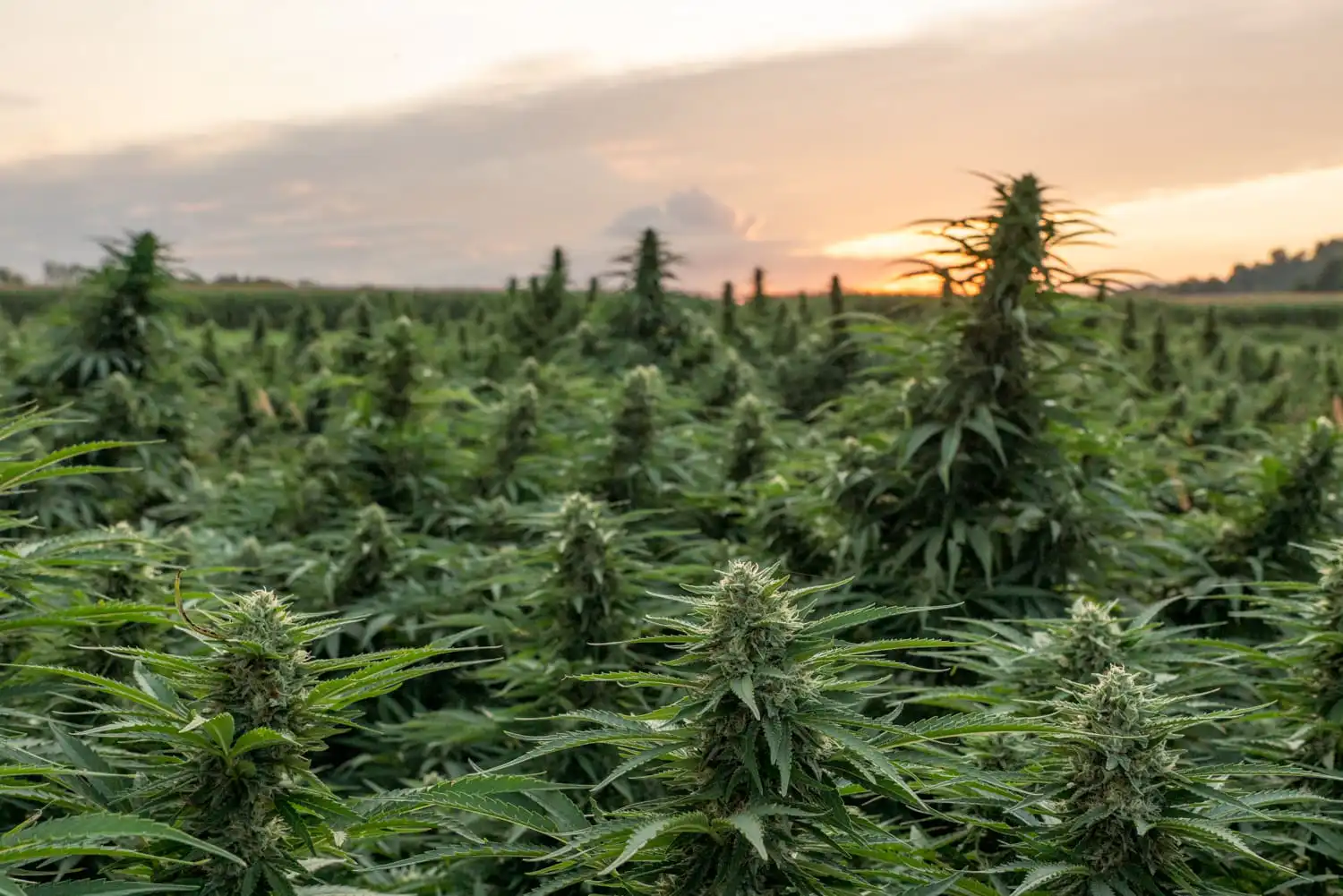
A Republican congresswoman is circulating draft legislation that would keep hemp THC beverages legal under federal law, creating a carve-out from the broad recriminalization of products derived from the crop that is set to take effect later this year, Marijuana Moment has learned.
The Hemp-Derived Beverage Regulatory Clarity Act from Rep. Beth Van Duyne (R-TX), in its current form, would allow adults over 21 to purchase and consume hemp THC drinks with up to 5 milligrams of delta-9 THC per serving.
It would also impose a federal tax of 10 cents per milligram of any hemp-derived cannabinoid contained within such beverages.
Hemp drinks would be regulated by the Treasury Department’s Tax and Trade Bureau (TTB) in consultation with the Department of Health and Human Services, and TTB could set requirements for hemp beverage testing, packaging, labeling and serving and container sizes.
Legal beverages could only contain naturally-occurring cannabinoids that are cultivated and processed within the U.S.
“A naturally-occurring cannabinoid regulated in accordance with [the bill] shall be deemed safe and may be added to a hemp-derived beverage intended for human consumption,” the draft bill obtained by Marijuana Moment says.
Manufactures, distributor, wholesales and sellers of hemp drinks would be required to obtain federal permits.
Companies could not sell multi-serving containers larger than 750 milliliters under the legislation.
It also directs the National Academies of Science, Engineering, and Medicine to publish a report on the safety of naturally-occurring cannabinoids and their use in beverages, while requiring TTB to issue a separate report on the proper serving sizes for hemp-derived beverages.
The legislation further clarifies that states, Indian tribes and localities could set regulations that are “more stringent” than federal rules, but says that they could not prohibit the shipment or transportation of hemp beverages through their borders on the way to other jurisdictions.
The draft bill has not yet been formally introduced, and its provisions could change before that happens.
Staff for Van Duyne did not respond to Marijuana Moment’s request for comment for this story.
Hemp derivatives with less than 0.3 percent delta-9 THC on a dry-weight basis were federally legalized under the 2018 Farm Bill that President Donald Trump signed during his first term in office. But late last year, he signed new legislation containing provisions that will redefine hemp to make it so only products with 0.4 milligrams of total THC per container will remain legal after November 12.
The circulation of the new draft legislation comes as the White House is separately making it clear that Trump wants Congress to take action to amend the law that threatens to federally recriminalize hemp-derived products.
The administration “welcomes the opportunity to work with the Congress to, at a minimum, update the statutory definition of final hemp-derived cannabinoid products to allow Americans to benefit from access to appropriate full-spectrum CBD products,” the Office of Management and Budget (OMB) said this month, “while preserving the Congress’s intent to restrict the sale of products that pose serious health risks.”
The call to avert a broad prohibition on hemp CBD products was included in a statement of administration policy about an annual agriculture spending bill that passed the House of Representatives.
Several lawmakers had filed amendments to that legislation to keep hemp products legal, but each was either blocked by the House Rules Committee from advancing to a floor vote or withdrawn by its sponsor.
“The Administration supports advancement of this legislation, but looks forward to addressing its concerns prior to enactment,” OMB said in its statement of administration policy. “The Administration looks forward to working with the Congress to provide more input as the bill’s legislative process unfolds.”
In April, the president himself urged congressional lawmakers to again redefine hemp to avoid recriminalization of full-spectrum CBD products.
“I am calling on Congress to update the Law to ensure that Americans can continue to access the full-spectrum CBD products they have come to rely on, and that help them, while preserving Congress’s intent to restrict the sale of products that pose Health risks,” Trump said in a Truth Social post on the same day his administration announced it is moving forward with rescheduling marijuana.
“We must get this done RIGHT and FAST, especially for those who saw that CBD helps them,” he said. “Plus, I am told it will also help our GREAT FARMERS, who we love, and will always be there for.”
Industry advocates say that the law as enacted last year not only threatens to prohibit intoxicating and synthetic cannabinoid products but also stands to remove popular full-spectrum CBD products that many Americans use therapeutically from the market.
“ONE in FIVE adults used it in the past year, and many say it improved their chronic pain enormously,” the president said in his social media post, adding that hemp-derived CBD “has made a HUGE difference for so many people.”
He also referenced a new initiative the administration launched in April to cover up to $500 worth of hemp-derived products each year for eligible Medicare patients. The program being implemented by the Centers for Medicare & Medicaid Services (CMS) focuses largely on CBD but also allows products to have up to 3 milligrams of total THC per serving.
“In December, I signed a very important Executive Order calling for Research and Innovation for Hemp-derived CBD,” Trump said. “Our wonderful Dr. Mehmet Oz moved fast to follow the directive in the Executive Order, and launched a model for some Seniors earlier this month. But more must be done!”
“Please get it done, and SOON,” the president said in reference to a congressional fix for the broad recriminalization set to take effect in November. “Thank you for your attention to this matter!”
It’s not clear how far Trump wants to scale back the scope of the scheduled federal restrictions on hemp products and what kinds of revised THC rules and limitations he would prefer to sign into law.
Separately, White House officials recently provided a congressman’s office with feedback on hemp regulatory legislation.
In April, Vince Haley, director of the White House Domestic Policy Council and James Braid, assistant to the president for legislative affairs, sent hemp policy suggestions to Rep. Andy Barr (R-KY).
“We appreciate your work to advance the policy of” an executive order Trump signed in December that included provisions seeking to protect Americans’ access to CBD products, the staffers wrote in a letter to the congressman.
“We are transmitting for your consideration draft legislative text and comments to address the statutory definition of final hemp-derived cannabinoid products in order to allow Americans to benefit from access to appropriate full-spectrum CBD products while preserving the Congress’s intent to restrict the sale of products that pose serious health risks,” the White House officials said, according to a social media post containing a screenshot of the letter. “We are available for discussion and further technical assistance.”
Separately, anti-marijuana organizations filed a lawsuit suit against the Medicare hemp CBD coverage policy—but a judge dismissed the case last month, ruling that they don’t have standing. Lawyers for Health and Human Services Sec. Robert F. Kennedy Jr. and CMS Director Mehmet Oz had filed a brief asking that the case be dismissed.
The White House Office of Management and Budget has also held a series of meetings about a Food and Drug Administration (FDA) CBD products enforcement policy.
FDA issued guidance making clear that it does not intend to interfere with implementation of the Medicare hemp-derived products coverage plan.
CMS separately finalized a rule that will allow coverage of some hemp products as specialized, non-primarily health-related benefits through Medicare Advantage plans.
As hemp products have become more popular with consumers, some large brands are attempting to get in on action.
Major retailer Target, for example, is expanding its participation in the hemp-derived THC beverage market. Last year, the company began a pilot program involving sales of cannabis drinks at 10 select stores in Minnesota. That apparently went well, and now the company has obtained licenses from Minnesota regulators to sell lower-potency hemp edible products—including THC drinks—at all 72 of its stores in the state.
A U.S. Department of Agriculture report published in April shows that farmers in the U.S. grew three-quarters of a billion dollars worth of hemp crops in 2025—a 64 percent increase from the prior year.
Read the full draft hemp beverage bill below: