Politics
GOP Hemp Opponents Fail To Derail House Agenda In Protest Of Delaying THC Product Ban

A handful of congressional Republicans threatened this week to upend their leadership’s agenda in protest of legislation to delay the scheduled federal recriminalization of hemp THC products from taking effect.
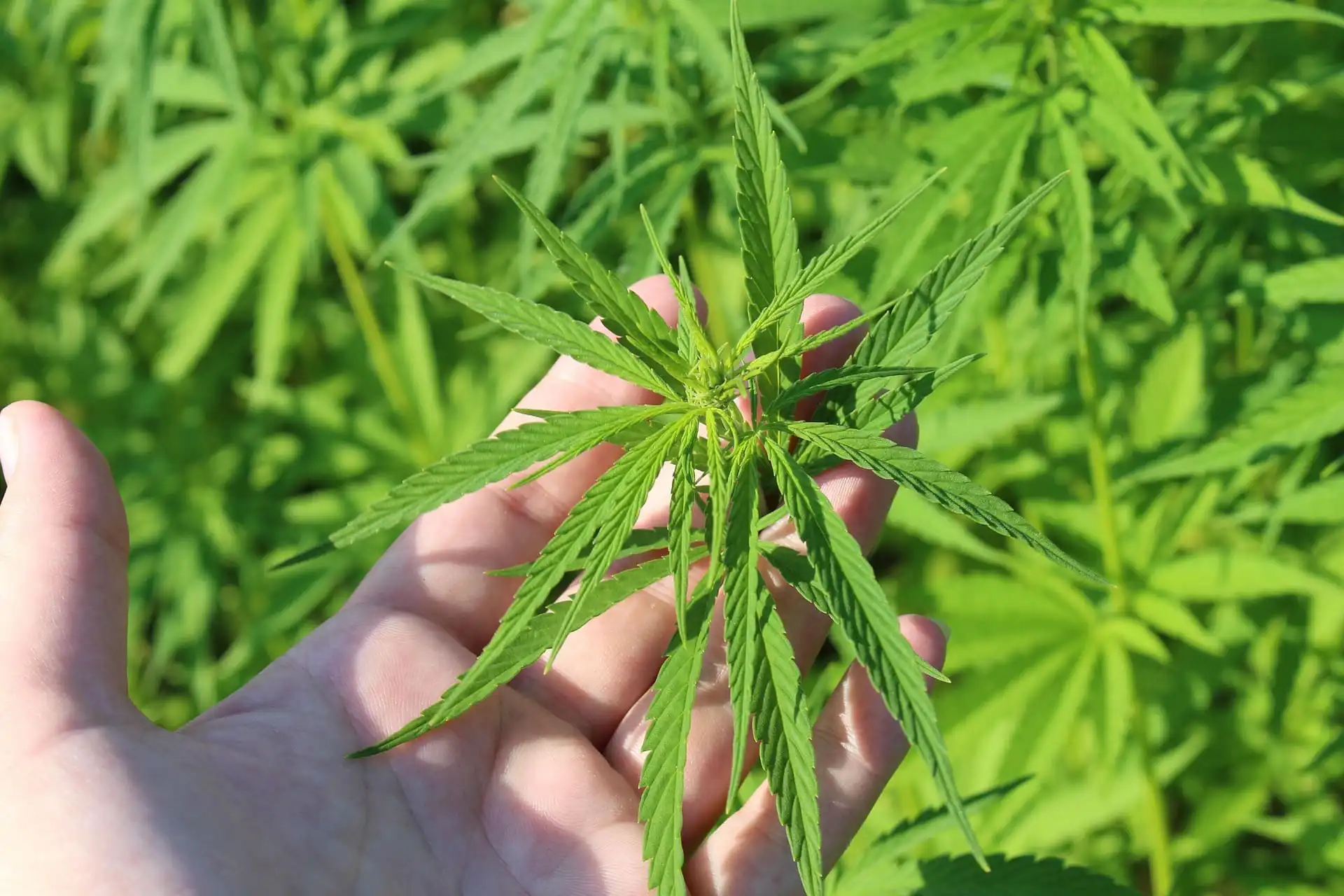
Hemp derivatives with less than 0.3 percent delta-9 THC on a dry-weight basis were federally legalized under the 2018 Farm Bill that President Donald Trump signed during his first term in office. But late last year, the president signed new legislation containing provisions that redefined hemp to make it so only products with 0.4 milligrams of total THC per container would remain legal after November 12.
The House of Representatives on Tuesday, however, approved a Senate-passed funding bill that contains provisions to delay the effective date of most parts of the ban, with an exception for synthetics, until December 11.
Rep. Andy Harris (R-MD) and several other members knew that they didn’t have enough votes to block that bipartisan funding bill, known as a continuing resolution, so they set out instead to block a rule for consideration of a separate package of largely partisan GOP-led legislation touching on issues such as condemning socialism, defending Israel from boycotts and the mining of mineral.
Harris, chairman of the House Freedom Caucus, voted against the rule on Tuesday, as did Reps. Pete Sessions (R-TX) and Chip Roy (R-TX), each of whom cited the hemp product ban as among the issues they want to take a stand against their own party’s leadership over.
But their opposition, along with that of Rep. Clay Higgins (R-LA), was not enough to defeat the rule clearing the way for House leadership’s agenda for the week to advance.
Two Democrats—Reps. Marie Gluesenkamp Perez (D-WA) and Jared Golden (D-ME)—voted with Republicans to approve the rule, 210-208.
Harris complained in a social media post that THC products are “being sold in convenience stores across the country,” saying that some “can contain even more THC than marijuana.”
Sessions, for his part, said he wanted House leaders to “change” the bill by removing the hemp ban delay provision.
“Let’s just make it a clean CR. I’ll vote for that,” he said.
Roy, for his part, said in a letter to leadership that he had “serious concerns” about issues in the bill that “Congress should address rather than simply extend,” including its “treatment of harmful intoxicating hemp products.”
Rep. Nancy Mace (R-SC), for her part, criticized her colleagues for threatening to delay their party’s agenda over hemp.
“There are a few House Republicans so upset the Continuing Resolution includes a delay in the implementation of the Mitch McConnell-backed language to ban most consumable hemp-derived products from the marketplace, they are threatening to vote against this week’s rule, which has nothing to do with the CR,” she said in a Facebook post. “Make that make sense.”
Rep. Rick Crawford (R-AR), who did not join other prohibitionists in voting against House leadership to protest the hemp move, said in a social media post that he opposes delaying the ban.
“Congress legalized hemp in the 2018 Farm Bill for agricultural uses like fiber, not as a backdoor for intoxicating products. Modern extraction techniques turn low THC hemp into gummies, snacks and drinks; items that can particularly cause risk to children,” he said. “Unregulated, intoxicating products should not remain on the market. The currently scheduled restrictions close this gap. A delay prolongs the harm. I sincerely hope that the ban goes into effect without further delay.”
House Appropriations Committee Chairman Tom Cole (R-OK), said he was “sympathetic” to concerns from Harris and others about use of the funding bill to address the hemp issue.
“This should not have been on here, CR should not be controversial, so I’m sympathetic with that,” he said, though he also criticized the handful of GOP holdouts for using the rule as “leverage” for their concerns.
“A lot of this is we’ve got a group that wants to leverage the procedural votes to extract things that the majority of us probably don’t want to do. I find that disappointing,” he said, according to The Hill. “I mean, if you’re going to be a member of the Republican conference, you ought to be able to vote for the rule. It’s just that simple, and you shouldn’t use it to leverage things against your own team. You want to vote against the bill? That’s perfectly fine, and that’s true in any bill. Your final vote on the bill is up to you, but blackmailing your colleagues is not the way to build an effective team.”
The funding bill’s provision to delay the ban, which is supported by the White House and is now headed to Trump to be signed into law, contains a carve-out to allow the immediate recriminalization on November 12 of synthetic cannabinoids “that are not capable of being naturally produced by a Cannabis sativa L. plant.”
A number of lawmakers from both chambers and both parties have filed or are circulating a growing number of bills to prevent the scheduled federal recriminalization of hemp THC drinks and other products later this year. Until now, none of those proposals have gained traction with congressional leaders.
For example, Reps. Beth Van Duyne (R-TX) and Greg Landsman (D-OH) filed a bill to keep hemp THC drinks legal while taxing and regulating them like alcohol.
Rep. James Comer (R-KY), who chairs the House Oversight and Government Reform Committee, is circulating legislation that would delay a planned federal ban on hemp THC products and institute some regulations—including packaging requirements, testing rules and age limits.
Separately, Rep. Andy Barr (R-KY), filed a lengthier proposal to prevent the federal recriminalization of hemp THC products and put in place a number of regulations for manufacturing, labeling, sales and taxation of hemp-derived products, including an age limit of 21.