Politics
Bipartisan Congressional Psychedelics Caucus Lays Out Plan For Federal And State Cooperation To Increase Therapeutic Access

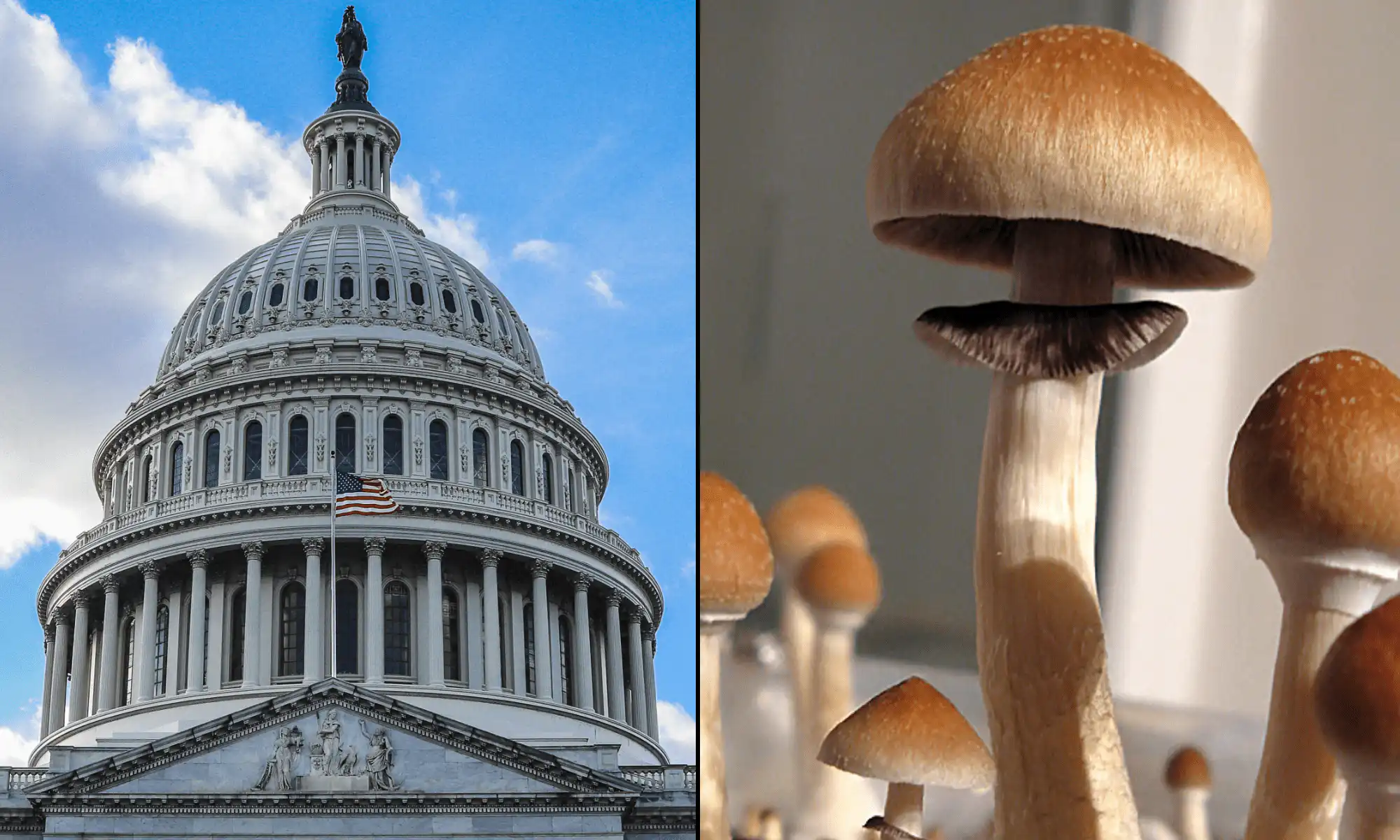
A new report from a bipartisan psychedelics caucus in Congress summarizes stakeholders’ views on how the therapeutic use of substances like psilocybin, ibogaine and DMT can be “safely and ethically integrated” into the U.S. healthcare system, emphasizing the need for collaboration across federal agencies and with states.
The document, published on Thursday by the Congressional Psychedelics Advancing Therapies (PATH) Caucus, comes after lawmakers in 2024 issued a request for information (RFI) seeking input from experts about how to best set up a regulatory framework for psychedelic medicines.
An analysis of responses to the RFI found “broad consensus among clinicians, researchers, veteran advocates, Tribal leaders, payors, regulators, and patients that [psychedelic-assisted therapy] could offer safe, equitable, and evidence‑based treatment for a wide array of treatment-resistant conditions,” a press release from the caucus says about the new report.
The report itself, however, cautions that there are “areas of agreement, tension, concern, and hope that require consideration, discussion, and further input to ensure that actions going forward are supported by policies related to safe access and participant and patient protections in PAT research.”
“These policies must ensure that the potential benefits are based on patient needs and minimally restricted by geography across the U.S. in rural and urban areas. Policies should be put in place to support coordinated national data systems to monitor benefits as well as potential unintended consequences of PAT and provide an evidence-base to ensure the best possible patient care that evolves in approach with the diverse emerging pipeline of new medicines and potential medical applications over time.”
The co-chairs of the PATH Caucus, Reps. Jack Bergman (R-MI) and Lou Correa (D-CA) said in response to a question from Marijuana Moment at a press briefing about the new report that President Donald Trump’s signing of an executive order to streamline research and access into psychedelic medicine this year has boosted their efforts to get fellow lawmakers to take the issue seriously.
“I think it’s been very helpful, in my opinion,” Correa said. “President Trump signing the executive order really pushed everybody forward, really pushed us to look at these new treatments—psychedelic treatments—and take them seriously.”
“Seventy years of war on drugs has really tied us down, and I think we need to open ourselves to the possibilities of cannabis, psychedelics and maybe other things that are out there that could help us when it comes to mental illness,” he said.
Bergman agreed that “the president signing the executive order put it on people’s radar who had not considered it before in a positive way.”
“It informed people who are trying to do the right thing for the right reason that they’ve got support from the highest levels,” he said. “And it also puts potential bad actors on notice that we’re watching in a very proactive way because we’re not going to let bad actors or illicit interests take down what we believe is imperative to the next steps in better mental health, not only for Americans but for people around the world.”
A major theme of the PATH caucus’s report is the need for federal agencies to effectively coordinate with one another and with state and tribal governments to advance research on and access to psychedelic therapies.
“Federal alignment is viewed as essential to reduce regulatory bottlenecks, ensure insurance coverage/reimbursement, establish safety standards, protect cultural knowledge, and integrate longstanding Indigenous customs into policymaking,” the report says.
Bergman, speaking at the press briefing, said that “federal agencies need to coordinate their work with states and tribes as partners, because if we don’t do the coordination effort, a one-size-fits-all from one entity is not going to work.”
Correa agreed, pointing to recent news that the Drug Enforcement Administration (DEA) is taking steps to criminalize additional psychedelics at the same time the Food and Drug Administration (FDA) is taking steps to accelerate therapeutic access.
“Federal agencies have to coordinate the efforts as we move in this direction of exploring and determining what psychedelics are good for and under what context,” he said.
Marion Coe, a researcher with the firm Pinney Associates that was hired to conduct the analysis of responses to the caucus’s RFI, similarly said that “we can’t have different federal agencies moving in opposite directions when we come to psychedelic research and regulation.”
The report offers a number of recommendations stemming from input the caucus received in response to the RFI—including the development of federal guidelines for psychedelic therapy, creation of multiple credentialing pathways for therapy providers and creation of a national system to monitor adverse events related to the use of psychedelics.
It also highlights the importance of determining how psychedelics can be covered under insurance, protecting indigenous and religious entheogenic practices and safeguarding against the over-commercialization and monopolization of the substances.
“We’re talking about medical treatments administered by trained professionals in supervised clinical settings, not—and I repeat—not at home,” Bergman said at the press briefing. “We must follow the evidence, uphold strong safety standards and understand both the promise and the limits of these therapies, and not be afraid to make adjustments as we see the need.”
Correa said that while psychedelics are not “the cure-all” for mental health issues, “the research has shown a lot of promise here when it comes to treatment, mental health, alcoholism, drug addiction, PTSD.”
“It’s compelling,” he said. “Our society has a lot of challenges that psychedelics can help with.”