Politics
Trump Signs Order To Accelerate Legal Access To Psychedelics For Patients With Mental Health Conditions

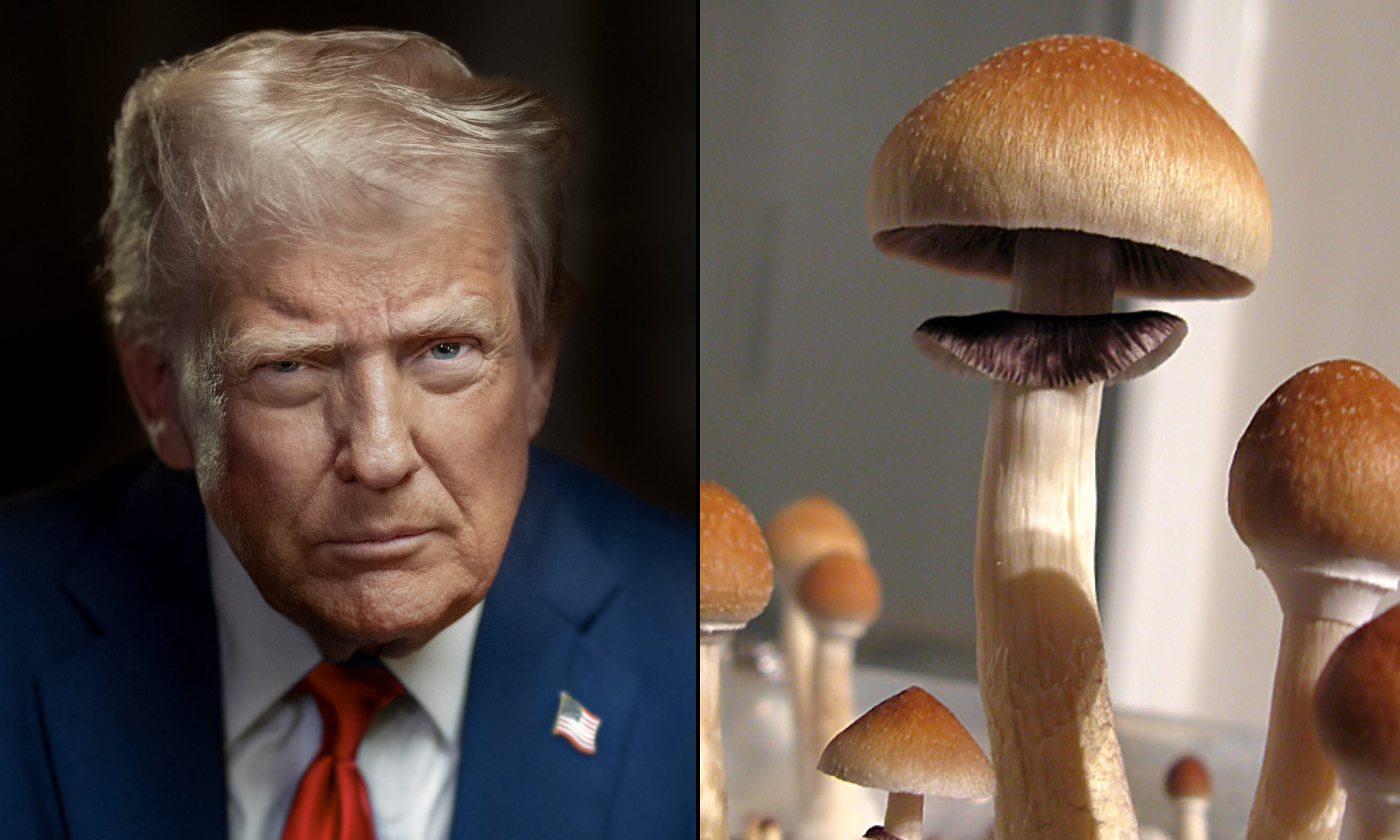
President Donald Trump has signed an executive order aimed at expanding and expediting research on the potential therapeutic benefits of psychedelics, a move aimed at making substances such as psilocybin, ibogaine, LSD and MDMA more readily available to patients in clinical settings.
The move will “dramatically accelerate access to new medical research and treatments based on psychedelic drugs,” Trump said.
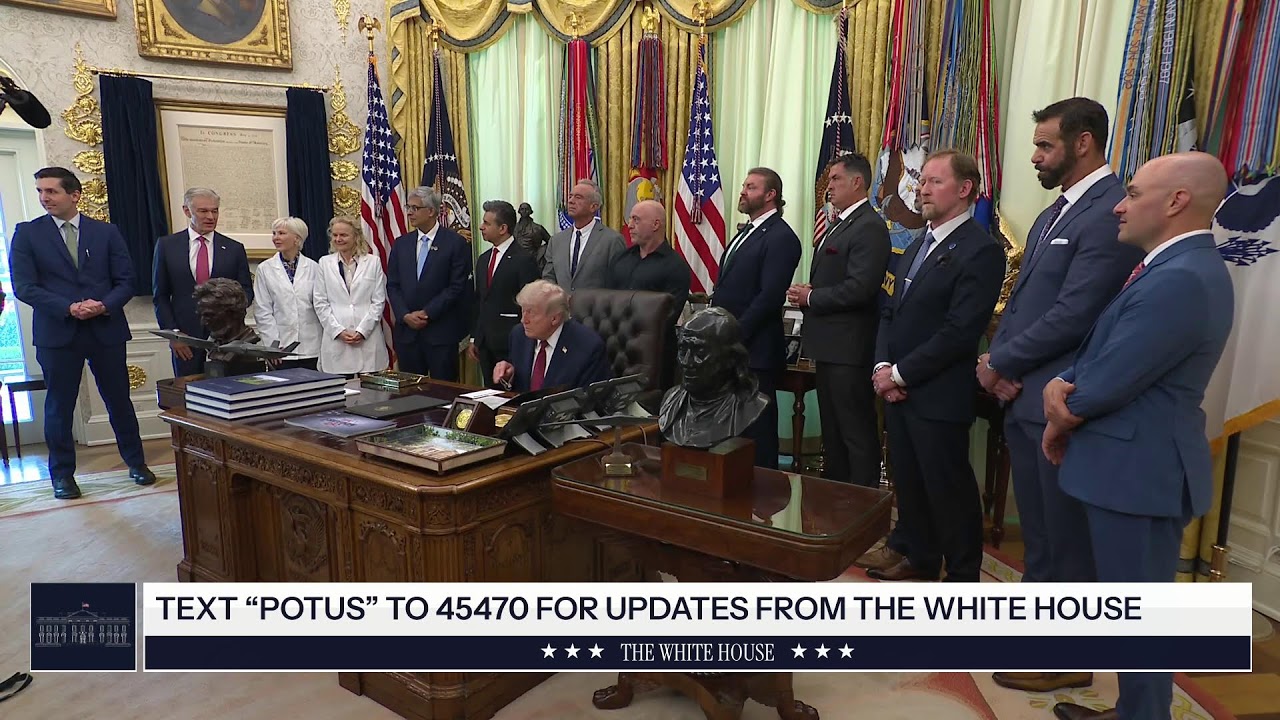
The order, which the president signed in the Oval Office on Saturday alongside federal health officials, advocates and the podcaster Joe Rogan, directs the Food and Drug Administration (FDA) to issue new guidance for researchers on conducting clinical trials on psychedelics.
“In many cases, these experimental treatments have shown life-changing potential for those suffering from severe mental illness and depression—including our cherished veterans,” Trump said.
Steps taken under the order will “clear away unnecessary bureaucratic hurdles, improve data sharing among the FDA and the Department of Veterans Affairs, and facilitate fast rescheduling of any psychedelic drugs that become FDA approved,” the president said.
Some psychedelics like psilocybin and MDMA have been designated with “breakthrough therapy” status, meaning that preliminary clinical evidence shows they can provide substantial improvement over existing therapies. Trump said his order will “expedite” the further review of such substances.
Trump also announced that the federal government is making $50 million available to support state-level research on ibogaine and is “opening a pathway for the substance to be administered to desperately ill patients under the Right to Try law” that he signed during his first term in office.
Health and Human Services (HHS) Secretary Robert F. Kennedy, Jr. said at the signing event that under the president’s order his department “will accelerate research, approval and access to new mental health treatments, including psychedelic therapies.”
“We’re taking this decision, this decisive step, to confront one of the most urgent public health challenges facing our nation, the mental health crisis,” he said. “This executive order will remove legal impediments that block American researchers, scientists, physicians and clinicians from properly studying these medicines and, where appropriate, establishing protocols for their safe therapeutic use.”
Kennedy also said health officials will coordinate with the Drug Enforcement Administration (DEA) and Department of Justice on “rescheduling reviews after successful Phase 3 trials” on psychedelics.
The order says that “the Attorney General shall, in consultation with HHS, initiate and complete review of any product containing a Schedule I substance that has successfully completed Phase 3 clinical trials for a serious mental health disorder, so that rescheduling, if appropriate under 21 U.S.C. 811, may proceed as quickly as practicable for such specific products that are ultimately approved under section 505 of the Federal Food, Drug, and Cosmetic Act.”
Food and Drug Administration Commissioner Marty Makary said that his agency will issue three national priority vouchers for psychedelics.
“Under this new program in this administration, drugs can get approved in weeks—not a year or a year plus, but in weeks—if they are in line with our national priorities,” he said.
Makary also announced “the first ibogaine investigational new drug clearance,” which he said will “pave the way for the first-ever human trials in the United States” on the psychedelic.
Rep. Morgan Luttrell (R-TX), who also attended the signing ceremony, said in a statement that he “can personally attest to the significant benefits of this treatment.”
“It changed my life, and I look forward to seeing the impact it will have on countless others,” he said. “We’re losing too many veterans. If this treatment gives us a chance to change that, then we owe it to them to pursue it. The President’s executive order brings us closer to a lasting solution that our veterans deserve.”
Centers for Medicare & Medicaid Services Director Mehmet Oz called the president’s action “a paradigm shift for mental health treatment.”
“Grateful to work alongside leaders who refuse to accept ‘no’ when lives are on the line,” he said.
A growing body of research and experience indicates that psychedelics can help people suffering with post-traumatic stress disorder, traumatic brain injuries, drug addiction and other mental health disorders.
Lawmakers in a number of states have passed legislation to support clinical trials with the aim of developing ibogaine into a legal medication with approval from the Food and Drug Administration (FDA).
Texas officials, for example, recently announced that the state will move ahead with launching its own research program on the psychedelic after the they couldn’t find a company to lead a consortium on the issue under a bill enacted last year.
The federal psychedelics move comes four months after Trump issued an executive order directing the Department of Justice to completed the process of moving marijuana from Schedule I of the CSA to Schedule III “in the most expeditious manner”—though that still hasn’t happened.
Meanwhile, Kennedy said recently that the Trump administration is “very anxious” to create a pathway for access to psychedelics therapy and that top officials across federal agencies want to “get it out to the public as quickly as possible.”
In an interview on the Joe Rogan Experience in February, Kennedy said he’s confident “we’re going to get it done,” with plans to develop and finalize rules that would enable patients with conditions such as post-traumatic stress disorder (PTSD) and depression to access psychedelic substances like psilocybin and MDMA in a “very controlled setting.”
“Everybody in my agency…is very anxious to get a rule out there that will allow these kind of studies and will allow access under therapeutic settings, particularly [for] the military soldiers who have suffered these injuries to get access to these products,” the HHS secretary said. “We’re working through that process now. We’re all working on it and trying to make it happen.”
“I think that we’re going to get it done,” he said.
Last June, Kennedy said his agency is “absolutely committed” to expanding research on the benefits of psychedelic therapy and, alongside of the head of FDA, is aiming to provide legal access to such substances for military veterans “within 12 months.”
Veterans Affairs Secretary Doug Collins also disclosed in April that he had an “eye-opening” talk with Kennedy about the therapeutic potential of psychedelic medicine. And he said he’s open to the idea of having the government provide vouchers to cover the costs of psychedelic therapy for veterans who receive services outside of VA as Congress considers pathways for access.
Bipartisan congressional lawmakers introduced legislation this session to provide $30 million in funding annually to establish psychedelic-focused “centers for excellence” at U.S. Department of Veterans Affairs (VA) facilities, where veterans could receive novel treatment involving substances like psilocybin, MDMA and ibogaine.
Former U.S. House Speaker Newt Gingrich (R-GA) has said ibogaine represents an “astonishing breakthrough” in the nation’s current “sick care system” that’s left people with serious mental health conditions without access to promising alternative treatment options.