Politics
Virginia Hemp Businesses Want Lawmakers To Hold Hearing On New THC Product Limits

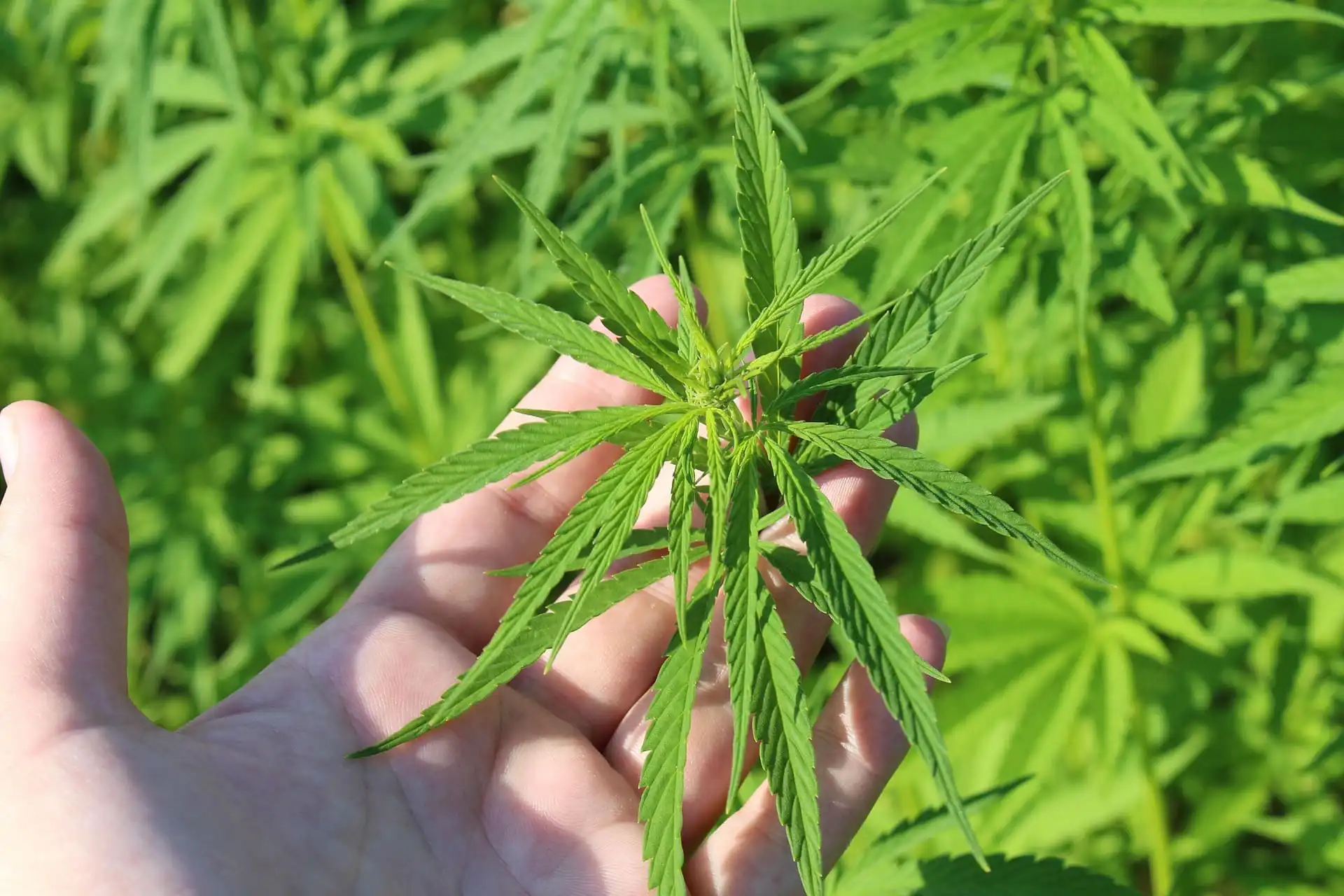
Virginia hemp businesses that say they are harmed by the state’s newly enacted restrictions on THC products are pushing a legislative cannabis committee to hold a hearing on the issue.
The Cannabis Small Business Association (CSBA), which represents hemp companies, is asking the legislature’s Joint Commission to Oversee the Transition of the Commonwealth into a Cannabis Retail Market to convene a “dedicated” meeting on the “consequences” of the new policy.
When lawmakers and the governor passed budget legislation this year, it included provisions that will legalize recreational marijuana sales while also narrowing the scope of legal hemp products in the state.
Specifically, the definition of what constitutes a legal hemp product was revised by removing a provision from prior law that allowed those containing more than 2 milligrams of total THC per package if they also had a ratio of CBD to THC that is 25:1 or more. By removing the CBD-THC ratio allowance, hemp products with more than 2 milligrams of THC are no longer legal.
The restrictions took effect on August 15, nearly 11 months before the state’s newly approved retail marijuana sales market is set to launch on July 1, 2027.
Several hemp companies filed a lawsuit to block the product restrictions from taking effect, but a federal judge denied their request to pause the policy while the overall litigation proceeds.
The legislature’s cannabis commission is largely focused on issues related to the launch of the state’s adult-use marijuana market, but CSBA said on Tuesday that it wants members “to hear directly from affected Virginia hemp businesses, consumers and families, independent experts, medical cannabis operators and the Cannabis Control Authority so lawmakers have a complete public record before determining what comes next.”
Sen. Lashrecse Aird (D), who chairs the panel, declined to comment on CSBA’s request for a hearing on hemp when reached via text message by Marijuana Moment.
Del. Paul Krizek (D), the commission’s vice chair, told Marijuana Moment in an email that he was on vacation and didn’t have a comment, but referred to Aird’s comments at the panel’s most recent meeting about her agenda for the final scheduled hearings of the panel before the next legislative session.
“The intent is to focus on health and safety, public health awareness and enforcement in particular during the September meeting,” Aird had said at a meeting this month. “These are the topics we will spend the remainder of the interim focused on ahead of 2027.”
Aird and Krizek sponsored the Senate and House of Delegates versions, respectively, of standalone marijuana sales legalization legislation that was later adopted into the budget in amended form.
CSBA noted in its call for a hearing on hemp issues that Krizek told The Fredericksburg Free Press last week that “I only have heard about this recently, but I am hopeful that their business model will work without the need to include intoxicating hemp.”
Barbara Biddle, president of CSBA, said that hemp businesses aren’t “asking policymakers to take our word for it.”
“We’re asking them to hear the evidence,” she said. “Bring the businesses, families, scientists, regulators and other stakeholders to the same table and have this conversation publicly.”
Biddle and CSBA previously called on the full legislature to hold a special session to revise the hemp product restrictions.
The lawsuit filed by seven hemp businesses—Northern Virginia Hemp and Agriculture, Redfern Hemp Co., District Hemp Botanicals, Pure Elkton Manufacturing, Cypress Hemp II, Wellness Warriors and Simply Hemp—said that the new restrictions “transform a legalized hemp product into an illegal and penalized substance.”
The overall cannabis provisions of the budget legislation “conferred exclusive commercial opportunities upon state-licensed marijuana operators,” it claimed. “These entities are authorized to market, distribute, and profit from high-potency THC products, whereas substantially similar, lower-potency hemp products in Plaintiffs’ inventory are subject to enhanced restrictions… In effect, it removed Hemp from the same retail marketplace now occupied exclusively by recreational marijuana.”
As a result, the hemp businesses have “suffered substantial losses” without being compensated by the state, which the suit said constitutes a violation of the Takings Clause of the Fifth Amendment of the U.S. Constitution, which prohibits the government from taking private property for public use without providing just compensation.
The filing said the businesses will be forced to terminate employees and reduce or suspend operations or face potential criminal charges, arguing that they “have experienced significant financial loss and should receive just compensation and an injunction to stop enforcement of the statutory amendment.”
Allowing recreational marijuana sales to launch while cracking down on hemp products that have existed in the market for years “creates an arbitrary divide between identical chemical compounds based solely on source or retail channel, rather than public safety,” the suit said.
“If a 3mg THC beverage is banned on a hemp retailer’s shelf for ‘public safety,’ but a 3mg THC beverage is completely legal and deemed safe if purchased at a state-licensed marijuana dispensary, the distinction is not based on the public safety, but on economic protectionism,” it said, alleging violations of due process and equal protection clauses of the U.S. Constitution.
“By replacing federal agricultural standards with economic policies that weaponize the authority to eliminate a distinct, federally compliant market, the path is cleared for a state-monopolized retail marijuana regime scheduled for 2027. Specifically, the Commonwealth has legalized and commercialized the marijuana industry as a whole but selectively singled out and dismantled the independent hemp industry. This contradicts the Commonwealth’s ‘public safety’ rationale in the new Hemp Prohibition which claims independent hemp products pose an intolerable threat to public health while the Commonwealth simultaneously permits and promotes a state-run marijuana marketplace distributing the chemical compounds at significantly higher potencies.”
“The Commonwealth cannot rationally maintain that 2.1 milligrams of THC in a hemp beverage sold by a licensed Virginia hemp business threatens public health, while materially higher doses of the same compound sold through a state-licensed dispensary do not,” the complaint said.
Meanwhile, federal hemp laws are also in flux.
Hemp derivatives with less than 0.3 percent delta-9 THC on a dry-weight basis were federally legalized under the 2018 Farm Bill that President Donald Trump signed during his first term in office. But late last year, the president signed new legislation containing provisions that will redefine hemp to make it so only products with 0.4 milligrams of total THC per container will remain legal after November 12.
Bipartisan lawmakers in the House and the Senate have introduced or are informally circulating various proposal to delay, alter or prevent the forthcoming hemp product ban, and the White House has also called for reforms on the issue.
That includes a key spending bill passed by the Senate that has provisions to delay the new prohibition on many, but not all, hemp THC products.