Politics
New Changes To ATF Gun Form Put Medical Marijuana Patients On The Path To Restored Second Amendment Rights (Op-Ed)

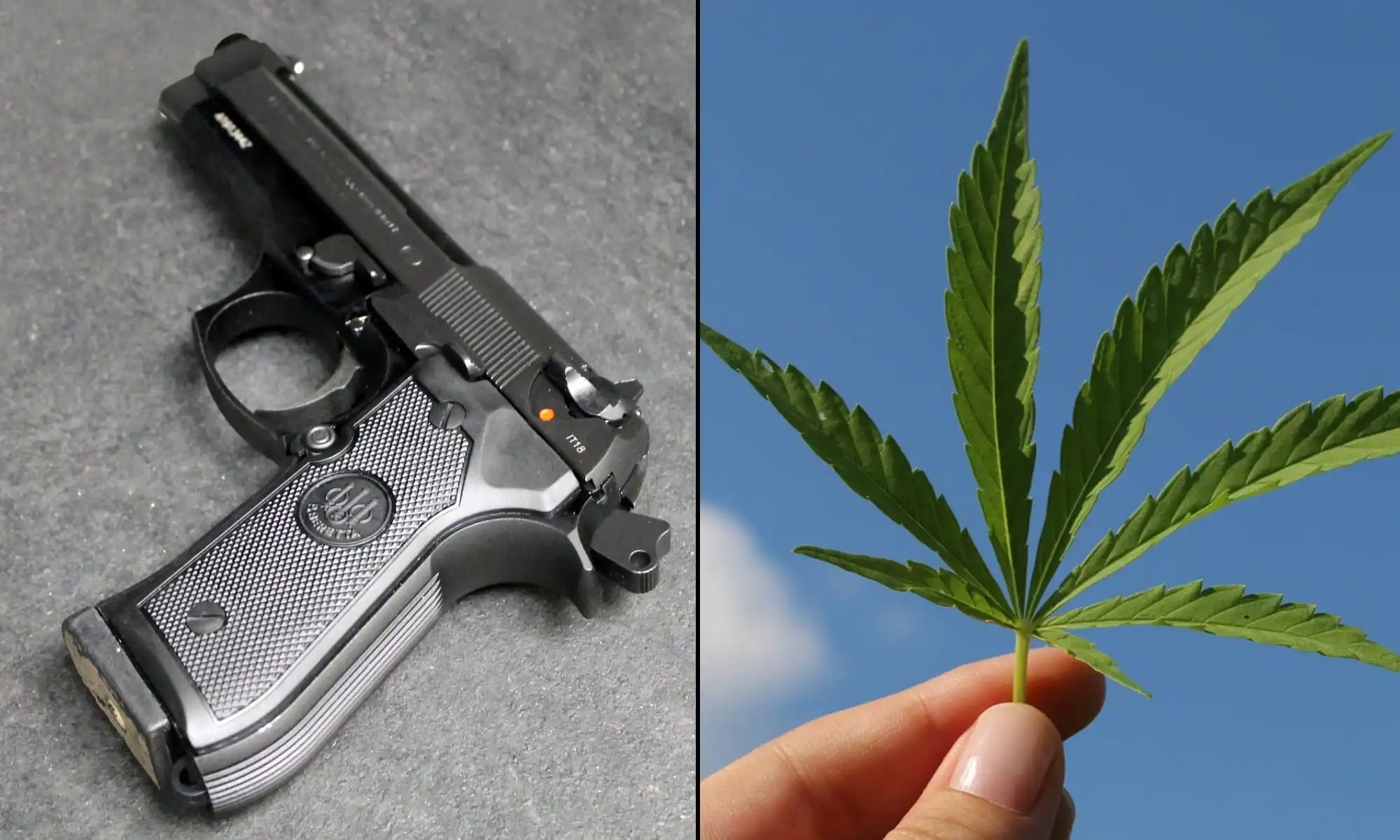
The proposed revisions represent “a formal, federal acknowledgment that medical marijuana is no longer in the same legal category it once occupied.”
By Dan Russell and Will Hall, Jones Walker LLP
In recent years approximately 4 million Americans lost their right to buy, possess or use a firearm. An overwhelming percentage of those people have no idea that the same federal law that led to Hunter Biden’s conviction also applied to them. In the Venn diagram of life in the United States, the overlap of firearm ownership and medical marijuana patients is simply not allowed.
The future, however, is looking like that may not be the case for very much longer.
There is a document that sits at the center of every legal firearm sale in America. It is a government form, dense with certifications and warnings, and for many years it has contained a line that has been a quiet trap for otherwise law-abiding citizens. The line warned that marijuana use, whether medical or recreational, state-licensed or otherwise, remains unlawful under federal law and disqualifies the buyer from purchasing a gun.
But now, finally, the Bureau of Alcohol, Tobacco, Firearms and Explosives (ATF) is proposing to change that language. And while the revision may look like bureaucratic housekeeping at first glance, it represents something considerably more significant: a formal, federal acknowledgment that medical marijuana is no longer in the same legal category it once occupied.
The Firearms Transaction Record, officially ATF Form 4473, is completed by any person buying a firearm from a federally licensed dealer. Among its questions is one that asks whether the buyer is an unlawful user of, or addicted to, marijuana or any other controlled substance. Until now, the form spelled out in bold, unambiguous language that marijuana remains federally illegal regardless of what any state has done about it. Medical card or not, dispensary receipt or not, the warning applied to everyone.
A newly proposed revision updates the explicit warning about medical use. The new language focuses the prohibition on recreational marijuana and omits any reference to state-authorized medical cannabis. The section now reads, in relevant part, that federal law does not permit the use or possession of marijuana for recreational purposes—full stop. For more than 4 million Americans, approximately 1 million in Florida alone, this would re-establish their Second Amendment rights.
This change did not come out of nowhere. It is a direct downstream consequence of the acting attorney general’s order earlier this year, immediately moving state-licensed medical marijuana products to Schedule III of the Controlled Substances Act, which is a significant step in the ongoing federal rescheduling process initiated by the Trump administration.
Under the prior scheduling, all marijuana was Schedule I: no accepted medical use, high potential for abuse, categorically illegal. Schedule III changes the calculus entirely. Put simply: if you are a registered medical marijuana patient buying from a licensed dispensary, the federal government’s own research arm says you now have legal cover.
At this time, the form revision is a proposal, not a final rule. It is subject to public comment through July. It can be changed, withdrawn or finalized in a different form. Even if the revision is finalized as proposed, a person who uses marijuana recreationally in a state where it is legal but who is not a registered medical patient remains in the same position as before—barred from purchasing a firearm under federal law.
As it has throughout history, ATF will retain the right to re-revise its form. The attorney general can deprioritize prosecutions. But only Congress can repeal Section 922(g)(3), and only the courts can declare it unconstitutional. Everything happening right now in federal rulemaking is a pendulum swing within a statutory framework that remains intact.
What is genuinely new is the signal the form sends. For years, that warning on Form 4473 served as the federal government’s blunt instrument—no matter what your state says, no matter what your doctor says, you are an unlawful user and you do not get a gun.
The proposed revision says something different. It says that medical marijuana, authorized under state law and now partially recognized at the federal level, is not in the same box as recreational use. It says that the government is at least beginning to track the reality on the ground, where almost every state has a medical marijuana program and millions of patients are navigating a legal landscape the federal government helped create.
Today medical marijuana patients in states that have robust, regulated medical programs—Florida, Texas and Pennsylvania—face federal felony exposure for possessing a firearm, while their neighbor with a case of beer in hand faces no such consequence.
None of this immediately resolves the central absurdity of the current moment. However, we are, finally, on the path to reinstating the Second Amendment rights for medical marijuana patients.
Dan Russell is a partner in Jones Walker’s Government Relations Practice Group, where he focuses his practice on civil and administrative litigation, gaming, and governmental law. Will Hall is a partner in Jones Walker’s Litigation Practice Group, where focuses his practice on administrative and civil litigation, with an emphasis on matters involving Florida state regulatory agencies and the entities that fall under their oversight.