Politics
Massachusetts Voters Don’t Support Repealing Recreational Marijuana Sales On The Ballot, Poll Shows

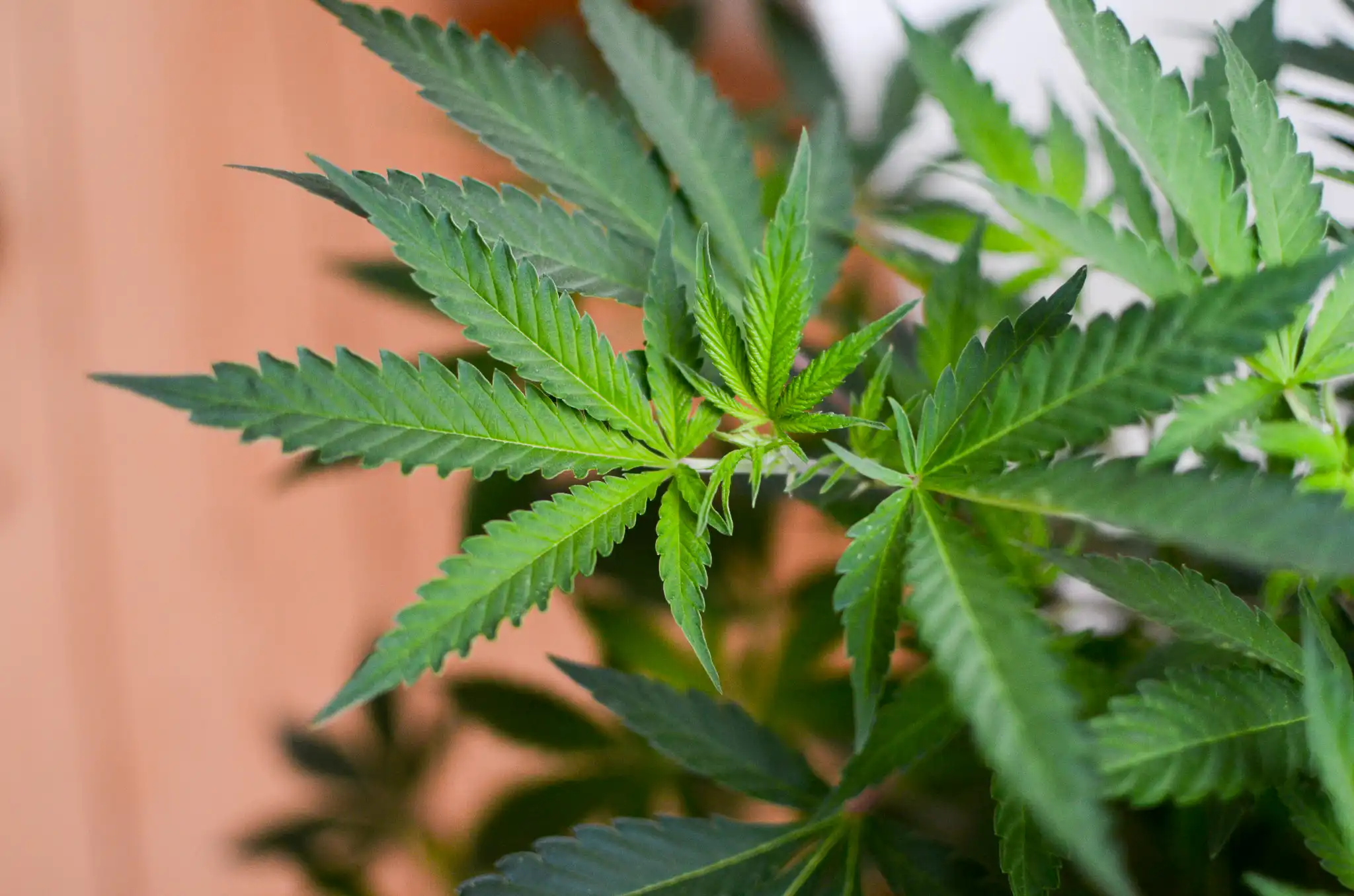
Most Massachusetts voters oppose a measure on the November ballot to roll back the state’s marijuana legalization law, according to a new poll.
The survey, conducted by the University of Massachusetts Amherst and WCVB-TV, found that a total of 55 percent of registered voters said they would either definitely vote no on repealing recreational cannabis sales (40 percent) or would probably vote no (15 percent).
A total of 33 percent would either definitely vote yes (15 percent) or probably vote yes (18 percent), while 10 percent are undecided.
Three percent said they don’t understand the ballot question, which was described as proposing to “repeal the laws that legalize, regulate, and tax the retail sale of recreational marijuana in Massachusetts while allowing adults age 21 and older to possess up to one ounce of marijuana.”
No demographic group—including when broken down by political party, age, gender, race, education level or income—had majority support for the marijuana legalization rollback measure in the survey.
When asked separately whether they “believe that the legalization of marijuana in Massachusetts has been positive or negative for the state,” a total of 55 percent percent of voters said the reform has either been very positive (26 percent) or somewhat positive (29 percent), while 24 percent said it has been either very negative (11 percent) or somewhat negative (13 percent). About a fifth of respondents (21 percent) said cannabis legalization has been neither positive nor negative.
“In 2016, Massachusetts voters legalized the possession, use, distribution, and cultivation of marijuana in the state, making the commonwealth the seventh state in the nation to legalize marijuana,” Tatishe Nteta, provost professor of political science at UMass Amherst and director of the poll, said in a press release.
“Looking back on the 10-year anniversary of this decision, we find that a majority of voters (54%) view legalization in a positive light, with only 2 in 10 (22%) saying that legalization has been negative for the state,” he said. “Given these favorable views, it is unsurprising that a majority of registered voters (55%) oppose the ballot question seeking to repeal marijuana legalization in the state.”
The pollster said that prohibitionists could still end up convincing enough voters to support their initiative—though he argued it would be a tall order.
“With the campaign for the ballot question still in its nascent stages and 1 in 10 voters remaining undecided, there remains time for the tables to turn and support for repeal to grow,” Nteta said. “But, with Trump voters (48%) and Republicans (45%) the only groups approaching majority support for the ballot question, convincing Massachusetts voters to reverse course on marijuana legalization appears to be a formidable challenge.”
The survey also asked about the eight other initiatives on the ballot this November—finding that the anti-cannabis measure had the least support of all of them.
“While most of the potential ballot questions garner broad support among Massachusetts voters, the question to repeal the commonwealth’s marijuana legalization is rather widely rejected in the new poll,” the polling memo says.
The survey involved interviews with 800 registered Massachusetts voters between August 5-12 and has a margin of error of +/-4.4 percentage points.
A separate recent poll that included only likely Democratic primary voters found that they overwhelmingly oppose scaling back the marijuana legalization law.
That survey, from the Suffolk University Political Research Center and The Boston Globe. showed that 79 percent said they would prefer to keep the state’s current cannabis laws intact, 16 percent said they want to repeal recreational sales and 4 percent were undecided.
There was supermajority support for maintaining marijuana legalization as-is among every age, racial, gender and geographic group polled.
Last month, state officials issued a final determination that the initiative—which would repeal laws allowing the regulated commercial sales of recreational cannabis and home cultivation while maintaining legal possession and continuing the medical marijuana system—will appear on ballot this fall.
While the latest survey results provide some comfort to cannabis reform supporters, advocates are not resting.
A coalition of Massachusetts marijuana business leaders, healthcare professionals and other advocates have launched a campaign to defeat the measure.
The Marijuana Policy Project (MPP) recently issued a warning that passage of the legalization rollback measure would have “disastrous political and economic consequences for legal cannabis markets everywhere.”
“Even a too-close victory would spook markets and incentivize a rash of similar initiatives in states around the country, each costing millions to try and defeat,” the group said.
After the Secretary of the Commonwealth’s Office determined that organizers for the anti-cannabis proposal had turned in enough valid signatures to put the measure before voters, a marijuana reform advocate filed an objection with the State Ballot Law Commission claiming that various signatures were not genuine, obtained through fraudulent means or were not “signed substantially as registered.”
The body rejected the challenge to the legal marijuana rollback measure, however, clearing it to go before voters to decide.
In June, the campaign behind the anti-legalization ballot measure fired a signature gatherer it says was shown appearing to engage in “wholly unacceptable” conduct in a recent video.
As Marijuana Moment reported, a man petitioning for the Massachusetts initiative as well as a similar anti-cannabis proposal in Maine was depicted in recent social media posts seeming to argue that voters who support legal marijuana access should sign the petitions in order to advance or protect reform.
The campaign later said it has “zero tolerance for any circulation tactics that would mislead petition signers.”
“The identified canvasser was immediately terminated, in coordination with our vendor, upon being made aware of the alleged conduct,” the group said. “The conduct apparent in the video would be wholly unacceptable and does not reflect how this campaign operates. We demand honesty, transparency and professionalism from everyone associated with our effort.”
A video posted to Reddit of the signature gatherer shows the man collecting signatures outside a retail store in Massachusetts next to a sign that says “keep cannabis legal.”
When confronted by a marijuana reform supporter who recorded the petitioner’s interactions with voters, he appeared to be trying to convince them that it is important to qualify the anti-cannabis measure for the ballot in order to then defeat it.
“This is what we’re fighting against right here. That’s why we vote no,” he said. “If we can get this to the ballot right here, we vote no.”
The person who captured the video pointed out that Massachusetts voters already approved marijuana legalization years ago, and that the only way it could be imminently repealed is if the new ballot measure qualified for the November election. If the initiative does not get enough signatures to go before voters, the state’s laws will remain the same.
“It’s my job,” the petitioner insisted, however. “I know what I’m talking about.”
“It’s a group of rich folks from out of state that want to basically take marijuana to when it was a medical marijuana card,” he said. “We don’t want that to happen.”
The same man also appeared to also be gathering signatures for a separate measure in Maine that would similarly repeal laws allowing regulated adult-use marijuana sales and home cultivation rights for adults while keeping possession legal and adding new testing requirements for medical cannabis.
A staffer for the prohibitionist organization Smart Approaches to Marijuana (SAM), whose affiliated group SAM Action is largely funding the anti-cannabis ballot campaigns in both states, declined to comment about the petitioner’s conduct when reached by Marijuana Moment.
The campaigns have previously been accused of misleading petitioning tactics.
In Massachusetts, some voters reported that the campaign used fake cover letters for other ballot measures on unrelated issues like affordable housing and same-day voter registration during the first round of petitioning. Legal cannabis supporters filed an earlier formal complaint about the prohibitionist effort’s tactics, but the State Ballot Law Commission rejected the challenge.
The measure also faced a legal challenge from cannabis industry operatives who argued it contains “impermissibly unrelated subjects,” and that the state attorney general’s official summary is “misleading and deficient.” The state Supreme Judicial Court heard oral arguments on the litigation challenging the anti-marijuana initiative but it ultimately ruled against the lawsuit.
Photo courtesy of Philip Steffan.