Politics
It’ll Be An ‘Uphill Path’ To Stop A Federal Ban On Hemp THC Products This Year, Ted Cruz Says

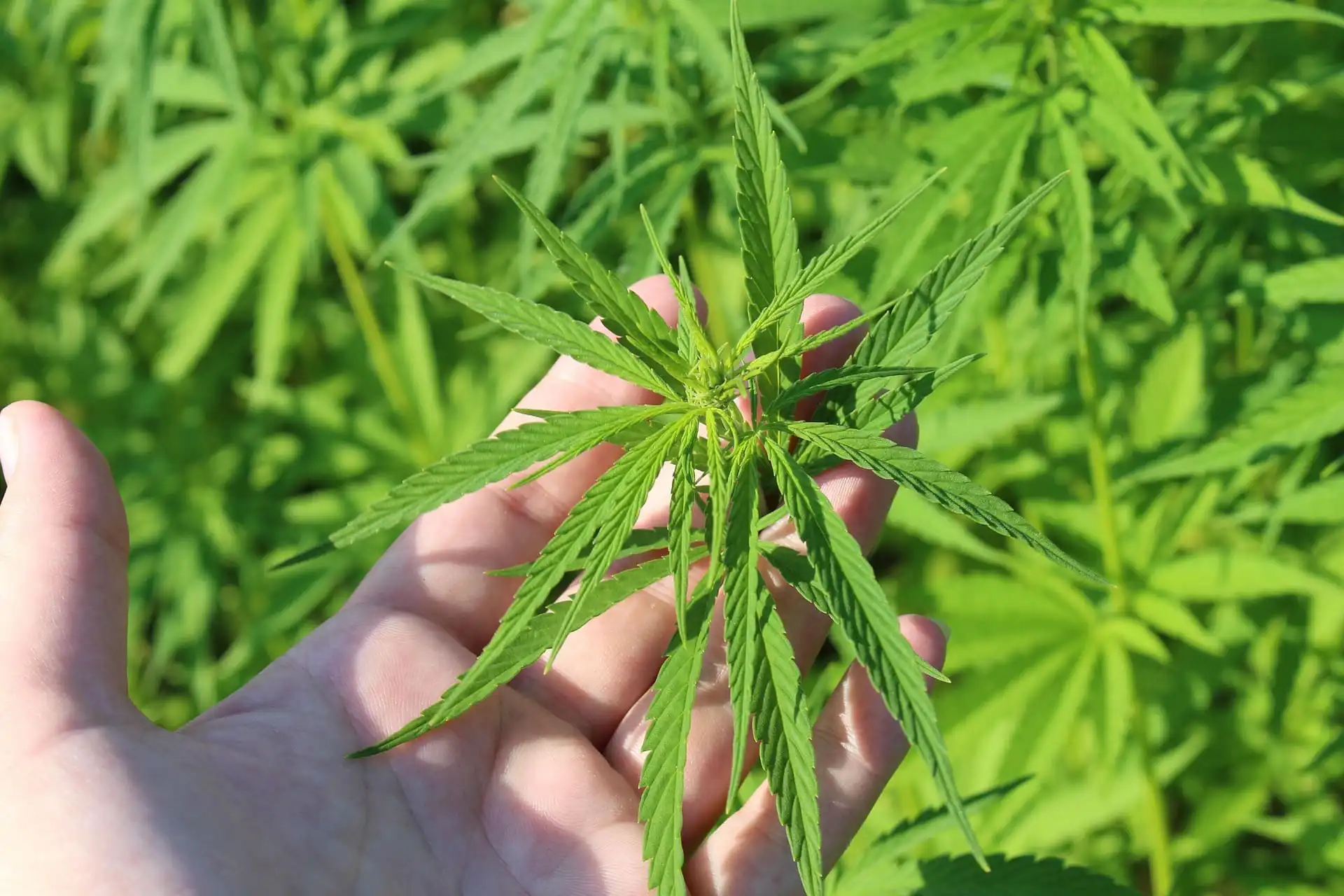
Hemp farmers and industry advocates will have a challenging time stopping the planned federal recriminalization of hemp THC products that’s scheduled to take effect later this year, Sen. Ted Cruz (R-TX) says.
But, he added, it will be easier to pass legislation on the issue next year when Sen. Mitch McConnell (R-KY), who led the push for the new ban, will likely be replaced by another Republican senator who supports keeping the crop’s derivates legal.
“I think the way Congress handled it and treated the hemp industry was really unfair,” Cruz said during a Zoom meeting with members of the group Hemp Industry & Farmers of America (HIFA) on Tuesday. “It wasn’t right, and it didn’t make sense. I think there are clearly abuses, and there are abuses that we need to be concerned about, but simply acting in a heavy-handed way to destroy another industry—that doesn’t make any sense.”
Hemp derivatives with less than 0.3 percent delta-9 THC on a dry-weight basis were federally legalized under the 2018 Farm Bill that President Donald Trump signed during his first term in office. But late last year, Trump signed new legislation containing provisions that will redefine hemp to make it so only products with 0.4 milligrams of total THC per container will remain legal after November 12.
Both the initial legalization and the rollback were championed by McConnell, who is retiring after this year and who reportedly sees it as a key part of his legacy to close a “loophole” that allowed intoxicating products to proliferate.
Lawmakers from both parties have filed legislation to delay, reverse or alter the scheduled recriminalization, but none of those bills have gained traction with House or Senate leadership.
Cruz told the hemp operatives during the meeting that if McConnell is “leaning in really hard, saying, ‘don’t do anything on this’—you know, I’m not someone to blow smoke up your ass—that means the votes probably aren’t there” in 2026.
The senator said in response to a question from a hemp operator that “the right political answer would be to say ‘yes, there’s hope'” of forestalling the ban in the short term.
But “if Mitch is dug in hard, it is a very uphill path,” he said. “I don’t know that it’s impossible. The best hope of something happening would be something on the Farm Bill that was a compromise. I’d be supportive of that, but…it is a difficult road.”
Industry advocates are anticipating a new hemp regulation bill, from Rep. Andy Barr (R-KY), who earlier this week won a primary election for the Republican nomination to replace McConnell in the Senate.
Cruz said it will be an “easier road” for hemp reform with McConnell gone from the Senate next year and replaced with industry champion Barr.
“I’m supportive of our doing it this year, so I’m not trying to pour poor ice on it,” he said. “I’m just trying to give you guys candor and truth.”
Barr himself spoke at a HIFA meeting earlier this month and previewed his forthcoming legislation—saying it faces opposition from a coalition of strange bedfellows including sectors of the alcohol industry, marijuana businesses and cannabis legalization opponents.
Cruz, for his part, was noncommittal on sponsoring or supporting a Senate companion version of the Barr hemp bill this year.
“I’ve looked at his bill, and I’m keeping an open mind,” he said on this week’s HIFA call. “My general approach is to keep the feds out of it and leave it to the states.”
Cruz was the only other Republican to vote against a motion to kill a hemp amendment from Sen. Rand Paul (R-KY) last year that would have removed McConnell’s ban language from the large-scale appropriations legislation that the president ultimately signed.
He described the dispute between the two Kentucky senators over the hemp issue as a “personal battle” that erupted during a closed-door lunch meeting of Senate Republicans.
“I’d like to give you, you know, highfalutin reasons of policy and principle that were based on deep studies,” Cruz said. “This was—listen, Mitch is in his final months in the Senate, and he’s obviously been there 40-some-odd years, and Mitch’s health is failing, so he is much weaker than he used to be. But Mitch leaned in very, very hard with all of my Republican colleagues, and urged them to support his language.”
“Rand got up and made an impassioned argument on the other side, and I’m not breaking any great news to say that Mitch and Rand have not always seen eye to eye, and that there have been real differences on this policy issue. There were very real differences at the end of the day. I ended up being the only other Republican who voted with Rand. For me, I listened to the arguments on the merits, and I thought Rand made more sense than Mitch did on this. I didn’t want to do damage to farmers, to small businesses across the country. I didn’t want Congress to be arbitrary and just slam the living crap out of people… And so it was a lunch where the two of them stood up and argued maybe 30 minutes about this. I went into the lunch with an open mind. I listened to them both. And look, I’ve got teenage daughters. I worry about products that are being marketed to kids and the harms that can come from that. I think those are real, but I also worry about farmers and people who have built businesses trusting the laws that are on the books. To then just arbitrarily yank the rug under them with no warning, that doesn’t make any sense.”
“Whether something happens this year I think still depends on that personality battle between the two,” he said of Paul and McConnell. “If Mitch is actively leaning on people not to do anything, my guess is the votes don’t move significantly.”
Cruz said that “next year could be a different story,” however.
“Obviously, Mitch is going to be replaced—likely by Andy Barr, and he’s on the complete other side of this. I think Andy is perceived—look, Rand holds very principled positions, but they, on many issues, can be within the Republican conference on the extreme, and so Rand doesn’t often doesn’t move many Republicans. That’s just the nature of—he’s quite fine being the one vote on a 99-1 vote. I think with Andy coming in next year, you might see a different dynamic there. I think Andy will be a very different senator than Mitch is, and I think it’ll be a very different senator than Rand is, and that that might be beneficial to resolving this issue. As I said, I’d like to see us fix the damage we did last time, and so I’m supportive of efforts to do that.”
The Texas senator did say it is “conceivable” that “we could see congressional action this year” on hemp reform, and that if it were to happen, “the most likely vehicle would be the Farm Bill.”
“Whether the Farm Bill is going to move is an open question,” he said, however. “I hope it moves, but there’s a real possibility we are facing an environment where Democrats are in a very obstructionist mood, and so that’s that’s a challenge for the Farm Bill to move.”
Leaders of the advocacy organization Marijuana Policy Project similarly said recently that they think it will be difficult to avert the ban on hemp THC products before November, though they left open the possibility that there could be a carve-out for beverages or some reforms to THC limits.
Notably, while Cruz said that a blanket federal prohibition on hemp deprives states of autonomy to set their own policies, the senator has also opposed the former Biden administration’s move to simply reschedule marijuana, citing increases in vehicle injury and fatality rates that he attributed to the legalization of adult-use cannabis.
He doesn’t appear to have publicly commented on rescheduling since the Trump administration moved forward with it.
Cruz has been broadly critical of marijuana legalization, though he’s also said at some points that individual states should have the ability to decide how to regulate cannabis. “I think it ought to be up to the states,” he said during a 2018 debate. “I think Colorado can decide one way. I think Texas can decide another.”
With respect to hemp policy, the House of Representatives recently passed a Farm Bill with provisions aimed at aiding industrial hemp producers—but without any language to delay or alter the federal recriminalization of hemp THC products that’s scheduled to take effect in November.
Trump last month pushed congressional lawmakers to take action to amend the currently scheduled hemp ban, which he suggested threatens to federally recriminalize full-spectrum CBD products.
“I am calling on Congress to update the Law to ensure that Americans can continue to access the full-spectrum CBD products they have come to rely on, and that help them, while preserving Congress’s intent to restrict the sale of products that pose Health risks,” the president said in a Truth Social post on Thursday, the same day his administration announced it is moving forward to reschedule marijuana.
“We must get this done RIGHT and FAST, especially for those who saw that CBD helps them,” he said. “Plus, I am told it will also help our GREAT FARMERS, who we love, and will always be there for.”
Major retailer Target, meanwhile, recently moved to expand its sales of hemp THC drinks into more states.
The Wine & Spirits Wholesalers of America (WSWA), for its part, said the House’s failure to include provisions to delay or alter the ban on hemp THC products was a “missed opportunity.”
“A ban will not remove these products from the market—it will push consumers toward unregulated, online channels with no age verification, no product standards and no accountability,” Dawson Hobbs, executive vice president of government affairs for WSWA said.