Politics
Hemp Company Pushes Back On DEA Claim That Synthetic Cannabis Compound HHC Is Illegal

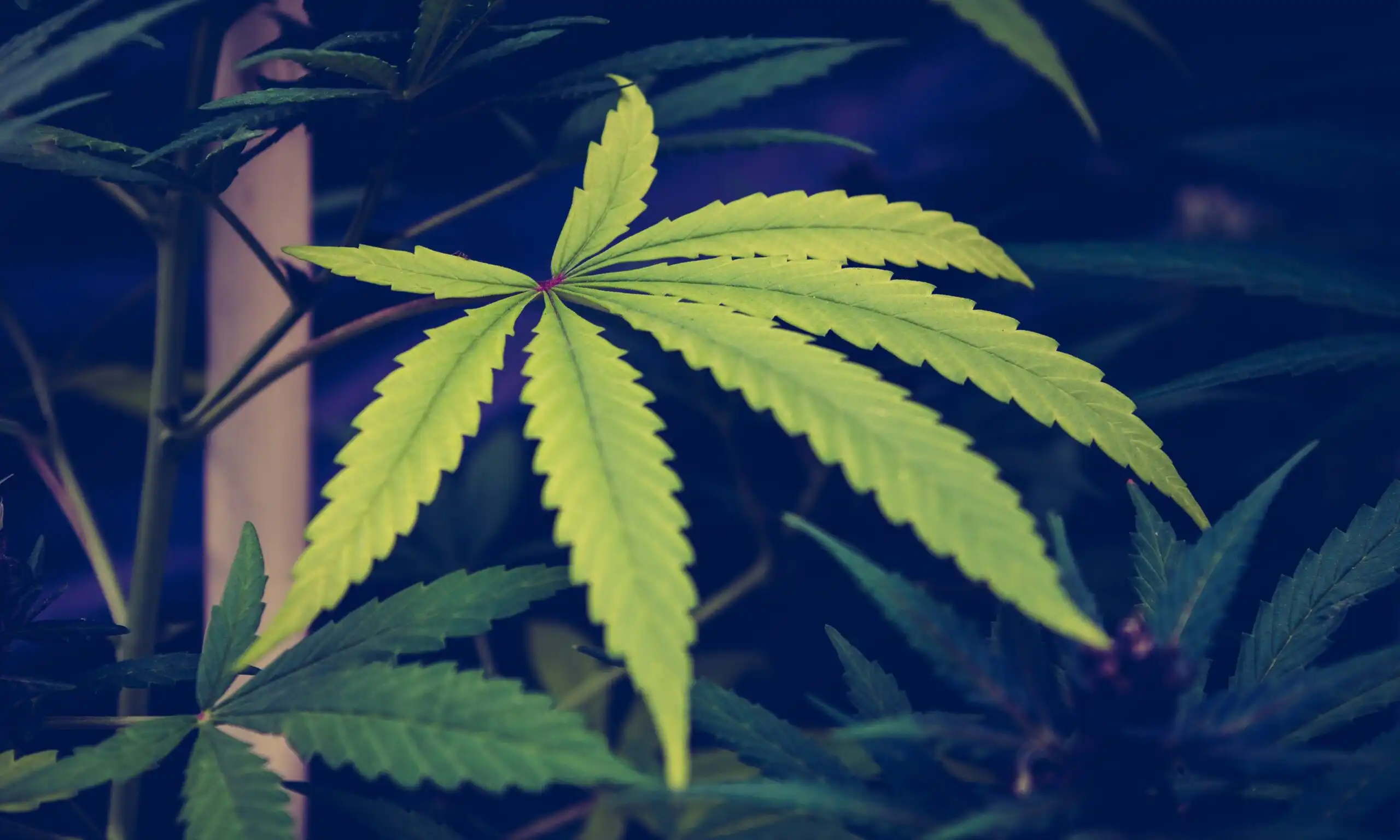
A hemp company is pushing back on a recent court filing from the Drug Enforcement Administration (DEA) about the agency’s stance that a cannabinoid produced synthetically from components of the cannabis plant is federally illegal—saying that its denial of another business’s petition on the issue undermines the arguments the government is making in ongoing litigation.
DEA issued a rule in May saying that while it had already considered hexahydrocannabinol (HHC) to be a Schedule I illegal substance under the federal Controlled Substances Act (CSA), the agency will now giving the compound its own unique drug code for classification.
Two hemp companies filed separate lawsuits challenging the move, however, and last week DEA filed a brief in the U.S. Court of Appeals for the Fourth Circuit in response to one of them—arguing that the company, Bluestar Operations, LLC, does not have standing to bring the case and, even if it did, it would fail on the merits.
The agency essentially said it has considered HHC to be illegal for decades and that assigning the code does is “a technical change that has no substantive effect on HHC’s status as a schedule I substance.”
“All the rule does is assign a tracking code to HHC to facilitate DEA’s administration of the CSA,” the brief said, adding that because the change “imposes no new obligations or liabilities,” Bluestar has not “identified any injury traceable to the rule that can be remedied in this proceeding.”
Bluestar, in a reply brief filed on Thursday, said DEA’s filing provided “no substantive answer to the merits” of its case.
“The DEA Rule, according to the Respondents, is something both simultaneously important enough to warrant publication in the Code of Federal Regulations yet sufficiently inconsequential that no one it reaches may be heard to challenge it,” lawyers for the company wrote. “Both cannot be true. That strategy fails on its own terms, and cannot rescue the DEA Rule which is unlawful on the merits.”
DEA’s position, Bluestar said in the filing, is that the company’s “injuries flow from the ‘preexisting’ status of HHC rather than from the DEA Rule.” But the agency “cannot have it both ways,” it said. “If HHC was already unambiguously a Schedule I substance, then no new agency action was necessary.”
The Bluestar filing also said that DEA’s argument that HHC is not “part of” the hemp plant contradicts the 2018 Farm Bill’s definition of hemp as including “all derivatives, extracts, cannabinoids, isomers” as well as the agency’s own “fifty-year practice of treating plant-elaborated compounds as retaining their botanical lineage.”
The drug agency’s brief last week also pointed to forthcoming planned changes in the legal status of hemp products.
Hemp derivatives with less than 0.3 percent delta-9 THC on a dry-weight basis were federally legalized under the 2018 Farm Bill that President Donald Trump signed during his first term in office. But late last year, the president signed new legislation containing provisions that will redefine hemp to make it so only products with 0.4 milligrams of total THC per container will remain legal after November 12.
As such, DEA said that the legal theory behind Bluestar’s case “will soon be overtaken by events.” The scheduled recriminalization of many hemp products “will defeat whatever remains of Bluestar’s claims,” it argued.
That said, Senate recently approved a funding bill that includes a provision to delay the effective date of the hemp product ban until December 11—a move that was supported by the White House. While that change has not yet been approved by the House of Representatives or enacted into law, industry supports believe it could give them more time to convince Congress to enact a regulatory structure for hemp products as an alternative to broad prohibition.
The new Bluestar brief pushed back on DEA’s citation of the potential change in hemp products’ federally legal status, saying that “the 2025 amendment is prospective—it is not yet in effect, and cannot retroactively supply a limitation the language of the 2018 Farm Bill never contained.”
“If anything, the 2025 amendment underscores that under current law—the only law governing the DEA Rule—hemp-derived HHC is lawful hemp,” the company’s lawyers wrote.
Separately, a lawyer for Bluestar sent a letter to the Fourth Circuit’s clerk on Saturday to notify the court of what he called a “dispositive development bearing directly” on DEA’s “defensive argument that Bluestar has failed to exhaust its remedies through a petition for rulemaking.”
The agency’s brief last week had said the “appropriate” course for the company was to file an administrative petition to reschedule HHC rather than file the current lawsuit.
But what DEA “did not disclose to the Court was the critical fact that another HHC manufacturer pursued that very route on June 18, 2026,” J. Gregory Troutman of Troutman Law Office, PLLC wrote in the letter on behalf of Bluestar. “That petition made the same core procedural and substantive arguments that Bluestar makes here, including parallel constitutional arguments.”
Troutman noted that “a mere 17 hours after Bluestar filed” its initial reply brief, “DEA transmitted its denial of this parallel administrative petition.”
“The short temporal gap between Bluestar’s Reply brief and the DEA’s denial of a parallel administrative petition on the same issues cannot be a coincidence,” the lawyer wrote. “It infers futility vis-à-vis the Respondents’ exhaustion of remedies argument and negates their standing traceability, redressability and mootness arguments. It also confirms the Petitioners’ closed-door/moving-target defenses, infers that the DEA manufactured its defenses and further confirms the basis for granting relief here.”
Meanwhile, the appeals court considering Bluestar’s challenge in June denied the company’s request for a stay on the drug code rule pending resolution of the litigation.
The U.S. Court of Appeals for the Ninth Circuit is considering a separate similar case brought by the hemp company IHC Investments, Inc., which also filed the rescheduling petition that Bluestar’s lawyer noted in his letter to the Fourth Circuit.
Both suits say the agency’s decision is “unlawful.”
In earlier briefs filed in June, DEA has said that each petitioner “fails to meet any of the factors required to show that a stay pending review would be warranted.”
HHC can be found in trace amounts in cannabis plants but is also synthesized by hydrogenating cannabidiol (CBD). It’s sometimes sprayed on cannabis flowers that are low in delta-9 THC, the most well-known psychoactive component of marijuana, and its psychoactive effects are reportedly similar.
While the 2018 Farm Bill federally legalized hemp and its derivatives with less than .3 percent delta-9 THC on a dry-weight basis, DEA says that only applies to naturally occurring, and not synthetic, cannabinoids. As such, it is the agency’s position that HHC does not fall under the definition of legal hemp.
The Bluestar case cited a prior ruling in the Fourth Circuit that found the hemp-derived cannabinoid THC-O-acetate is federally legal despite DEA’s claim to the contrary.
“Congress intentionally employed expansive statutory language and did not prohibit cannabinoids subjected to ordinary extraction, refinement, conversion, hydrogenation, distillation, or similar manufacturing processes commonly utilized throughout the hemp industry,” the complaint said.
DEA’s move “conflicts with the plain text, structure, and purpose of the 2018 Farm Bill and unlawfully inserts limitations Congress neither intended, nor enacted,” it said. The agency’s action has “already caused immediate and concrete harm to the Petitioner, including substantial compliance costs, business uncertainty, reputational harm, disruption of commercial relationships, and interference with ongoing operations.”
“Congress, not executive agencies like the DEA, defines the scope of federal criminal liability. The DEA lacks authority to narrow Congress’s legalization of hemp cannabinoids through interpretive construction unsupported by statutory text.”
The IHC Investments case cited a prior Ninth Circuit ruling that the federal legalization of hemp through the 2018 Farm Bill removed restrictions on a wide range of molecules produced by the cannabis plant—including the psychoactive cannabinoid delta-8 THC.
The petition said that “DEA effectively, and thus unlawfully, attempts to expand federal criminal liability through administrative interpretation, unsupported by the plain statutory text of the enabling legislation.”
“Congress did not prohibit converted cannabinoids, hydrogenated cannabinoids, or cannabinoids subjected to ordinary commercial processing techniques,” the complaint said. “Congress did not clearly authorize the DEA to criminalize broad categories of hemp-derived cannabinoids through administrative interpretation.”
Both petitions argued that DEA’s move violates the major questions doctrine, a precedent holding that if an agency seeks to decide an issue of major national significance, that action needs to be supported by clear congressional authorization.
The agency’s ban of HHC “carries enormous economic and political significance affecting a nationwide hemp industry involving billions of dollars in commerce,” the litigation brought by Bluestar said.
DEA, for its part, said in the HHC rule it filed that “only tetrahydrocannabinols in or derived from the cannabis plant—not synthetic tetrahydrocannabinols—are excluded from control as ‘tetrahydrocannabinols in hemp.'”
“To clarify further, tetrahydrocannabinols produced through chemical conversion, even when hemp derived are considered synthetically produced for purposes of the CSA, do not qualify as ‘tetrahydrocannabinols in hemp’ under” the 2018 Farm Bill, the agency said.
The Federal Register notice wasn’t the first time that DEA addressed the legal status of HHC.
In a 2023 letter, Terrance Boos, chief of DEA’s Drug and Chemical Evaluation Section, wrote that HHC “does not occur naturally in the cannabis plant and can only be obtained synthetically, and therefore does not fall under the definition of hemp.”
The recent filing signed by DEA Administrator Terrance Cole said that “this rule does not affect the continuing status of hexahydrocannabinol as a schedule I controlled substance in any way.”
“This action, as an administrative matter, establishes a separate, specific listing for hexahydrocannabinol in schedule I of the CSA and assigns a DEA drug code for this substance,” it said. “This action will allow DEA to establish an aggregate production quota and grant individual manufacturing and procurement quotas to DEA-registered manufacturers of hexahydrocannabinol, who had previously been granted individual quotas for such purposes under the drug code for tetrahydrocannabinols.”
The DEA notice cited a move last year by an international drug control body to add HHC to Schedule II of the United Nations Convention on Psychotropic Substances of 1971—but the document doesn’t note that when the Commission on Narcotic Drugs (CND) took the action, the U.S. was the only country to abstain from the vote.
DEA said that the U.S. Department of Health and Human Services (HHS) “concurs with the direct listing and drug code assignment of hexahydrocannabinol in the CSA.”
Read the filing and letter in the HHC lawsuit below: