Politics
Federal Appeals Court Sets Schedule For Lawsuit Challenging Medicare Hemp Coverage Program

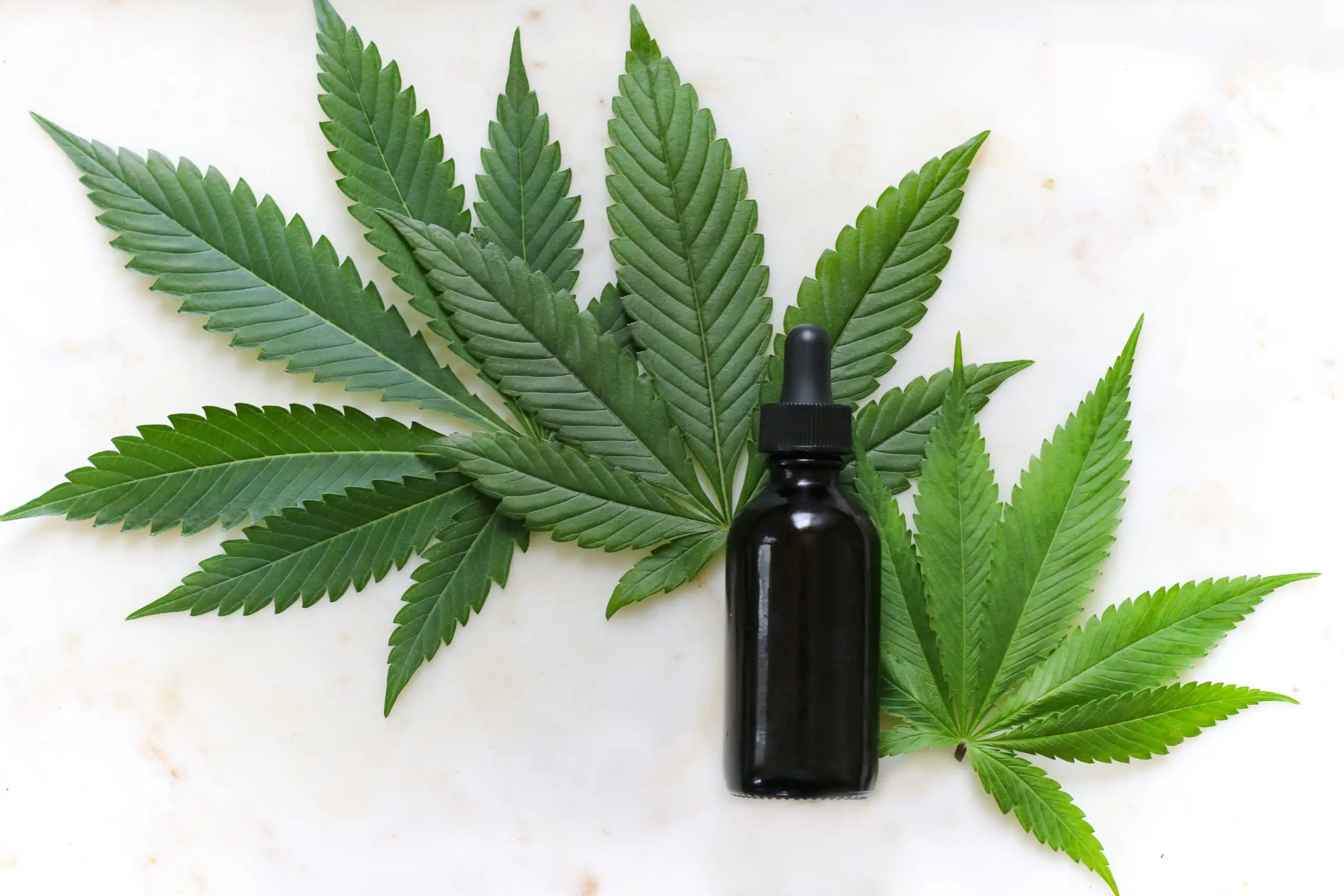
A federal appeals court has laid out the schedule for a lawsuit brought by a coalition of anti-marijuana groups and a cannabis-focused biopharmaceutical corporation that are challenging the Trump administration’s initiative to cover up to $500 worth of hemp-derived products each year for eligible Medicare patients.
In May, Judge Trevor N. McFadden dismissed the challenge to the program that’s implemented by the Centers for Medicare & Medicaid Services (CMS) that focuses largely on CBD but also allows a certain amount of THC in products. The opponents of the CBD Medicare effort then asked the U.S. Court of Appeals for the District of Columbia Circuit to reconsider the decision.
On Wednesday, the appeals court issued an order setting the schedule for briefs in the case:
- Appellants’ Brief: October 5
- Appellees’ Brief: November 4
- Appellants’ Reply Brief: November 25
- Deferred Appendix: December 2
- Final Briefs: December 16
“All issues and arguments must be raised by appellants in the opening brief,” the order signed by Clifton B. Cislak, the court’s clerk, says. “The court ordinarily will not consider issues and arguments raised for the first time in the reply brief.”
An attachment to the order notes that the case “may be set for oral argument,” with details to follow in a separate order if the court does schedule a hearing.
McFadden, the lower court judge who first heard the case, ruled that prohibitionist groups and activists, led by Smart Approaches to Marijuana (SAM), as well as a cannabis-focused biopharmaceutical corporation MMJ International Holdings and its subsidiaries, “have not established standing to bring this case.”
“Each claims an injury too abstract or too remote to open the courtroom doors,” he said.
“At the outset, the Court notes that it need not tackle the bulk of questions that Plaintiffs raise in their motions,” McFadden wrote. “That is because Plaintiffs’ case suffers from a fatal flaw: the failure to establish Article III standing to bring their claims. The Court addresses only this jurisdictional hole and will dismiss the entire suit and deny Plaintiffs’ motion for a preliminary injunction as moot.”
In April, lawyers for Health and Human Services Sec. Robert F. Kennedy Jr. and CMS Director Mehmet Oz filed a brief arguing that the anti-cannabis organizations that filed the suit against the Medicare hemp coverage policy do not have standing to bring the case.
“No organizational Plaintiff shows enough for an injury-in-fact,” McFadden said in his ruling. “All claim that they diverted resources in response to the BEI’s implementation, but none established that such resource diversion ‘interfered’ with its core activities or prevented it from ‘pursuing its true purpose.’”
When it comes to the company MMJ and its subsidiaries, the judge said it is “not a direct and current competitor with anyone selling hemp to Medicare beneficiaries.”
“In short, MMJ has no product on the Medicare-beneficiary market and no sense of when it may,” he said.
Duane Boise, CEO of MMJ International Holdings, said in a press release on Thursday that “no court has ruled that CMS followed the law.”
“A court ruled that we were not allowed to ask,” he said. “We were told we are not a competitor because we have no product on the market. We have no product on the market because we followed the federal process. That is the question we are putting to the D.C. Circuit.”
Outside of the challenge to the CMS hemp program, SAM, MMJ and others filed separate lawsuits challenging the Trump administration’s move to federally reschedule marijuana.
Beyond the advocacy organizations, the hemp CMS case involves individual plaintiffs, including anti-marijuana lawyer David Evans, who claims he had standing to challenge the new Substance Access Beneficiary Engagement Incentive (BEI) as a Medicare recipient—but the federal agencies reject that argument.
“If Evans’s worst-case-scenario—his doctor recommends hemp to him—came true, Evans would lack a concrete harm,” McFadden wrote.
“In sum, no matter the theory, Plaintiffs have failed to establish an Article III injury from the BEI’s implementation,” the judge said. “The use and regulation of hemp are important matters, and Plaintiffs understandably have strong views on these topics. But while they may not like the BEI, they have not been injured by it. The case will thus be dismissed for lack of subject matter jurisdiction.”
Previously, McFadden had rejected the plaintiffs’ request for a temporary restraining order to halt the program from launching on April 1.
Notably, the government’s motion to dismiss the case says it was prepared in part by Matthew Zorn, a lawyer for HHS who before taking on the federal job led numerous cases suing government agencies on behalf of plaintiffs seeking marijuana and drug policy reform.
The CMS initiative comes after President Donald Trump signed an executive order in December calling on the attorney general to finalize a rule federally rescheduling marijuana, which is now underway, that also contained components to “improve access” to full-spectrum CBD products.
Under the program, inhalable preparations are not allowed, and products can contain no more than 0.3 percent delta-9 THC by dry weight and can have up to 3 milligrams of total THC per serving.
The THC limit could potentially change if a law the president signed late last year takes effect as scheduled this November. That policy would strictly limit the types of cannabis products that are currently permitted under the 2018 Farm Bill that Trump signed in his first term, expressly prohibiting hemp derivatives containing more than 0.4 milligrams of total THC per container.
The White House has called on Congress to take action to amend the planned ban to maintain legal access to hemp-derived full-spectrum CBD products.
Oz, the CMS director, recently pressed senators to support provisions to delay the effective date of the hemp product ban in order to provide more time to craft a regulatory structure as an alternative to prohibition.
Keeping the ban on schedule “would undo significant gains that have been made to make clinically-appropriate full-spectrum hemp-derived CBD accessible to the senior citizens and individuals with disabilities that rely on the Medicare program for their healthcare,” Oz wrote in a letter.
In a brief in the CMS hemp lawsuit, federal agencies noted that “CMS does not pay for hemp products under the BEI.”
“The participating provider furnishes eligible products at its own cost, subject to the $500 annual cap per beneficiary. The BEI operates within the shared-savings framework that defines the underlying models. If a provider’s investment in beneficiary engagement reduces the beneficiary’s total cost of care, the provider and CMS share in the resulting savings. If it does not, the provider absorbs the loss. No new federal appropriation is involved. No new entitlement is created. The BEI is, at its core, a decision by willing providers that a particular intervention can reduce downstream claims.”
A bipartisan group of members of Congress recently sent a letter to Trump and other federal officials pressing for guidance on whether medical cannabis would be covered by Medicare.
Meanwhile, the White House Office of Management and Budget held a series of meetings this year about a Food and Drug Administration (FDA) CBD products enforcement policy.
FDA also issued guidance making clear that it does not intend to interfere with implementation of the Medicare hemp-derived products coverage plan.
CMS separately finalized a rule that will allow coverage of some hemp products as specialized, non-primarily health-related benefits through Medicare Advantage plans.
Read the order on the briefing schedule for the lawsuit challenging the Medicare hemp program below:
https://www.documentcloud.org/documents/28584640-medicare-hemp-lawsuit-briefing-order/
Photo courtesy of Kimzy Nanney.