Politics
Truckers And Pilots Still Can’t Use Medical Marijuana Even Though Trump Reclassified It, Transportation Department Says

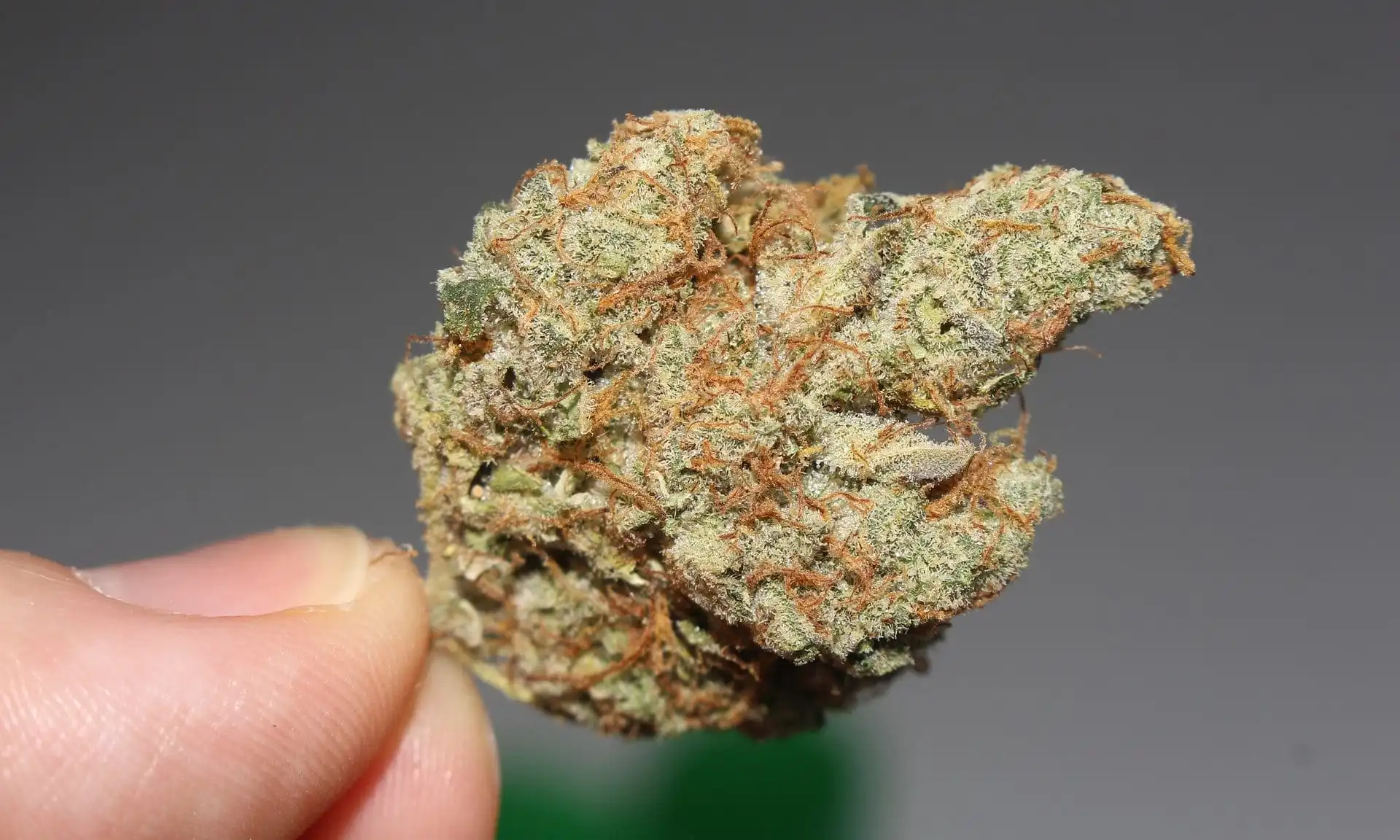
Last month, the Trump administration moved to federally reclassify medical marijuana that is dispensed to patients in accordance with state programs. But that doesn’t mean truck drivers, airline pilots and other federally regulated workers can now use it without being punished, the Department of Transportation (DOT) is clarifying in a new notice.
“Marijuana use is not compatible with safety-sensitive functions,” the agency said on Friday.
Medical review officers (MROs) who receive drug test results indicating cannabis consumption cannot deem them to be negative for illegal substance use, even when an employee says it was the result of state-licensed medical marijuana, DOT’s guidance said. That is the case even after the Department of Justice issued an order moving state-regulated medical cannabis from Schedule I to Schedule III of the Controlled Substances Act (CSA), making such use federally legal.
“Currently, there is no instance when the MRO could verify a laboratory-confirmed marijuana positive drug test result as ‘negative’ when an employee claims the positive was caused by a State licensed marijuana product,” DOT said, explaining that even after rescheduling, medical marijuana dispensed in accordance with state law “does not constitute” a drug that has been approved by the Food and Drug Administration (FDA).
“Without FDA approval for a controlled substance, it cannot be prescribed,” DOT said. “A ‘legitimate medical explanation’ requires use of a legally prescribed controlled substance in compliance with Federal laws governing such a prescription.”
Even if the worker in question presents “documentation such as State-issued medical marijuana cards, physician recommendations or certifications, or dispensary records or receipts,” those documents “do not satisfy” federal regulations governing what constitutes a “legitimate medical explanation” for use of a drug, the notice says. “Marijuana use under State marijuana programs or other non-prescription sources do not qualify as a ‘legitimate medical explanation.'”
The guidance from DOT’s Office of Drug and Alcohol Policy and Compliance and its Office of the General Counsel says in a footnote that it does “not have the force and effect of law” and is “not meant to bind the public in any way.”
“The document is intended only to provide clarity to the public regarding existing requirements under the law or agency policies, and compliance may be achieved in more than one way,” it says.
The drug testing rules cited by DOT cover workers in aviation, trucking, railroads, mass transit, pipelines and other transportation industries.
—
Marijuana Moment is tracking hundreds of cannabis, psychedelics and drug policy bills in state legislatures and Congress this year. Patreon supporters pledging at least $25/month get access to our interactive maps, charts and hearing calendar so they don’t miss any developments.
Learn more about our marijuana bill tracker and become a supporter on Patreon to get access.
—
While it is widely accepted that safety-sensitive transportation workers should not perform their jobs under the influence of marijuana or other substances, legalization supporters point out that cannabis metabolites can stay in a person’s system for weeks after use and still be detected on drug tests even when there is no impairment.
DOT’s hard-line position contrasts to some extent with the findings of a recent congressional analysis of rescheduling’s impact and with how other agencies are implementing reforms in response to the move.
The Congressional Research Service published a report on the current cannabis rescheduling move explaining that certified patients who possess medical marijuana from state-licensed dispensaries now have certain protections under Schedule III. “The order appears to authorize end users to possess marijuana for medical use without a CSA-compliant prescription,” it says.
The Bureau of Alcohol, Tobacco, Firearms and Explosives (ATF) has posted a draft update to a gun purchase form to acknowledge the federally legal status of medical marijuana under rescheduling. The revised section in question notably says that only “use or possession of marijuana for recreational purposes” is federally prohibited, leaving out the prior form’s mention of medical cannabis.
The U.S. Department of the Treasury and Internal Revenue Service (IRS) said they plan to issue new tax guidance for the marijuana industry following rescheduling. The reform will benefit state-licensed marijuana businesses by allowing them to take federal tax deductions they’re currently barred from under an IRS code known as 280E that doesn’t apply to Schedule III substances.
Even the Drug Enforcement Administration (DEA), which has long opposed cannabis legalization and was accused of stalling the rescheduling process initiative by the Biden administration, has launched a registration process for state-legal marijuana businesses to take advantage of federal benefits that come with the reform.
DEA will also oversee a hearing starting next month to consider broader marijuana rescheduling beyond state-legal medical cannabis.
DOT, for its part, stands out so far among agencies that have issued formal reactions to marijuana rescheduling by claiming that the move will not change much, if anything, for covered entities.
In December, when President Donald Trump issued an executive order directing the Department of Justice to complete the process of rescheduling cannabis “in the most expeditious manner,” the transportation agency posted an advisory saying that all safety-sensitive workers must still comply with federal drug testing requirements.
At the time, DOT didn’t quite specify what would change if marijuana was ultimately rescheduled, but the latest notice makes clear its view that state-legal medical cannabis under Schedule III is still no excuse for a positive drug test despite the Trump administration’s federal change.
Last October, Transportation Secretary Sean Duffy suggested Trump was “getting pressure” to reschedule cannabis—arguing that marijuana is “really addictive” and saying that policy reform around the issue sends a “dangerous” message.
“At a time when culture is pushing and celebrating the use of marijuana, we’re not talking about the risk,” Duffy said.
Then-Transportation Secretary Pete Buttigieig said in 2024 that placing cannabis in Schedule III wouldn’t affect drug testing policies for commercial truckers, noting that the department specifically lists marijuana as substance to screen.
“Our understanding of the rescheduling of marijuana from Schedule I to schedule III is that it would not alter DOT’s marijuana testing requirements with respect to the regulated community,” the Biden administration official said. “For private individuals who are performing safety-sensitive functions subject to drug testing, marijuana is identified by name, not by reference to one of those classes. So even if it moves in its classification, we do not believe that that would have a direct impact on that authority.”
In March, DOT included a directive to substance abuse professionals to disregard attempts to justify positive tests for THC due to a worker’s use of medical marijuana or hemp oil.
Meanwhile, last year, DOT proposed a new rule to update its drug testing guidelines, revising terminology around cannabis in a way that provides more specificity related to THC. In a notice published in the Federal Register last September, the department said it was proposing the rule change to “harmonize” with cannabis terminology adopted by the U.S. Department of Health and Human Services (HHS).
White House Press Secretary Karoline Leavitt said that the administration is moving forward with marijuana rescheduling because cannabis reform is “overwhelmingly popular” with voters and because doing so will help people who need access to the drug for medical purposes.
During a press event in the Oval Office, Trump spoke about the medical benefits of marijuana, saying that “a lot of people are suffering from big problems, which this seems to be the best answer.”
“So hopefully you don’t need it,” the president said. “But if you do need it, I hear it’s the best of all the alternatives.”