Politics
Bill To Legalize Marijuana Sales In Virginia In 2026 Will Be Unveiled This Week

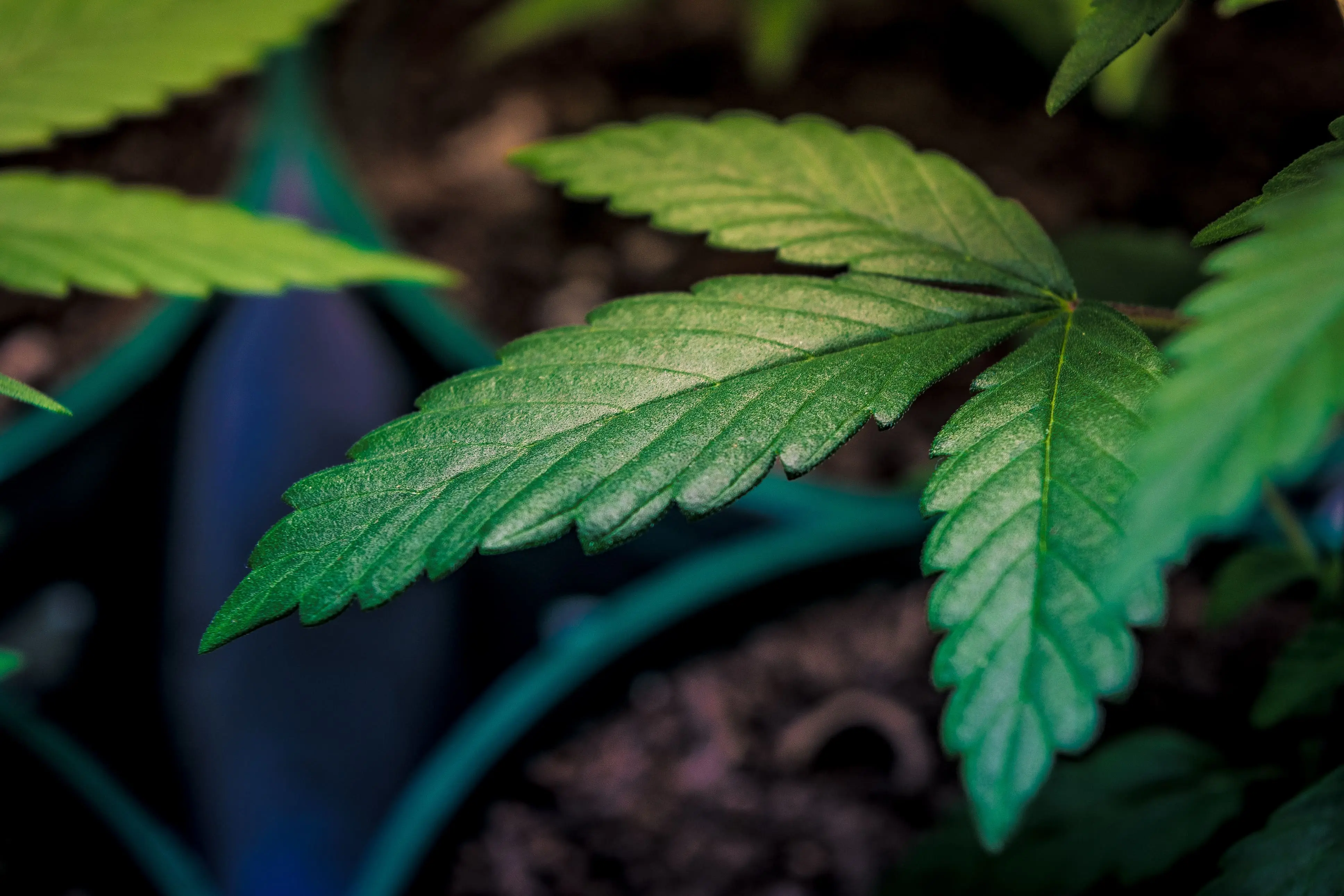
“We need to regulate, control and tax marijuana, so that we have a revenue that can help the community reinvest.”
By Markus Schmidt, Virginia Mercury
After months of hearings and study, the legislature’s Joint Commission on the Future of Cannabis Sales is poised to roll out a final proposal Tuesday that would launch a legal, regulated adult-use cannabis retail market in Virginia—potentially ending five years of economic and legal uncertainty since the commonwealth legalized possession and cultivation in 2021.
The latest version—sponsored by Commission Chair Paul Krizek, D-Fairfax, in the House of Delegates and Sens. Louise Lucas, D-Portsmouth, and Aaron Rouse, D-Virginia Beach, in the Senate—scraps the controversial local-opt-out clause, increases local taxing authority and builds a licensing regime designed to privilege small, independent, Virginia-based businesses over large medical-marijuana operators.
Krizek said the refinements are not about maximizing short-term revenue, but creating a sustainable, decentralized market that channels tax dollars back into communities disproportionately harmed by the War on Drugs—even if that means giving up some early windfalls.
“The goal has been to make sure it is a decentralized market structure, competitive, sustainable, prioritizing independent Virginia-based businesses,” Krizek told The Mercury in an interview last week.
Retail plan moves forward after years of vetoes
Virginia became the first Southern state to legalize adult-use cannabis in 2021, allowing adults 21 and older to possess up to 1 ounce and cultivate up to four plants at home. But the law included no mechanism for legal sales, and successive retail-market bills were blocked by vetoes from outgoing Gov. Glenn Youngkin (R).
The commission created earlier this year aims to deliver what lawmakers couldn’t: a comprehensive retail structure. Its final proposal is set to be formally introduced ahead of the 2026 session, with sales targeted to begin November 1, 2026—provided lawmakers clear the bill and Gov.-elect Abigail Spanberger (D) signs it.
Supporters say the absence of a legal retail framework has only bolstered the illicit market. “It was a bad day for organized crime in the illicit cannabis market,” Krizek said earlier this month, referring to the election of Spanberger, who has pledged to sign adult-use legislation.
Spanberger, a Democrat, told The Mercury in August that she supports “a legalized retail market for cannabis.”
What’s new: Opt-outs gone; local control expanded
The biggest change to the retail framework: a provision that would have allowed localities to opt out of cannabis sales altogether has been eliminated.
Under earlier drafts, counties and cities could have banned retail outlets via referendum—a feature critics likened to “dry counties,” which risked stranding large populations without access to legal cannabis.
“We’re not going to have an opt-out for a lot of reasons,” Krizek said.
He argued that opt-outs would invite unregulated illicit markets to flourish in “dry” zones, threaten public safety and undermine statewide equity and revenue goals. He added that local governments would retain full control over zoning, buffer zones and licensing requirements under the new plan.
The final bill also increases local taxing authority. Under previous proposals, localities could levy up to 2.5 percent in local excise tax. The new draft raises that cap to 3.5 percent, giving local governments more resources for schools, public-health campaigns and other priorities.
The state tax remains at a proposed 8 percent—with a new provision to allow deductibility of certain business costs at the state level, even though marijuana remains federally illegal.
The bill would also remove the sales tax on paraphernalia and treat those items under ordinary sales tax rules.
“With the local tax bump, communities will have a little bit more resources to do the things they need to do at the local level,” Krizek said.
Perhaps most consequential is a licensing regime aimed at decentralizing ownership and expanding opportunity for “micro-business” operators.
As many as 50 percent of initial licenses would be reserved for micro-businesses—small operators who grow, process or sell cannabis on a modest scale. Large medical-marijuana operators will still be eligible, but all license holders will be capped at five total retail and/or grow/processing authorizations.
Krizek said even a silent partner with a small stake—say 1 percent—would count toward that limit, making corporate consolidation difficult.
A new direct-to-consumer license also would allow micro-businesses to deliver cannabis directly to patient or adult-use customers’ homes—subject to regulation by the Virginia Cannabis Control Authority (CCA).
Krizek said the overall goal is to build “hundreds of new, small local businesses,” strengthen Virginia’s agricultural sector and direct tax dollars to the communities harmed most by prohibition.
“We all recognize that we need to regulate, control and tax marijuana, so that we have a revenue that can help the community reinvest…and the racially disparate impacts of the prohibition or the War on Drugs.”
He emphasized the aim is a “well regulated adult market” that remains competitive and sustainable, even if the state takes in less tax revenue early on, rather than let a handful of large companies corner the industry.
Commission draws on recent data and industry hearings
The final proposal, which will be posted to Virginia’s legislative information system in the coming days, reflects insights gathered at a series of public hearings held by the commission this year.
In August, lawmakers heard from experts on taxation, equity and small-business opportunity—clear signals that the commission was preparing to write a framework that diverged from past drafts.
Players in the medical-cannabis system—which underlies the retail rollout—recently logged major milestones. The CCA’s seed-to-sale tracking system, operated through the vendor Metrc, is now live. Between July and August, the medical market recorded nearly $30 million in sales across more than 256,000 transactions.
Proponents say that tracking, combined with planned labeling rules, testing standards and delivery-license oversight, marks one of the strongest regulatory regimes in the country—and a much firmer barrier between the legal and illicit markets than existed under previous, vetoed plans.
Critics at past hearings pointed out that older drafts still lacked crucial definitions for delivery agents and clarity on labeling, especially for edibles and topicals.
Labor advocates welcome promise of “people-based market”
UFCW 400—a union representing 35,000 workers across retail, cannabis, grocery, health care, food-processing and service jobs in the mid-Atlantic—praised the new plan’s emphasis on small businesses and equitable labor practices.
“We at UFCW 400 are excited to finally see a pathway for an adult use marketplace here in Virginia. We are pushing for a people-based market, one that centers workers, consumers, and community,” Kayla Mock, the union’s vice president, said in an email.
The union hopes the legislation will include labor-peace provisions to ensure any worker organizing efforts are free from retaliation. Mock added that monopolies in the cannabis sector are bad for workers, consumers and long-term fairness, and supported the micro-license approach as a check against corporate dominance.
Union leaders say that, in states lacking labor protections, cannabis workers have faced “retaliation, intimidation and termination” when they attempted to unionize—conditions they hope Virginia’s new law will avoid.
What’s next—and what could derail the rollout
The commission is scheduled to formally present the finalized proposal at Tuesday’s meeting, clearing the way for lawmakers to introduce the bill in the 2026 session. If all goes well—and there are no new roadblocks—retail sales could potentially begin November 1, 2026.
But the outcome is not yet certain. Opponents may raise familiar concerns about public health, youth access and law enforcement challenges. Some have noted that the transition from decriminalization to a fully regulated retail market carries risks—especially if regulators do not balance access, safety and equity correctly.
Still, advocates say the revamped legislation could deliver on long-promised reforms. “We’ve got to stand up this legal marketplace sooner rather than later,” Krizek said.
If the bill passes next year, Virginia could finally close the book on five years of legal limbo—and become a test case for a Southern state embracing adult-use cannabis with an eye toward equity, community reinvestment and small-business growth.
This story was first published by Virginia Mercury.