Politics
Arizona Bill To Punish People Over ‘Excessive’ Marijuana Odor Or Smoke Dies As Session Adjourns

An Arizona bill that would have penalized people who create “excessive” amounts of marijuana smoke or odor has died, a relief to advocates who said the proposal amounted to overreach that would have undermined the legalization law voters enacted.
The legislation from Sen. J.D. Mesnard (R) did pass the Senate in March, as well as the House Judiciary Committee, but it stalled on the floor despite being endorsed by the chamber’s Republican and Democratic caucuses after there was an objection to it passing on the consent calendar.
Lawmakers adjourned the legislative session on June 13 before the proposal could be taken up on the regular calendar, officially killing it for the year.
Throughout the measure’s history, lawmakers heard testimony on both sides of the debate, with proponents calling it a necessary update to state statute that will prevent unsolicited exposure to the smell of cannabis and opponents such as Arizona NORML and the ACLU of Arizona arguing that the proposal unnecessarily undermines the will of voters who enacted legalization at the ballot.
Mesnard, the bill sponsor, responded to criticism of the proposal, including the possibility that the policy could be subject to litigation if its ultimately enacted into law, during a House committee hearing in March.
“I don’t think we should feel paralyzed as policymakers to advance the right policy that’s protecting somebody’s private property rights,” he said. “Someone can litigate anything we do down here, and it is often used as a way to try to paralyze us from decision making. I don’t think it should be in this case.”
He also explained to a member of the House panel that the bill would not force local governments to adopt their own rules or take enforcement action.
“Some some cities or towns may pursue something, some won’t. This is the backup if they don’t have something,” the senator said. “It’s obviously something that it’s easier to pursue at the local level—and, typically, nuisances are pursued at the local level—so it’s not trying to interfere with what is the most common approach.”
A separate companion resolution to put the issue before voters to decide on failed in the Senate, but Mesnard later made a successful motion to reconsider that defeat—though the measure was not brought up again.
As introduced, both measures would have added broad criminalization provisions back into the state’s cannabis use laws. But most of that punitive language was revised by the Senate Committee of the Whole. For example, it was changed to provide a clearer definition of “excessive” smoke and remove a reference to making the offense a “crime.”
The bill as passed by the Senate, however, would have made it a public nuisance punishable by up to four months in jail and a $750 fine to create “excessive marijuana smoke or odor…if the person’s conduct is intentional or the person knowingly and substantially interferes with the comfortable enjoyment of life or property.”
The latest revised definition of excessive cannabis smoke or odor described it as “airborne emissions resulting from the burning, heating or vaporizing of marijuana or marijuana products,” according to a summary of the adopted amendment.
Such emissions must also be “detectable by a reasonable person of ordinary sensibilities on other private property” and “occur for more than 30 consecutive minutes on a single occasion or on three or more separate days within a 30-day period.”
The bill (SB 1725) and resolution (SCR 1048) in their latest form specified that “lawful possession or use of marijuana does not preclude a finding of nuisance, except that a court may consider possession of a valid registry identification card as a mitigating factor,” and they provide that “a person is not liable for committing a private nuisance unless the person has received notice of the interference and fails to abate it within five days.”
Under the revised legislation, the affected party would first had to file a compliant with local officials before pursuing action with the state, but only if the municipality has already adopted an ordinance regulating excessive cannabis smoke or odor.
A person would have been deemed in violation of the law if a local court issued a written order directing them to “abate excessive marijuana smoke or odor that constitutes a nuance” and that person “knowingly violates or refuses to comply with the order.”
Each day of non-compliance after failing to adhere to the order would have been considered a separate offense, and failure to comply would have been a petty offense.
—
Marijuana Moment is tracking hundreds of cannabis, psychedelics and drug policy bills in state legislatures and Congress this year. Patreon supporters pledging at least $25/month get access to our interactive maps, charts and hearing calendar so they don’t miss any developments.
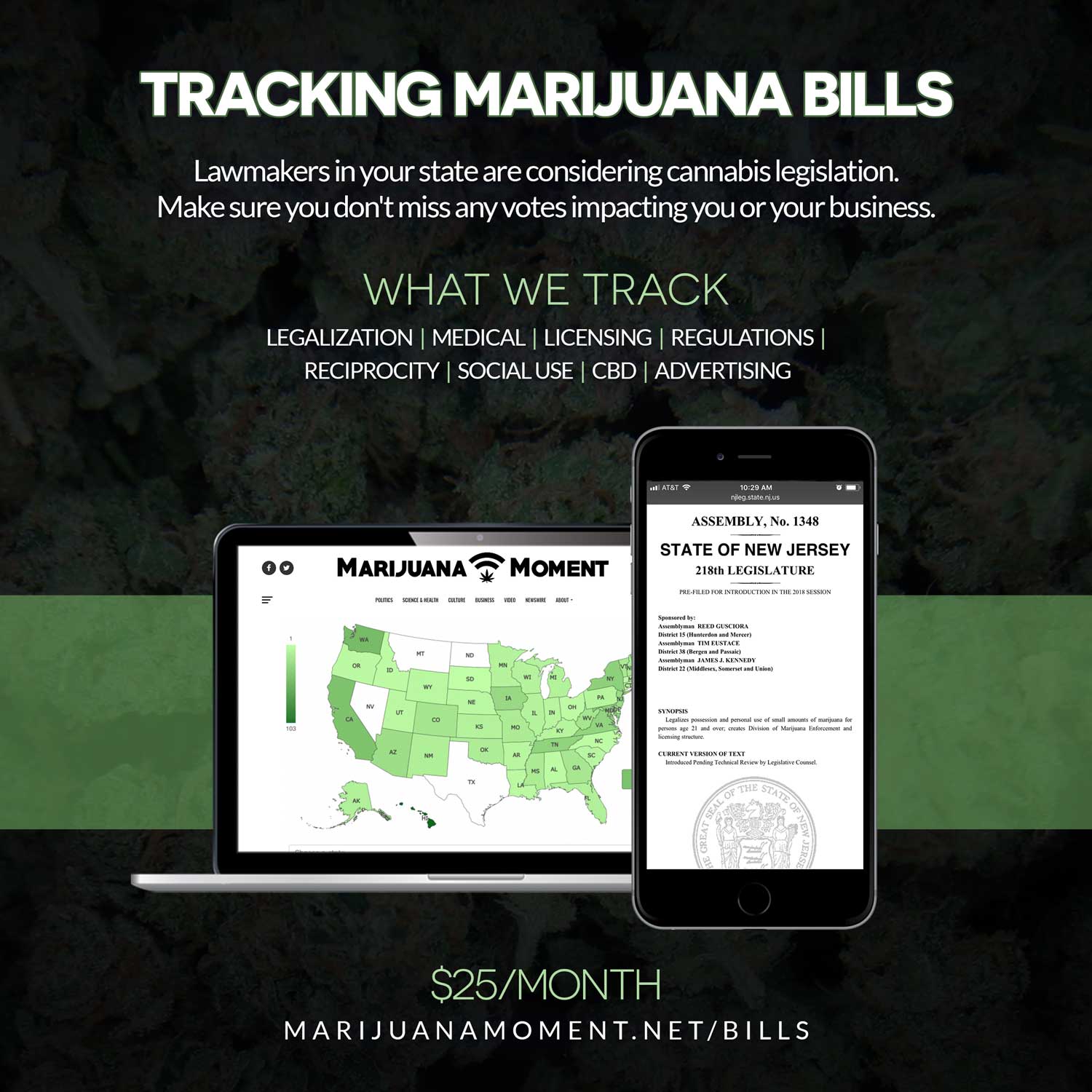
Learn more about our marijuana bill tracker and become a supporter on Patreon to get access.
—
Separately, marijuana opponents had filed a ballot initiative to roll back legalization in Arizona this year, but that effort was scrapped after the local campaign leader said he has “adjusted my viewpoints on the threat to kids” posed by the legal marijuana industry.
Sean Noble, president of the political strategy firm American Encore, told local media that while he launched the campaign due to concerns about marketing of cannabis to children, he has come to realize that marijuana businesses in Arizona have “not done some of the things that I thought they were doing.”
“I went into it with a pretty profound belief that it was happening,” Noble said. “I was kind of relying on things that I had seen or read from other people.”
“I don’t think that they’re specifically marketing gummies and candies and that kind of thing the way that I was led to believe that they were doing,” he said. “Maybe they’re doing that in other states. But it’s not happening here in Arizona.”
A poll from 2024 found ongoing majority support from Arizona likely voters for medical cannabis legalization (86 percent), adult-use legalization (69 percent) and industry banking reform (78 percent).
Meanwhile, senior residents in Arizona independent living communities could soon see a different kind of care service available in their neighborhoods: Kiosks allowing them to view and buy marijuana products from licensed dispensaries.
The retailer Life Is Chill and cannabis technology company LoveBud announced recently that they were partnering for the launch of the novel initiative, which will involve deploying the kiosks in participating senior living communities that residents can use to learn about and order marijuana products for delivery.