Politics
Trump’s Marijuana Order Doesn’t Change Drug Testing For Safety-Sensitive Workers, At Least For Now, Transportation Department Says

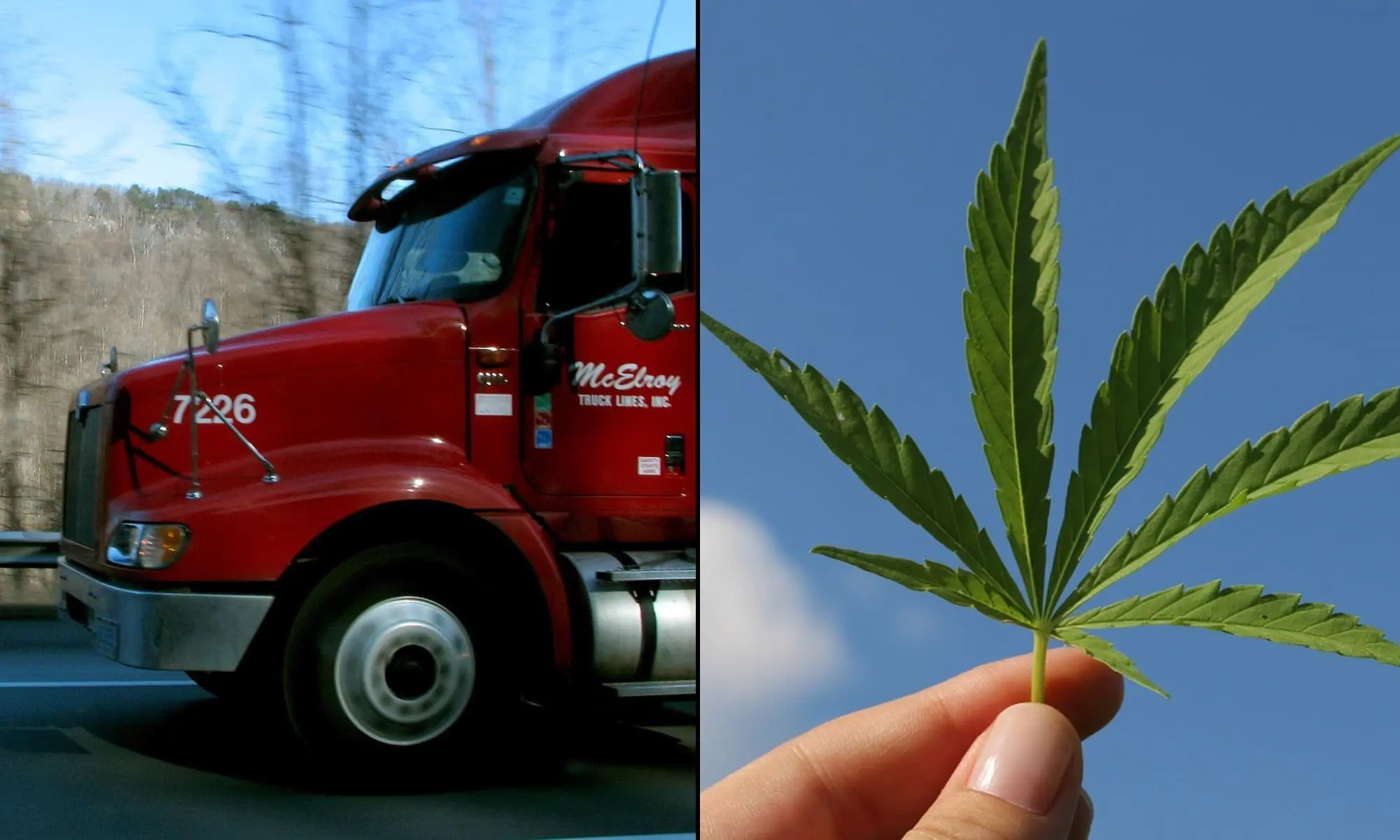
The U.S. Department of Transportation (DOT) is advising that all safety-sensitive workers must still comply with federal drug testing requirements, even as the president directs the attorney general to complete a cannabis rescheduling process.
However, the department didn’t quite specify what would change if marijuana is ultimately moved from Schedule I to Schedule III of the Controlled Substances Act (CSA)
After President Donald Trump signed an executive order on cannabis rescheduling last week, DOT issued a notice saying it’s received “inquiries” about the impact of the potential reform on the department’s “longstanding regulation about the use of marijuana by safety‐sensitive transportation employees.”
That includes “pilots, school bus drivers, truck drivers, train engineers, subway operators, aircraft maintenance personnel, transit fire‐armed security personnel, ship captains, and pipeline emergency response personnel, among others.”
DOT clarified that, until Attorney General Pam Bondi finalizes the rescheduling action, marijuana remains a Schedule I drug. Therefore, it “remains unacceptable for any safety‐sensitive employee subject to drug testing under the Department of Transportation’s drug testing regulations to use marijuana.”
Additionally, “Until the rescheduling process is complete, the Department of Transportation’s drug testing process and regulations will not change,” the notice says.
“Transportation employees in safety-sensitive positions will still be subject to testing for marijuana,” DOT said. “Furthermore, the Department’s guidance on medical and recreational marijuana and CBD are still in effect.”
Laboratories, medical review officers and substance misuse professionals must still comply with existing drug testing rules, so there are “no changes to your roles and responsibilities as they relate to marijuana.”
“We will continue to monitor the rescheduling process and update the transportation industry as appropriate,” the department said. “We want to assure the traveling public that our transportation system is the safest it can possibly be.”
While it seemed as if DOT was leaving room open for a possible internal policy change if marijuana rescheduling is ultimately finalized, former Transportation Secretary Pete Buttigieig said last year that placing cannabis in Schedule III wouldn’t affect drug testing policies for commercial truckers, noting that the department specifically lists marijuana as substance to screen.
“Our understanding of the rescheduling of marijuana from Schedule I to schedule III is that it would not alter DOT’s marijuana testing requirements with respect to the regulated community,” the former Biden administration official said. “For private individuals who are performing safety-sensitive functions subject to drug testing, marijuana is identified by name, not by reference to one of those classes. So even if it moves in its classification, we do not believe that that would have a direct impact on that authority.”
The reason rescheduling on its own wouldn’t change DOT policy is based on an interpretation of the 1991 Omnibus Transportation Employee Testing Act, which grants the transportation secretary with discretion to test for any controlled substances that they’ve “determined has a risk to transportation safety.”
Buttigieg was responding to a question from Rep. Rick Crawford (R-AR) during a House Transportation and Infrastructure Committee hearing. The congressman had referenced concerns from the American Trucking Associations (ATA) “about the broad public health and safety consequences of reclassification on the national highway system and its users.”
The latest notice comes about three months after DOT proposed a separate rule to update its drug testing guidelines, revising terminology around cannabis in a way that provides more specificity related to THC.
While it’s widely understood that driving under the influence of cannabis is dangerous, the relationship between consumption and impairment is a messy one.
Last year, for example, a scientific review of available evidence on the relationship between cannabis and driving found that most research “reported no significant linear correlations between blood THC and measures of driving,” although there was an observed relationship between levels of the cannabinoid and reduced performance in some more complex driving situations.
“The consensus is that there is no linear relationship of blood THC to driving,” the paper concluded. “This is surprising given that blood THC is used to detect cannabis-impaired driving.”
In a separate report last year, NHTSA said there’s “relatively little research” backing the idea that THC concentration in the blood can be used to determine impairment, again calling into question laws in several states that set “per se” limits for cannabinoid metabolites.
“Several states have determined legal per se definitions of cannabis impairment, but relatively little research supports their relationship to crash risk,” that report says. “Unlike the research consensus that establishes a clear correlation between [blood alcohol content] and crash risk, drug concentration in blood does not correlate to driving impairment.”
Similarly, a Department of Justice (DOJ) researcher said last February that states may need to “get away from that idea” that marijuana impairment can be tested based on the concentration of THC in a person’s system.
“If you have chronic users versus infrequent users, they have very different concentrations correlated to different effects,” Frances Scott, a physical scientist at the National Institute of Justice (NIJ) Office of Investigative and Forensic Sciences under DOJ, said.
Photo courtesy of Martin Alonso.