Politics
Top Hawaii Lawmaker Previews Bill To Let Voters Decide On Marijuana Legalization At The Ballot


A top Hawaii lawmaker says he will work to advance a bill this session that would put the question of marijuana legalization to voters after repeated failed efforts to enact the reform legislatively in recent sessions.
House Judiciary and Hawaiian Affairs Committee Chairman David Tarnas (D) previewed the plan in an interview with Honolulu Civil Beat that was published on Monday. Given the legislature’s evident reluctance to end prohibition on its own despite public support for legalization, he said the issue ought to be decided by voters.
“This is kicking this particular policy decision—very selectively—to the public for a decision,” Tarnas, who has previously sponsored legalization and other marijuana reform bills, said.
While Gov. Josh Green (D) supports legalizing cannabis, and polling has indicated that Hawaiians are ready for the policy change, the chairman is signaling that he doesn’t anticipate that the legislature will be ready to move forward with a legislative reform this year but may instead be inclined to defer to voters.
House Speaker Nadine Nakamura (D) has acknowledged broad public support for marijuana legalization, but said that some of her chamber’s members from the island of Oahu are not on board with the reform.
Putting legalization on the ballot would come in the form of a proposed constitutional amendment under Tarnas’s plan, which would require a two-thirds vote in each chamber of the legislature.
Hawaii’s Senate last February narrowly defeated a proposal that would have increased fivefold the amount of cannabis that a person could possess without risk of criminal charges.
Had the measure become law, it would have increased the amount of cannabis decriminalized in Hawaii from the current 3 grams up to 15 grams. Possession of any amount of marijuana up to that 15-gram limit would have been classified as a civil violation, punishable by a fine of $130.
A Senate bill that would have legalized marijuana for adults, meanwhile, ultimately stalled for the session. That measure, SB 1613, failed to make it out of committee by a legislative deadline.
While advocates felt there was sufficient support for the legalization proposal in the Senate, it’s widely believed that House lawmakers would have ultimately scuttled the measure, as they did last February with a legalization companion bill, HB 1246.
In 2024, a Senate-passed legalization bill also fizzled out in the House.
Last year’s House vote to stall the bill came just days after approval from a pair of committees at a joint hearing. Ahead of that hearing, the panels received nearly 300 pages of testimony, including from state agencies, advocacy organizations and members of the public.
Green signed separate legislation last year to allow medical marijuana caregivers to grow marijuana on behalf of up to five patients rather than the current one.
And in July, the governor signed another bill that establishes a number of new rules around hemp products in Hawaii, including a requirement that distributors and retailers obtain a registration from the Department of Health.
Lawmakers also sent a bill to the governor that would help speed the expungement process for people hoping to clear their records of past marijuana-related offenses—a proposal Green signed into law in April.
That measure, HB 132, from Tarnas, is intended to expedite expungements happening through a pilot program signed into law in 2024 by Green. Specifically, it will remove a distinction between marijuana and other Schedule V drugs for the purposes of the expungement program.
The bill’s proponents said the current wording of the law forces state officials to comb through thousands of criminal records manually in order to identify which are eligible for expungement under the pilot program.
Meanwhile, in November, Hawaii officials finalized rules that will allow medical marijuana dispensaries to sell an expanded assortment of products for patients—including dry herb vaporizers, rolling papers and grinders—while revising the state code to clarify that cannabis oils and concentrates can be marketed for inhalation.
The department also affirmed its support for federal marijuana rescheduling—a policy change that President Donald Trump ordered to be completed last month but has yet to come to fruition.
—
Marijuana Moment is tracking hundreds of cannabis, psychedelics and drug policy bills in state legislatures and Congress this year. Patreon supporters pledging at least $25/month get access to our interactive maps, charts and hearing calendar so they don’t miss any developments.
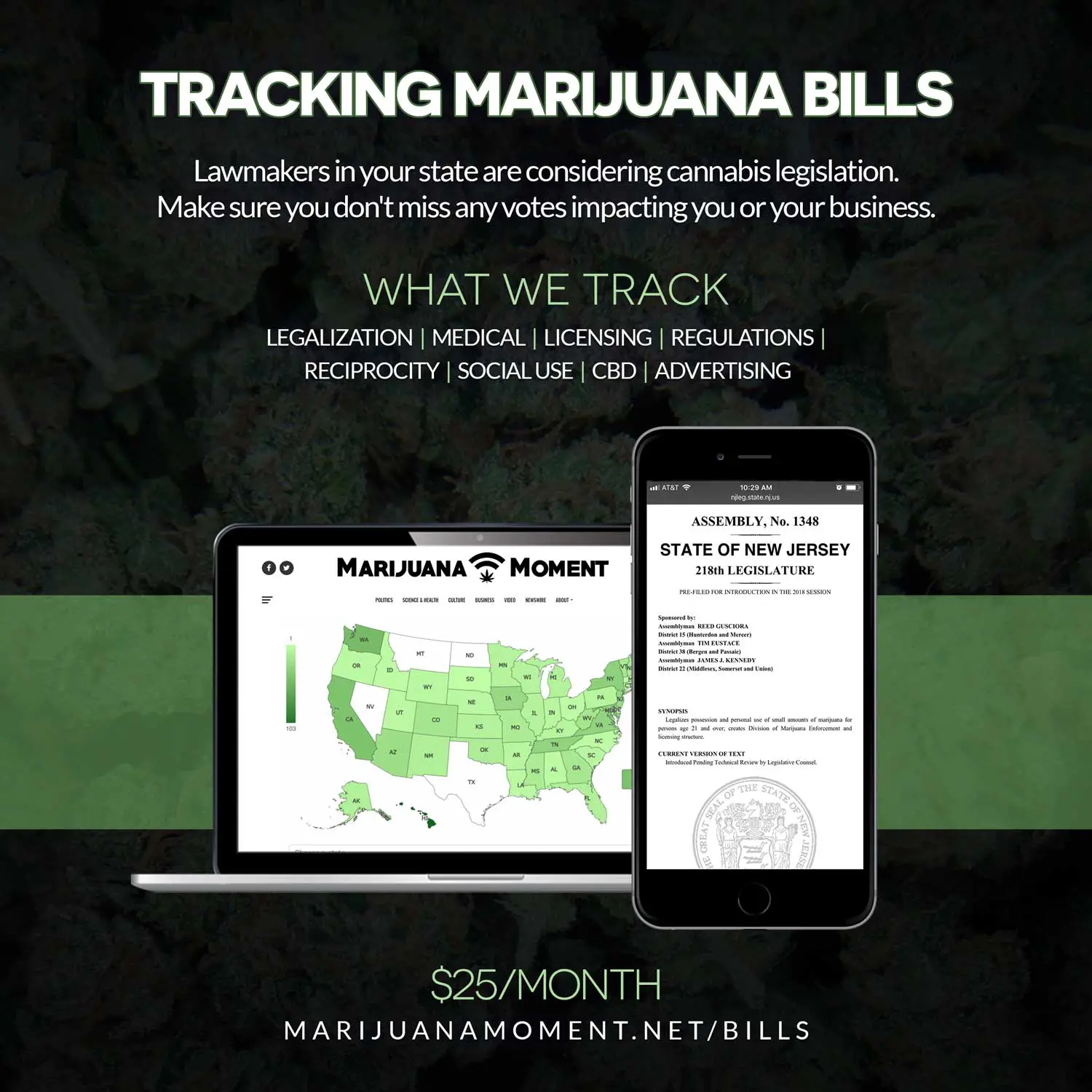
Learn more about our marijuana bill tracker and become a supporter on Patreon to get access.
—
Regulators are also launching a series of courses designed to educate physicians and other healthcare professionals about medical marijuana as the state’s cannabis program expands.
The underlying medical marijuana expansion bill signed by the governor in late June, in addition to allowing more patients to more easily access cannabis, also contains a provision that advocates find problematic.
Before lawmakers sent the legislation to Green, a conference committee revised the plan, inserting a provision to allow DOH to access medical marijuana patient records held by doctors for any reason whatsoever.
This past fall, regulators solicited proposals to assess the state’s current medical marijuana program—and also sought to estimate demand for recreational sales if the state eventually moves forward with adult-use legalization. Some read the move as a sign the regulatory agency saw a need to prepare to the potential reform.
Photo courtesy of Brian Shamblen.