Politics
Pennsylvania House Lawmakers Slam Senate Over Marijuana Legalization Inaction As Governor Again Calls For Reform

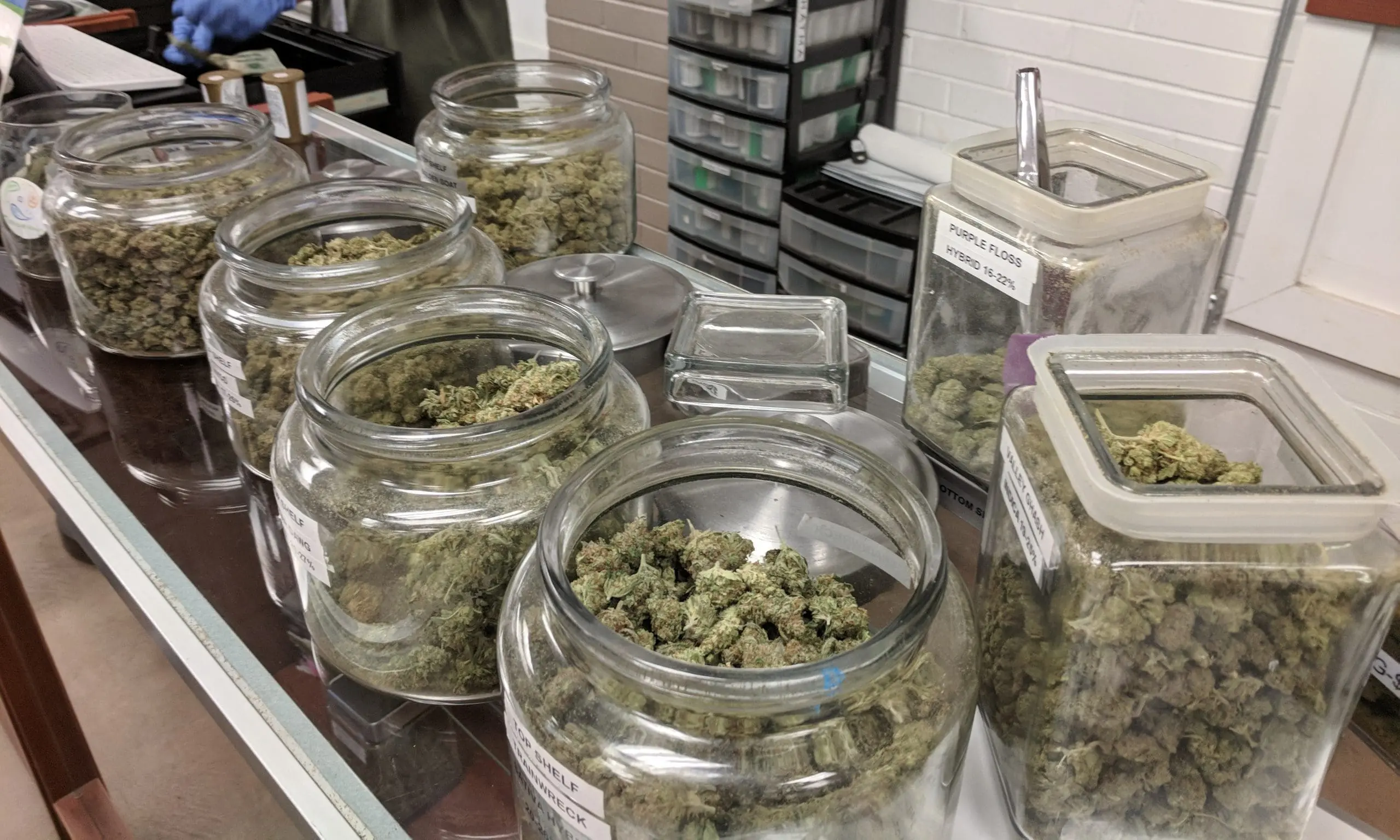
Pennsylvania House Democratic lawmakers are calling on the GOP-controlled Senate to come to the table and pass a bill to legalize marijuana, as proposed by the governor once again as part of his budget latest request.
At a press conference on Wednesday, three Democratic members of the House who have championed adult-use legalization stressed the need to move on reform, laying blame for inaction on the Senate where even supporters of the policy change have so far been unable to deliver on the issue.
Reps. Rick Krajewski (D) and Dan Frankel (D), who sponsored a bill to legalize with state-run shops that advanced through the House last year, said they understand that the novel regulatory approach they envisioned may be “controversial” to some members, but that’s all the more reason for the Senate to bring their own ideas to the conversation to finally get the job done.
Gov. Josh Shapiro (D) didn’t call for a state-run model in his budget request that was unveiled this week; rather, his plan reflected a more traditional, private market that could still be a starting point for negotiations over the reform, the lawmakers said.
“This week, we heard from our governor: Pennsylvania must stay competitive as an economic engine. And with legalization, we have the opportunity to rein in a market that is completely deregulated in terms of potency, content or labeling,” Krajewski said. “We can promote public health while bringing in hundreds of millions of public dollars that can be directed to the communities hit hardest at past criminalization.”
“We knew that this innovative [state-run] approach would be controversial, but as we surveyed the national landscape of legalization frameworks, we knew that using the same playbook of other states would lead Pennsylvania to be a follower, not a leader,” he said. “Massive multi-state cannabis companies have leveraged their existing medical and recreational footprints to control entire swaths of newly emerging recreational markets. Where states have tried to level the playing field with social equity guidelines, those states have been terrorized with industry lawsuits.”
“We know that legislating comes with negotiation and compromise,” Krajewski said.”We’re willing to come together and discuss a proposal that addresses everyone’s priorities.”
He also took a jab at Sen. Dan Laughlin (R), who has promoted adult-use legalization and his legislation to achieve that policy outcome—but has declined to bring it to a vote in his own committee that he chairs, choosing instead to call on the Democratic-controlled House to pass his bill first.
“Why didn’t Senator Laughlin provide an amendment of his own [when the state-run bill crossed over to the Senate]?” Krajewski asked. “Why hasn’t he run his own cannabis proposal? He was asked this exact question at the voting meeting and gave a clear answer: We’re not ready.”
“There is the truth. The Senate has shown that they are not ready to get this done,” he said. “Despite publicly saying they support legalization, they seem to be stuck in their prohibitionist views of the past.”
“Part of why we are able to take this unique approach in HB 1200 is because we have a unique landscape in Pennsylvania with our existing state liquor store system. A lot of states don’t have that as an existing infrastructure to develop a plan like this. But the goal is not just about, ‘Well, let’s do state stores.’ There’s a real problem that we’ve seen… There’s been experiences from people around the existing rollout of cannabis legalization frameworks, where you have folks who have been given hope this opportunity—social equity applicants—about being able to engage in this gold mine of a new market with cannabis, who then fall into cycles of bankruptcy to get bought out by private equity.”
“There’s consolidation in the market. There are real monopolistic practices that occur right now in legal, private cannabis markets. And so we’re putting this bill out just to say, ‘Here’s a way to consider—to not fall into that same trap.'” he said. “In Pennsylvania, we’re open to any proposal that also puts in anti-monopoly protections, that puts in real money towards small entrepreneurs who want to start businesses, because this is an expensive, expensive industry that a lot of folks don’t realize have a ton of upfront costs.”
Frankel, for his part, said at the presser that “Pennsylvanians are not waiting on Harrisburg.”
“Our bordering states are collecting millions in tax revenue from purchases made by our constituents,” he said. “Meanwhile, Pennsylvanians are still being arrested for simple possession arrests that can follow someone for life—affecting job prospects, housing and educational opportunities. The Senate’s refusal to act on adult-use cannabis means letting our neighbors make the rules and keep the revenue.”
“That money should be supporting our schools, our transit systems [and] our communities here at home,” Frankel said. “It should be easing the burden on Pennsylvania taxpayers. Instead, in the absence of a legal marketplace, we have what amounts to a prohibition tax, and every Pennsylvanian is paying for it.”
“The governor included money in his budget for a proposal likely different than House Bill 1200. The House has offered a plan, the governor has offered a plan, while the Senate simply waits. The Senate must stop the delays and pass a cannabis legalization bill. They must join us in this conversation by proving that they can take action and show us that they really do want to stop the inappropriate arrests make products safe and legal and fund our budget.”
Asked to expand on the prospects of reaching a compromise that doesn’t involve state-run sales, Frankel said “the bill that we sent over, House Bill 1200, really had priorities in it—and those priorities include criminal justice, social justice reform, generally a sustainable way to create opportunities for affected communities in the business space here, and public health issues as well as the tax revenue.
“You know, there may be a different way to do those things, and we’re open to having that discussion,” he said. “There were ideas in both chambers, the governor, we all came to the table to work something out. But we need to know that there is a willingness to actually do something in the Senate to end up having that negotiation.”
“I think Representative Krajewski and I have always said that we are open for a conversation in a negotiation,” he said. “There may be different ways to skin the cat, so to speak, but any proposal that ends up becoming law should address those issues. And maybe there’s a different way than House Bill 1200 to do that, but we need to at least see that the Senate there is a willingness and a capacity to pass something. Send us something, could be a lousy bill, but send us something. Show us you want to do something, then we can get to the table and negotiate our differing priorities.
Further, while Laughlin might be a vocal proponent of legalization , with his own reform legislation, Frankel told reporter on Wednesday that he’s unsure the GOP Senate has enough votes to move the reform forward.
“I don’t think Senator Laughlin could pass in his committee an adult-use bill right now, let alone get it to the floor with Republican leaders refusing to do that,” Frankel said.
Laughlin, for his part, posted on X this week that “the Governor’s [budget] proposal spends billions more than we take in and leans on revenue the Legislature hasn’t approved. We need a real, sustainable solution.
“I’ve said it for years: it’s time to get serious about adult-use cannabis and stop passing the cost onto Pennsylvanians,” he said.
Rep. Jordan Harris (D), chair of the House Appropriations Committee, also weighed in on the legalization debate at the briefing on Wednesday, emphasizing that “the House has done its work in passing an adult-use cannabis bill over to the Senate,” and that “we need our colleagues in the Senate to finally act.”
“Here’s the thing: If they don’t like our version of cannabis legalization, they are well within their right to send us their version of cannabis legalization for us to discuss and debate,” he said, adding that “instead of tax revenue coming to the Commonwealth of Pennsylvania, it’s going to the great state of New Jersey.”
“Now, look, I know my friends over there enjoy that. I would like us to retain those dollars here in Pennsylvania. The other thing about why we need to get this done is that there’s a lot of Pennsylvania farmers who would be able to significantly take part in the industry had we done this work here in the commonwealth,” Harris said. “Look, this is not even a debatable topic anymore. I think the public has made it very clear, and has done so for years, that the prohibition on cannabis—those days are over.”
“Those days are over, and so it is high time that folks, instead of making excuses, come up with a plan that they can get votes for and send us something,” he said.”If they can’t do our bill, send us something. But the people of Pennsylvania are tired of waiting for us to get this right.”
Meanwhile, the presser and governor’s latest budget request come weeks after Pennsylvania House Speaker Joanna McClinton (D) similarly said legalizing marijuana is one way to create a “very important” revenue source for the state—and that it’s an achievable reform if only legislators could find “the will to do it.”
Bipartisan Pennsylvania lawmakers who’ve been working to enact adult-use legalization over recent sessions without success so far have also recently said that President Donald Trump’s federal marijuana rescheduling order could grease the wheels in 2026.
For what it’s worth, another top GOP senator—Sen. Scott Martin (R), chair of the chamber’s Appropriations Committee—said in December that he was skeptical about the prospects of enacting legalization in the 2026 session, in part because of the federal classification of cannabis that’s now expected to change. Of course, marijuana would still be federally illegal under Schedule III, so it’s unclear if a simple loosening of the law would move the needle enough from his perspective.
—
Marijuana Moment is tracking hundreds of cannabis, psychedelics and drug policy bills in state legislatures and Congress this year. Patreon supporters pledging at least $25/month get access to our interactive maps, charts and hearing calendar so they don’t miss any developments.
Learn more about our marijuana bill tracker and become a supporter on Patreon to get access.
—
A top aide to Pennsylvania’s governor said in September that lawmakers should stop introducing new competing legalization bills and instead focus on building consensus on the issue—while emphasizing that any measure that advances needs to contain equity provisions if the governor is going to sign it into law.
Laughlin, for his part, said in August that the House “needs to pass the language in my bill and send it to my committee” after which point he “can negotiate with the Senate and the governor.”
The senator separately said recently that supporters are “picking up votes” to enact the reform this session.
Meanwhile, bipartisan Pennsylvania senators in October introduced a bill that would allow terminally ill patients to use of medical marijuana in hospitals.
Separately, the leading Republican candidate in the race to become the next governor of Pennsylvania dodged a question about her stance on legalizing marijuana—saying she doesn’t have a “policy position” on the issue and arguing that the sitting governor’s proposal for reform “way, way overstated” potential revenue.
The candidate, Pennsylvania Treasurer Stacy Garrity (R), pointed to neighboring Ohio, which launched its own adult-use cannabis market this year, saying “they generated about $115 million in revenue.” And while the populations of both states are relatively comparable, Shapiro’s budget projected $536.5 million in cannabis revenue in the first fiscal year of implementation.
She did, however, say that if Pennsylvania moves forward on enacting the reform, she’ll “make sure that it’s banked appropriately.”
Meanwhile, a Pennsylvania Democratic senator recently said that federal marijuana rescheduling would be “very influential” in advancing legalization in his state, giving “political cover” to GOP members on the fence about reform.
Polls have shown bipartisan support for legalization among voters, but the reform has consistently stalled in the legislature, due largely to GOP opposition. But not all Republican members are against the policy change—and one recently said she felt her party should seize the “opportunity to snatch” the issue from Democrats.