Politics
Oklahoma Attorney General Warns That State Would Need To ‘Reimburse’ Medical Marijuana Businesses Under Governor’s Plan To Shut Down Market


The attorney general of Oklahoma says he would “love” to see the state’s medical marijuana program wiped out, as the governor recently suggested. But he cautioned that doing so would mean reimbursing the hundreds of licensees participating in the market because the state would be “taking” a revenue source away from them.
During a press briefing on Tuesday, Oklahoma Attorney General Gentner Drummond (R) was asked about Gov. Kevin Stitt’s (R) call to have voters revisit the state’s medical marijuana program and ultimately “shut it down.” Drummond said it’s a “complicated issue.”
“Now, clearly, when we passed this law in 2018, we were asleep at the switch, right?” he said. “We did not put proper protocol in place to limit the number of marijuana grow facilities. It was truly the Wild West.”
“We have to balance the investment in those legal operations with the desire by all law enforcement—I think unanimity, that there’s unanimity among law enforcement—if we didn’t have marijuana at all, it would be better for the state,” the attorney general said. “But we have to be aware of, and if the governor goes forward with this plan or a future governor does, then we would need to reimburse these individuals, because it will effectively be a taking.”
As a lawyer, Drummond said he’s “concerned about the taking.” But as a law enforcement representative, “I’d love for it to be gone,” he said, adding that, at one of his first meetings with the FBI as the state’s attorney general, he was advised to end the state’s medical cannabis program to mitigate public safety concerns.
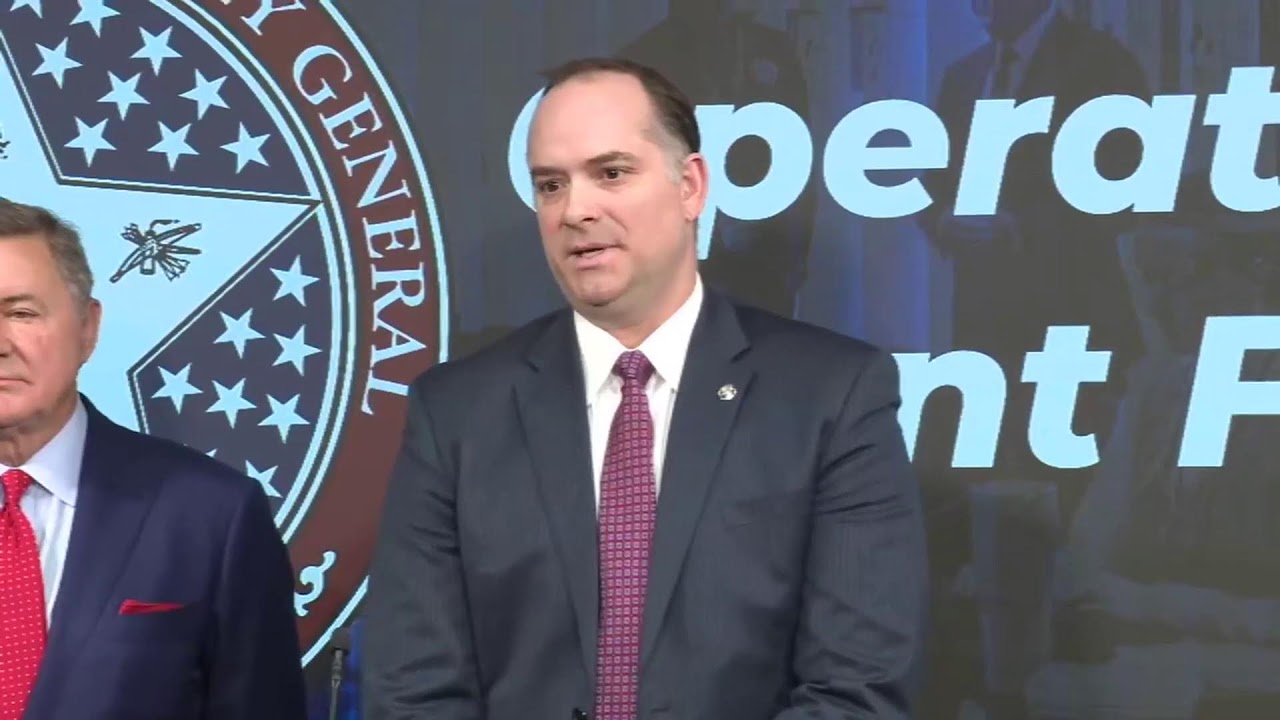
“I will also add on that: It’s an illusion to think that we’re offsetting the tax dollars with the cost of law enforcement,” he said. “I could not even begin to estimate that numbers of hundreds of millions of dollars spent in law enforcement to eradicate black market—marijuana, fentanyl production, sex trafficking, human trafficking—and Oklahoma is probably 100-to-1 ratio. So this bargain for exchange, Oklahoma got the bad end of it.”
The governor’s push for a reevaluation of Oklahoma’s medical marijuana law has drawn mixed reactions from top lawmakers and officials.
Senate President Pro Tem Lonnie Paxton (R), for example, expressed openness to the idea—though he made clear the will of voters must still be respected, so it’s unlikely he would agree to an outright repeal of the legalization law.
There should, however, be an “actual medical marijuana program,” the Senate president said.
Senate Minority Leader Julia Kirt (D), for her part, said she’s “not into revisiting state questions,” and lawmakers should “trust the people, and we should actually implement them as well.”
“This legislature, before our time, could have made a decision to put guardrails in place before this state question passed,” the senator said. “Instead, they stuck their head in the sand and let that question pass and be mayhem.”
Chris Anoatubby, the lieutenant governor of the Chickasaw Nation in Oklahoma, aligned himself with Stitt’s position, stating that the medical marijuana program as currently implemented has “been a problem all over Oklahoma.”
He added that he’d “absolutely” support “reforming” the cannabis law.
During his speech on Monday, the governor complained that the state has “more dispensaries than we do pharmacies,” adding that marijuana retailers “hide an industry that enables cartel activity, human trafficking, and foreign influence in our state.”
While regulators and law enforcement have “done incredible work to hold back the tide of illegal activity,” Stitt said, the industry is “plagued by foreign criminal interests and bad actors, making it nearly impossible to rein in.”
“We can’t put a band-aid on a broken bone,” he said. “Knowing what we know, it’s time to let Oklahomans bring safety and sanity back to their neighborhoods. Send the marijuana issue back to the vote of the people and shut it down.”
While the governor’s rhetoric signals he may be interested in seeing the medical cannabis industry shuttered altogether, it’s not clear what exactly he wants voters to decide on and his office has not released specific language of a proposed ballot measure.
Back in 2022, Stitt similarly used his State of the State address as an opportunity to dig at the voter-approved medical marijuana law, arguing that residents were misled by proponents of the ballot initiative.
Meanwhile, in November, Oklahoma activists withdrew an adult-use marijuana legalization initiative that they’d hoped to place on the state’s 2026 ballot.
After a short but aggressive signature push to secure ballot placement, Oklahomans for Responsible Cannabis Action (ORCA) ultimately did not turn in its petitions by the deadline, according to the secretary of state’s office.
There were challenges unique to this election cycle, as last year the governor gave final approval to legislation that some advocates worry will inhibit future citizen-led policy changes, including cannabis reform.
The law puts additional requirements on initiative “gist” language that voters see on the ballot and also revise policies around signature gathering to make it so petitioners could only submit signatures from up to 11.5 percent of registered voters in a single county for statutory proposals and 20.8 percent for constitutional measures.
Meanwhile, amid the signature gathering process, law enforcement leaders with the Oklahoma Association of Chiefs and Oklahoma Bureau of Narcotics and Dangerous Drugs had been raising concerns about cannabis.
—
Marijuana Moment is tracking hundreds of cannabis, psychedelics and drug policy bills in state legislatures and Congress this year. Patreon supporters pledging at least $25/month get access to our interactive maps, charts and hearing calendar so they don’t miss any developments.
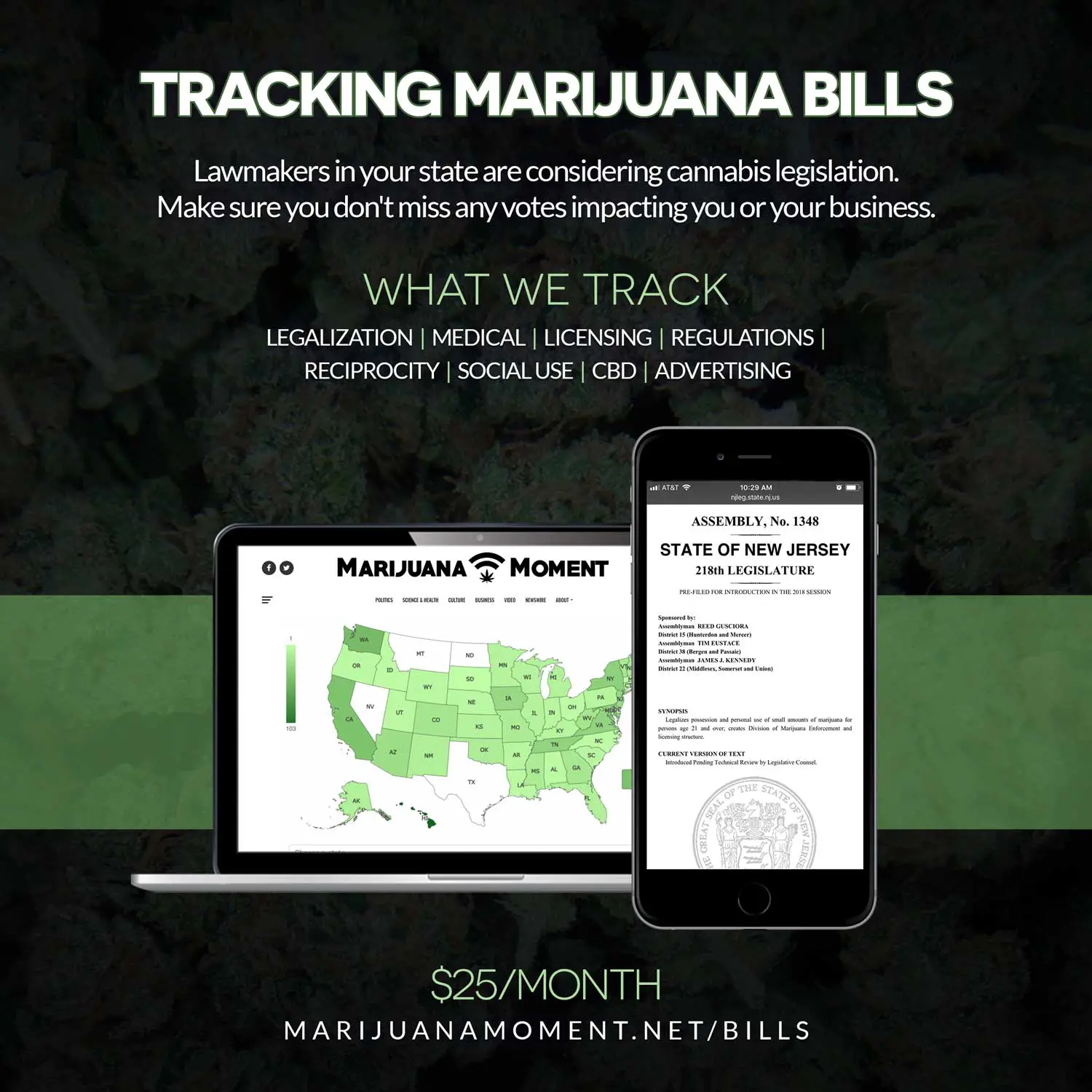
Learn more about our marijuana bill tracker and become a supporter on Patreon to get access.
—
Also in Oklahoma, lawmakers in March advanced a bill aimed at protecting gun rights of state-registered medical marijuana patients, although federal law still bars cannabis users from owning firearms regardless of their patient status.
Another state bill filed last year by a GOP legislator would criminalize the use of medical cannabis during pregnancy.
Photo courtesy of Philip Steffan.