Politics
Massachusetts Officials Approve Rules Allowing Marijuana Social Consumption Lounges To Open


Massachusetts marijuana regulators have unanimously approved rules to license and regulate cannabis social consumption lounges in the state.
Members of the Cannabis Control Commission (CCC) on Thursday voted 4-0 to approve the rule, which was unveiled over the summer.
The rules create three new license types related to social consumption: One would let existing dispensaries build upon their business by allowing marijuana use at their facilities, another would permit “hospitality” services by non-cannabis businesses such as cafes and theaters and another would create an “event organizer” category for entities wishing to allow marijuana consumption at events such as music festivals.
“The Commonwealth has been eagerly waiting social consumption, so we’re proud to move this effort across the finish line,” Shannon O’Brien, chair of the commission, said in a press release. “We look forward to the economic opportunities these new license types will offer to small businesses and entrepreneurs who have been disproportionately harmed by the War on Drugs.”
Bruce Stebbins, co-chair of the CCC social consumption working group, said the finalized regulatory package “reflects years of stakeholder engagement, research, and policy discussion and deliberation.”
“Next steps will include ongoing engagement with municipalities that must opt-in to hosting social consumption and educating residents to ensure the Commonwealth is prepared for this expansion of our $8 billion regulated cannabis industry,” he said.
Kimberly Roy, another member of the commission, said the vote to advance the package “marks a long-awaited and carefully considered milestone for Massachusetts’ regulated cannabis industry.”
“By finalizing the Social Consumption license-type, the Commission is honoring the will of the voters who envisioned safe, legal spaces for adult-use cannabis, while maintaining strong safeguards to protect public health and public safety,” she said. “This achievement represents years of collaboration among stakeholders, policymakers, and communities across the Commonwealth.”
However, she added, the vote on Thursday “does not conclude the Commission’s work; it begins a new chapter of consumer and public education to ensure this emerging sector operates safely and responsibly.”
Commissioner Carrie Benedon said the “finalization of these social consumption reforms represents a significant milestone for legal cannabis in the Commonwealth.”
“Commissioners and staff have put significant thought and care into crafting a program that will provide economic opportunities for equity participants and small businesses while emphasizing public health and safety,” she said.
Travis Ahern, executive director of CCC, said the social consumption license option “offers the Commonwealth significant regional tourism opportunities, safe spaces for those who cannot consume cannabis at home, the ongoing transition of legacy operators to the legal market,” he said. “Commission staff have worked hard to support the creation of each license type, and we’re excited to get to work setting up the internal infrastructure that will enable these new businesses to serve Massachusetts residents.”
The policy change around social consumption lounges comes amid a push by anti-legalization activists to put an initiative on the ballot next year that would roll back the state’s adult-use legalization law.
An association of Massachusetts marijuana businesses recently urged voters to tell local officials about any cases of misleading signature gathering tactics and “fraudulent messaging” by the campaign behind that effort.
There have been allegations piling up that petitioners working on behalf of Coalition for a Healthy Massachusetts have shared false information about what the measure would accomplish—with claims that paid petitioners have used fake cover letters for other ballot measures on issues like affordable housing and same-day voter registration. The state attorney general’s office has confirmed it’s received complaints to that end, but the campaign has denied sanctioning such activities.
Under proposed initiative, adults 21 and older could still possess up to an ounce of cannabis, only five grams of which could be a marijuana concentrate product. Possession of more than one ounce but less than two ounces would be effectively decriminalized, with violators subject to a $100 fine. Adults could also continue to gift cannabis between each other without remuneration.
But provisions in the state’s voter-approved marijuana law that allow for commercial cannabis retailers and access to regulated products by adults would be repealed under the proposal. Adults’ right to cultivate cannabis at home would also be repealed. The medical cannabis program would remain intact, however.
Massachusetts Attorney General Andrea Campbell’s (D) office—which cleared the campaign for signature gathering in September—has stressed to voters the importance of reading their summary, which is required to go at the top of the signature form, before signing any petitions.
Meanwhile, the head of Massachusetts’s marijuana regulatory agency recently suggested that the measure to effectively recriminalize recreational cannabis sales could imperil tax revenue that’s being used to support substance misuse treatment efforts and other public programs.
Whether the cannabis measures make the cut is yet to be seen. Voters approved legalization at the ballot in 2016, with sales launching two years later. And the past decade has seen the market evolve and expand. As of August, Massachusetts officials reported more than $8 billion in adult-use marijuana sales.
Last month, the Massachusetts Senate approved a bill that would double the legal marijuana possession limit for adults and revise the regulatory framework for the state’s adult-use cannabis market. Similar legislation also advanced through the House earlier this year.
—
Marijuana Moment is tracking hundreds of cannabis, psychedelics and drug policy bills in state legislatures and Congress this year. Patreon supporters pledging at least $25/month get access to our interactive maps, charts and hearing calendar so they don’t miss any developments.
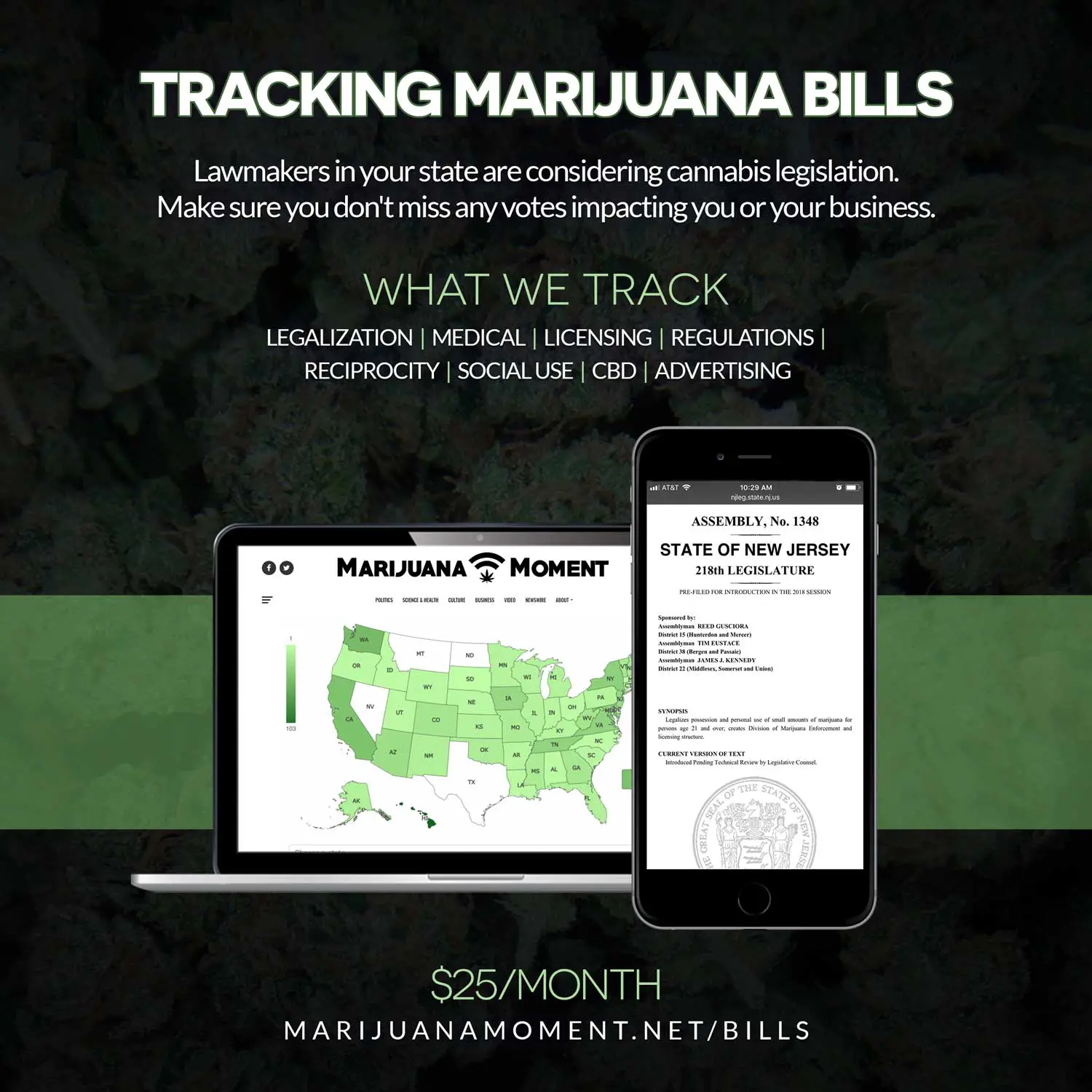
Learn more about our marijuana bill tracker and become a supporter on Patreon to get access.
—
Separately, CCC recently launched an online platform aimed at helping people find jobs, workplace training and networking opportunities in the state’s legal cannabis industry.
State lawmakers have also been considering setting tighter restrictions on intoxicating hemp-derived products and a plan to allow individual entities to control a larger number of cannabis establishments.
Also in Massachusetts, legislators who were working on a state budget butted heads with CCC officials, who’ve said they can’t make critical technology improvements without more money from the legislature.
Massachusetts lawmakers additionally approved a bill to establish a pilot program for the regulated therapeutic use of psychedelics. And two committees have separately held hearings to discuss additional psilocybin-related measures.
Photo courtesy of Martin Alonso.